How to Drink Less During Holiday Stress and Emotions
To drink less during holidays, decide your limit before events, map your biggest emotional triggers, keep a non-alcoholic drink in hand, and make an exit plan before cravings peak. The goal is not a perfect holiday; it is a safer, calmer one where alcohol does not make every stressful moment harder.
> Scope: This guide is for adults trying to drink less during holiday stress; it is not detox guidance, diagnosis, or a substitute for medical care.
TL;DR
- Holiday drinking urges often rise because stress, family conflict, loneliness, grief, disrupted sleep, and social pressure all stack together.
- A simple holiday drinking plan includes a drink limit, alcohol-free alternatives, trigger-specific coping actions, and a way to leave early.
- If you drink more than planned, treat it as data, not failure: review the trigger, reset the next day, and add support.
At-a-glance holiday drinking plan to drink less during holidays
Quick answer: To drink less during the holidays, plan your limit before the first drink, reduce exposure to your strongest triggers, and use simple refusal scripts before pressure starts. If you drink heavily or have withdrawal symptoms when you cut back, talk with a clinician before making sudden changes.
Key takeaways
- Choose a drink limit and a stop time before each event.
- Eat, hydrate, and bring a non-alcoholic option you actually like.
- Name the feelings most likely to push you toward drinking.
- Use short scripts such as “I’m good for now” without overexplaining.
- Leave earlier if cravings rise instead of waiting for willpower to fail.
- Track patterns after events so the next plan is more realistic.
A holiday drinking plan works best when it is made before the party, dinner, office event, or family gathering. Once stress rises, it is harder to make calm decisions from scratch.
Use this quick checklist:
- Set a drink limit before you arrive.
- Choose two alcohol-free drinks you actually like.
- Eat before drinking, especially before evening events.
- Identify your top two triggers.
- Plan transport that does not depend on drinking.
- Decide when you will leave.
Cutting back still matters, even if you are not quitting completely. For many people, the safer plan is not “never drink again starting tonight.” It is one fewer drink, a slower first hour, or leaving before the late round starts.
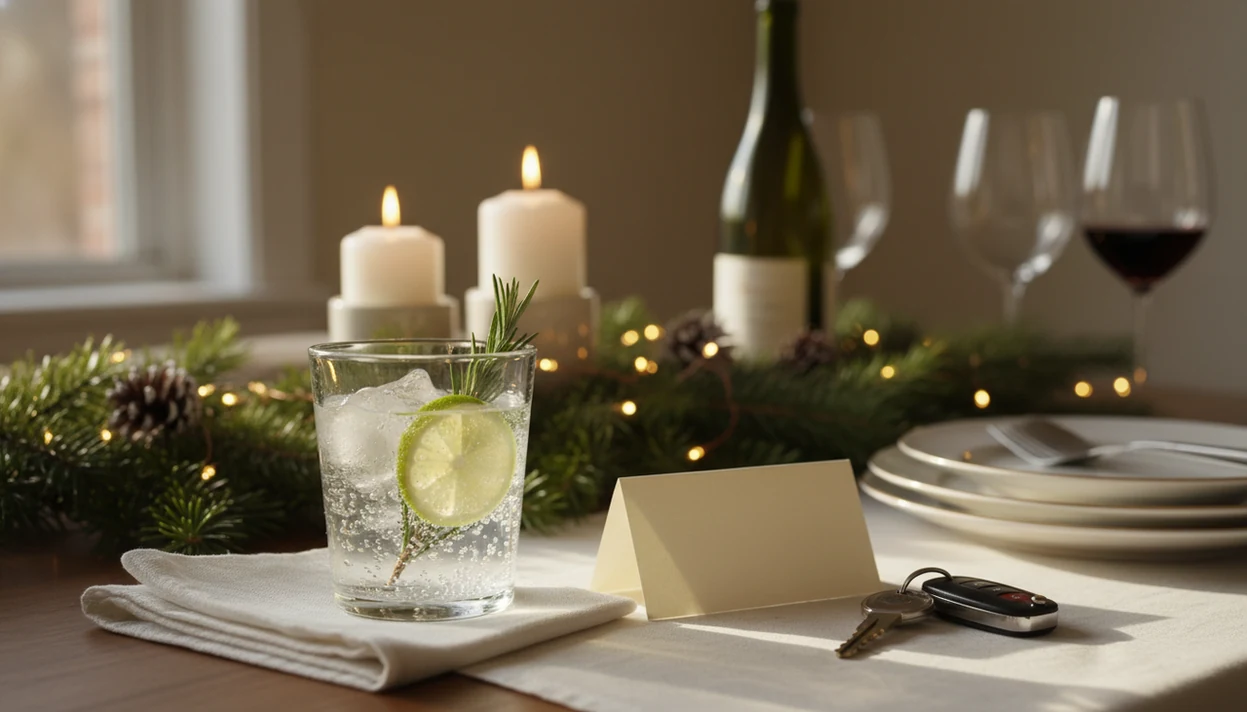
The lime wedge sinking in club soda can be a plan, not a punishment.
Holiday drinking triggers that make alcohol cravings stronger
Holiday drinking triggers are people, places, emotions, routines, and social cues that make alcohol feel automatic. Cravings are predictable stress responses, not moral weakness.
Five facts help explain why they build quickly:
- Family conflict can prime drinking urges. Old roles return fast at holiday tables, even for adults who feel steady elsewhere.
- Grief and loneliness often sharpen cravings. A quiet room after a memorial toast can feel different from an ordinary Friday.
- Financial stress and work burnout lower patience. Shopping costs, travel, deadlines, and year-end pressure stack together.
- Alcohol-centered parties create cue exposure. Open bars, champagne countdowns, and drink-pouring relatives keep the cue visible.
- Sleep and meal disruption make urges louder. Travel, skipped lunch, and late nights can reduce impulse control.
CDC survey data report that about 21.5% of U.S. adults binge drank in the past 30 days, and the CDC defines binge drinking as 5 or more drinks for men or 4 or more drinks for women on one occasion: https://www.cdc.gov/alcohol/about-alcohol-use/binge-drinking.html Holiday episodes can matter because occasional binge drinking still raises injury, mood, and driving risk.
Holiday stress alcohol cravings in the brain and routine
Holiday stress alcohol cravings often follow a stress-craving loop: tension rises, alcohol promises short-term relief, the brain remembers that relief, and future urges become stronger in similar situations.
That loop uses cue conditioning. In plain language, the brain links a setting with a reward. Wrapping gifts with wine, watching games with beer, or hearing New Year’s champagne corks can become cues before a person consciously decides to drink. For more on reward changes after alcohol reduction, the science is covered in dopamine after quitting alcohol.
Routine changes add pressure. Less sleep, skipped meals, travel, less exercise, and more unstructured time all make cravings easier to mistake for a real need.
The empty bottle beside the recycling bin can become a useful data point. Not shame. Data.
Understanding the loop gives you more intervention points: eat, leave the room, change the drink in your hand, call someone, or delay the first pour.
5-step holiday drinking plan before cravings hit
How to use a holiday drinking plan:
- Set a drink limit before Christmas parties, family dinners, New Year’s gatherings, or office events, and write it down.
- Choose your first non-alcoholic drink so your first decision is already made when someone offers alcohol.
- Eat before the event because hunger can make both alcohol effects and irritability arrive faster.
- Script your refusal with one short line, such as “I’m pacing myself” or “I’m good with this.”
- Leave before the high-risk window if the late part of the night usually brings shots, arguments, or pressure.
NIAAA low-risk drinking benchmarks are often cited as no more than 3 drinks in a day and 7 per week for women, and 4 in a day and 14 per week for men: https://www.niaaa.nih.gov/alcohols-effects-health/drinking-levels-defined. Those limits reduce risk at a population level, but they do not guarantee safety for everyone.
For many holiday events, setting the exit time is often easier than relying on willpower because the hardest cues arrive later.
Holiday drinking pressure scripts that do not require explanations
How to avoid holiday drinking when people offer alcohol repeatedly: use short scripts, hold a non-alcoholic drink, and avoid getting pulled into a debate. You do not owe medical, recovery, or emotional details.
Try these lines:
- “I’m good with this.”
- “I’m pacing myself.”
- “I’m driving tonight.”
- “Not tonight, thanks.”
- “I’ve got an early start tomorrow.”
Short is better. Long explanations invite follow-up questions.
Social positioning matters too. Arrive late if the first hour is mostly drinking. Stay near the cousin, friend, or coworker who does not push alcohol. Avoid the kitchen counter, bar cart, cooler, or drink-pouring zone if that is where refills happen without asking.
If alcohol pressure and habit loops show up together, alcohol reduction guides can help you separate social cues from physical cravings.
Christmas alcohol cravings and emotional holiday moments
Christmas alcohol cravings can be especially strong when celebration, memory, family roles, and grief collide. A song, an empty chair, or a familiar argument can make drinking feel like the quickest way to soften the room.
Use a 20-minute delay when an urge spikes. This does not erase every craving, but it gives the nervous system time to settle before you decide. During that window, call someone, take a walk, step outside, use a slow breathing reset, eat something, or leave the room.
A rain-specked windshield during a quiet drive home can feel safer than another hour of pressure.
If you drink more than planned, review it like a craving log: time, trigger, intensity, response, and what support would help next time. For people who feel foggy or emotionally flat after drinking, day after drinking brain fog explains the next-day pattern in more detail.
MeQuit tracking for holiday drinking triggers and routines
MeQuit is a quit smoking app that helps adults stop smoking, stop vaping, drink less, and track cravings, streaks, and milestones. App-based tracking may help adults notice craving times, emotional patterns, dry days, streaks, and the situations that repeat.
A useful log is specific: 7:40 p.m., family argument, craving intensity 8 out of 10, switched to sparkling water, left at 9:00. That kind of entry is easier to learn from than “bad night.”
Holiday parties can also link smoking, vaping, and alcohol. The cigarette urge after the first beer is a common dual trigger, and it can restart a loop a person thought was separate.
Good self-guided alcohol-reduction trackers deliver private tracking, reset prompts, and trigger review; they are not detox care, diagnosis, or emergency support.
Tracking tools can support behavior change, but they do not replace medical care.
Limitations
Drinking less is harm reduction, not a substitute for medical treatment when alcohol dependence, severe withdrawal risk, or alcohol use disorder is present.
- Withdrawal symptoms such as shaking, confusion, seizures, hallucinations, or severe agitation need urgent medical guidance.
- Medication interactions, pregnancy, driving plans, trauma history, severe depression, unstable housing, and co-occurring substance use are reasons to seek professional support.
- A mild hangover after two extra drinks is different from withdrawal. If you are unsure, ask a clinician.
Clinicians typically recommend medical support when someone cannot cut down, has withdrawal symptoms, mixes alcohol with risky medications, or drinks in unsafe situations.
FAQ
Why do I drink more during the holidays?
Holiday drinking often increases because stress, family conflict, loneliness, disrupted routines, grief, and social pressure happen at the same time. Alcohol may feel like quick relief, but it can make sleep, mood, and next-day stress worse.
How can I refuse alcohol at a holiday party?
Use short lines such as “I’m good with this,” “I’m pacing myself,” or “I’m driving tonight.” You do not need to explain your health, recovery, or personal reasons.
What counts as binge drinking during the holidays?
In the U.S., binge drinking is commonly defined as 5 or more drinks for men or 4 or more drinks for women on one occasion. Holiday drinking can meet this threshold even when someone does not drink heavily most weeks.
Can I drink at Christmas if I am trying to cut back?
Some people can set limits at Christmas, while others may need abstinence because of alcohol history, health conditions, medications, pregnancy, or withdrawal risk. If stopping alcohol causes symptoms, seek medical advice before changing suddenly.
What should I do when an alcohol craving hits?
Delay the drink, eat something, leave the room, call support, choose a non-alcoholic drink, or log the urge with time, trigger, intensity, and response. A short delay often gives you more choice.
What should I do if I drink more than I planned?
Put safety first: do not drive, avoid more alcohol, hydrate, and get help if you feel unwell. The next day, review the trigger and reset the plan instead of treating the slip as total failure.
Are mocktails helpful when I am trying to drink less?
Mocktails can help when they reduce social pressure and give you something to hold. They may be triggering if the taste, glassware, or ritual closely mimics drinking.
When should I get professional help for alcohol use?
Seek professional help if you have withdrawal symptoms, blackouts, repeated inability to cut down, unsafe drinking, drinking and driving, severe emotional distress, or alcohol mixed with other substances. Self-guided plans are not enough for high-risk situations.