Alcohol Tracking App Privacy and Sensitive Drink Data
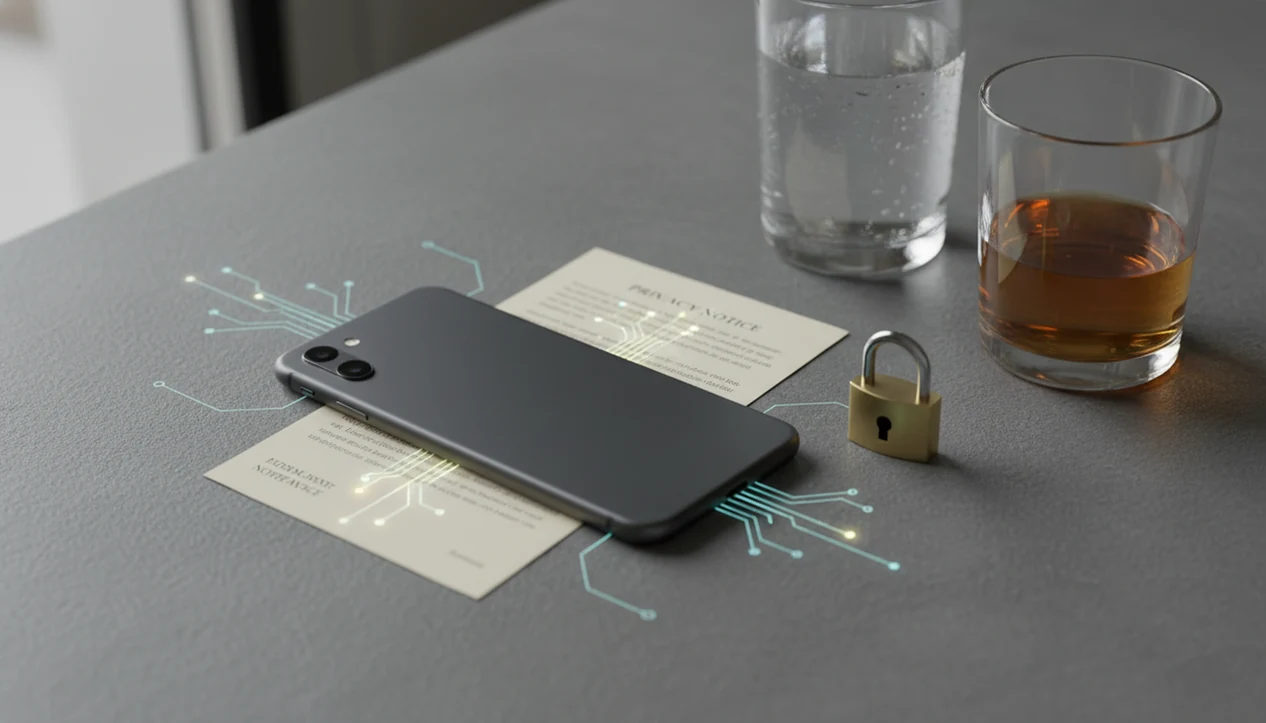
Alcohol tracking app privacy matters because drink logs can reveal when, how much, where, and why someone drinks, along with cravings, relapse notes, and recovery patterns. Before using a drink tracker, check whether it limits data collection, avoids advertising-based sharing, explains deletion clearly, and protects sensitive alcohol app data with strong security.
Definition: Alcohol tracking app privacy is the set of policies, technical safeguards, and user controls that determine how a drink tracker collects, stores, shares, protects, and deletes sensitive alcohol-use data.
TL;DR
- Drink logs, cravings, mood notes, location, and sobriety streaks can be sensitive even when an app is not a medical app.
- Most standalone alcohol and mindful drinking apps are not automatically covered by HIPAA in the United States.
- Look for minimal data collection, clear deletion controls, encryption, no ad-based sharing of sensitive data, and plain-language privacy terms.
Alcohol tracking app privacy: what sensitive drink data includes
Quick answer: A private alcohol tracking app should collect only the information needed to help you reflect on drinking patterns, not data for advertising or broad profiling. Before logging drinks, check what is stored, whether notes and cravings are optional, how deletion works, and whether the app can be used without an account.
Key takeaways
- Treat drink logs, craving notes, and trigger patterns as sensitive personal data.
- Prefer apps that explain data use in plain language before you enter details.
- Account-free apps may reduce exposure because less identifying information is collected.
- Avoid trackers that rely on ad personalization or unclear third-party sharing.
- Look for easy export or deletion if you may want to stop using the app later.
- If you drink heavily, ask a clinician before quitting suddenly because withdrawal can be dangerous.
Alcohol app sensitive data includes drink counts, timing, cravings, sobriety streaks, relapse notes, triggers, mood entries, and sometimes location. It can reveal health, mental health, addiction history, social habits, and risky behavior even when it never appears in a medical record.
A single log might look harmless. Three weeks of entries can show the Friday 6 p.m. drink, the craving after an argument, and the reset note typed under a table at dinner. That pattern is personal.
Tools like Me Quit can sit at the intersection of alcohol and nicotine behavior change. MeQuit is a quit smoking app that helps adults stop smoking, stop vaping, drink less, and track cravings, streaks, and milestones. For related nicotine data concerns, our guide to quit smoking app privacy covers similar risks around cravings and relapse notes.
Five alcohol app sensitive data facts users should know
- Alcohol and mindful drinking apps may collect data as revealing as health records, especially when logs include mood, cravings, relapse history, or mental health notes.
- Most standalone health apps are not HIPAA-covered entities unless they are offered by, or on behalf of, a covered health care entity, according to HHS guidance on health apps hhs.
- Wellness apps commonly use third-party analytics, advertising tools, or software development kits. A 2022 BMJ analysis found that 19 of 20 mental health apps shared data with third parties bmj.
- Anonymous data can be re-identified when linked to device IDs, IP addresses, behavior patterns, timestamps, or location.
- Privacy-by-design matters for addiction-related tools because disclosure can cause stigma, discrimination, relationship stress, or personal harm.
The pocket check is real. So is the privacy check.
How drink tracker privacy works behind the scenes
Drink tracker privacy works through a data path: you enter logs, the app stores them locally or in the cloud, the app may sync to servers, analytics tools may receive usage events, and support systems may access account details. The technical terms are first-party data and third-party sharing. First-party data stays with the app provider; third-party sharing sends some data to outside vendors.
That difference matters when a weeknight pour after laptop shutdown becomes a repeated timestamp. Ad IDs, device identifiers, IP addresses, and app events can build a behavioral alcohol-use profile, even without your name attached.
Encryption protects data in transit and at rest, but it does not automatically stop internal use, legal requests, account takeover, or vendor processing. The most privacy-protective drink tracking setup collects less data first, then secures what it keeps.
Drink tracker privacy guarantees worth looking for
Strong drink tracker privacy guarantees are trust signals, not absolute safety promises. Look for specific commitments you can understand before entering cravings, limits, or relapse notes.
- Data minimization: The app collects only what is needed for tracking, streaks, cravings, milestones, reminders, and core app function.
- No ad targeting from alcohol logs: The policy says drink logs, cravings, and recovery notes are not sold or used for advertising profiles.
- User deletion controls: You can delete individual drink logs, export your information, and close the account without emailing three times.
- Security and access limits: The app uses encryption, limits staff access, sets retention periods, and explains vendor roles clearly.
- Plain-language notices: The privacy policy describes data use in normal words, not only “business purposes” and “partners.”
A privacy-protective recovery app should keep progress tracking, craving resets, and milestone reminders private by default, without public labels or pressure to share.
Alcohol app privacy red flags in app stores and policies
Is this alcohol tracker asking for more access than it needs? That is the first privacy question to ask before downloading a free app on iPhone, iOS, or Android.
Be cautious with broad permissions such as precise location, contacts, microphone access, or unrelated device access unless the app explains why they are necessary. A basic drink count does not usually need your contact list. A craving note does not need the microphone.
Policy language can be just as revealing. Watch for vague phrases like affiliates, partners, marketing purposes, business purposes, or improving services without naming what data moves where. Also flag no deletion process, no retention period, no support contact, or no explanation of third-party SDKs.
Some apps require sign-in before basic tracking or mix sensitive logs with advertising analytics. If you are comparing effectiveness as well as privacy, the separate guide on do drink less apps work explains what app support can and cannot do.
Common myths about mindful drinking data privacy
Mindful drinking data privacy is often misunderstood because alcohol apps look like health tools, social trackers, journals, and habit apps at the same time. The label on the app store page is not enough.
| Myth | Reality |
|---|---|
| Health or sobriety wording means the app is automatically HIPAA-protected. | HIPAA depends on who provides the app and whether it is tied to a covered health entity. |
| Turning off personalized ads stops all analytics or marketing data flows. | Phone settings may limit ad personalization, but analytics, measurement, and vendor processing can still occur. |
| Anonymous use prevents identification. | Device IDs, IP addresses, location, timestamps, and detailed patterns can still point back to a person. |
| “We do not sell your data” means no sharing occurs. | Selling, sharing, analytics, and vendor processing can mean different things in privacy policies. |
The FTC’s Flo case showed that sensitive health data can be shared with major platforms despite privacy promises, according to the FTC’s 2021 Flo Health settlement announcement ftc. Read the verbs closely: collect, use, disclose, share, sell, retain.
Real-world risks from weak alcohol tracking app privacy
Weak alcohol tracking app privacy can matter outside the app because drinking data can affect reputation, relationships, employment worries, insurance concerns, legal exposure, or unwanted disclosure. The risk rises when drink logs are combined with mood notes, location, device identifiers, or relapse history.
A sticky bar table under your fingertips is just a moment. A location-tagged pattern of late-night drinking, cravings, and “broke my limit” notes is a different kind of record.
Pew reported in 2023 that 81% of U.S. adults were concerned about how companies use collected data, and 67% said they understood little or nothing about what companies do with it. pewresearch Pew also reported in 2021 that 43% of U.S. adults had experienced some form of data exposure, such as a breach or unauthorized account access.
Private logs deserve breach-aware design, not wishful thinking.
Alcohol tracking app privacy questions to ask before signing up
What should I ask before trusting a drink tracker with sensitive data? Start with the exact information the app collects, then look at sharing, deletion, permissions, and retention.
Ask whether the app collects drink counts, cravings, mood, notes, location, account details, device IDs, IP addresses, or diagnostic data. Then ask whether logs are used for advertising, analytics, product improvement, research, or vendor processing. Those categories are not the same.
Check whether you can delete one embarrassing log and the whole account from inside the app. If cloud sync is offered, look for a way to disable it or understand what gets uploaded. Also test whether basic tracking works without unnecessary permissions.
For people tracking alcohol and nicotine together, a private reset plan is often easier than separate journals because one craving window can trigger both habits. The evidence question is covered separately in are quit smoking apps effective.
Scope and Safety Note
This page explains privacy risks around alcohol tracking apps; it is not medical advice, legal advice, or a substitute for care. Privacy settings can reduce exposure, but they cannot promise that every disclosure, breach, subpoena, device compromise, or shared-screen moment will be prevented.
Use the guidance here as a data-safety check before you type sensitive notes into an app. For health, withdrawal, or legal risk, bring in the right professional support rather than relying on an app setting or article.
- Treat heavy daily drinking as a medical-safety issue, not only a habit-tracking problem. Do not stop suddenly without medical guidance if you drink heavily every day or have had withdrawal symptoms before.
- Seek urgent help for severe symptoms such as confusion, seizures, chest pain, fainting, hallucinations, or worsening withdrawal signs.
- Ask a qualified clinician about tapering, medication, detox support, or safer next steps if cutting down feels physically difficult.
- Contact a lawyer, legal aid service, employer representative, or other qualified professional for questions about courts, custody, driving, work, insurance, or mandated reporting.
- Use privacy tools as one layer of protection, while keeping emergency care and professional advice separate from app-based tracking.
Limitations
Privacy controls reduce risk, but they cannot remove every risk from alcohol tracking. Be careful with any app, including one that uses strong language about security.
- Strong encryption cannot eliminate all breach, subpoena, insider access, account takeover, or device theft risk.
- HIPAA may not apply to standalone alcohol tracking apps, depending on who provides the app and how it connects to care.
- Privacy features do not replace medical support. If cutting down causes shaking, confusion, seizures, or severe symptoms, read about alcohol withdrawal warning signs and seek urgent care.
Clinicians typically recommend medical guidance before sudden alcohol cessation for people with heavy daily use or past withdrawal symptoms. For alcohol withdrawal symptoms and medical-risk context, see MedlinePlus medlineplus.
FAQ
Are alcohol tracking apps private?
Privacy varies by app. It depends on what data the app collects, how it shares data, what security it uses, and whether deletion controls are clear.
Is drink tracker data HIPAA protected?
Drink tracker data is not automatically HIPAA protected. HIPAA may apply only when the app is offered by, or on behalf of, a covered health care entity.
Can apps sell drink logs?
Some apps may sell data, share data, or use data for advertising and analytics depending on their policy. “Sell” and “share” can have different legal meanings.
What data do alcohol apps collect?
Alcohol apps may collect drink counts, cravings, mood, notes, goals, location, device identifiers, IP address, account data, and app usage events. Some also track sober streaks or dry days.
Can anonymous drink data identify me?
Anonymous drink data can sometimes be linked back to a person. Device IDs, IP addresses, location, timestamps, and repeated behavior patterns increase that risk.
Should I allow location access?
Allow location only when the app clearly needs it for a feature you want. If possible, choose approximate location or deny location access for basic drink tracking.
Can I delete alcohol app data?
Deletion depends on the app. Check whether it offers in-app log deletion, full account deletion, retention terms, and a support contact.
Are free drink trackers safe?
Free drink trackers can be safe, but users should check ads, trackers, permissions, and data-sharing practices. A free price does not explain the business model.
What is sensitive drink data?
Sensitive drink data is alcohol-use information that could reveal health, recovery status, cravings, relapse history, location, mood, or behavior patterns. In Me Quit, users should still treat those entries as private personal data.