
How Alcohol Damages Mitochondria and Drains Cellular Energy
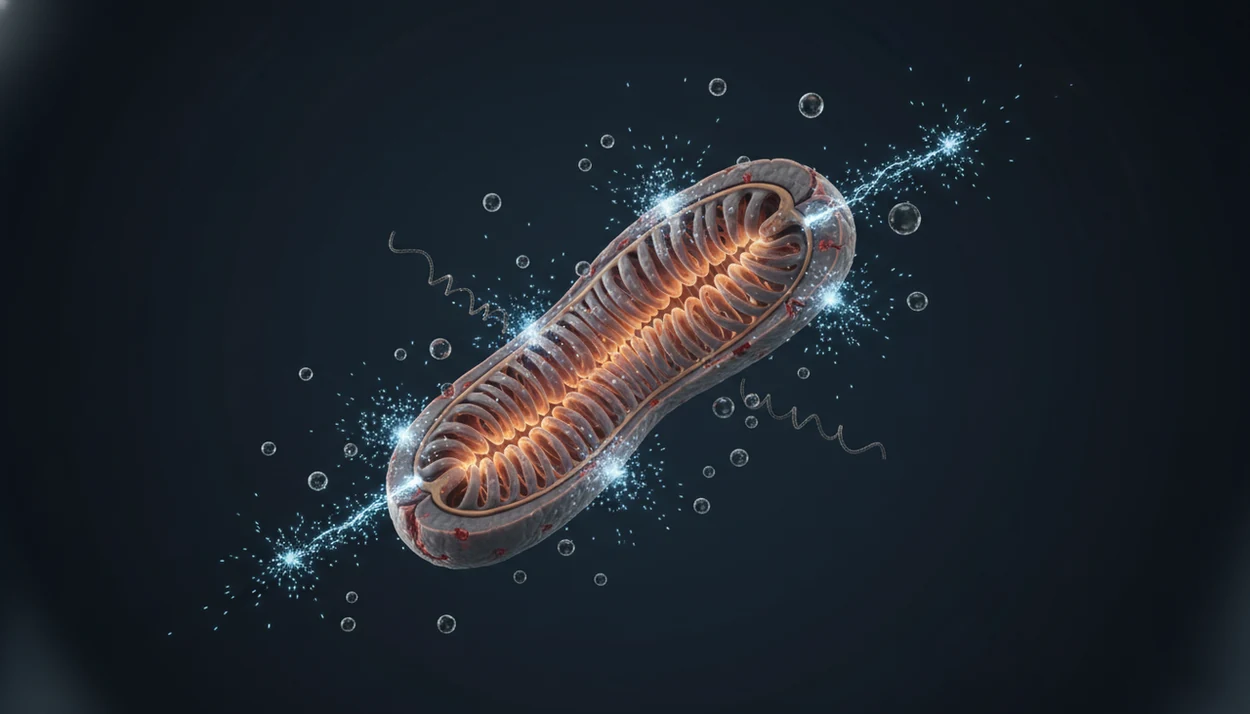
Alcohol mitochondrial damage happens when ethanol metabolism increases oxidative stress, free radicals, NAD+ depletion, and mitochondrial DNA injury, leaving cells with less ATP and weaker repair capacity. The liver is especially vulnerable, but alcohol-related mitochondrial dysfunction can also affect immune cells, brain-related pathways, fatigue, inflammation, and cellular aging.
Definition: Alcohol mitochondrial damage is the disruption of the cell’s energy-producing mitochondria caused by alcohol-related oxidative stress, redox imbalance, DNA injury, membrane depolarization, and impaired ATP production.
TL;DR
- Alcohol raises mitochondrial reactive oxygen species, which can damage proteins, membranes, and mitochondrial DNA.
- Ethanol metabolism shifts NAD+/NADH balance, making it harder for cells to produce energy and repair damage efficiently.
- Reducing or stopping alcohol exposure is the most practical first step for lowering ongoing oxidative stress and giving mitochondria a chance to recover.
Alcohol mitochondrial damage at a glance
Quick answer: Alcohol can strain mitochondria because ethanol metabolism often increases reactive oxygen species, shifts NAD+/NADH balance, and can impair mitochondrial DNA and membrane function. For many people, reducing drinking frequency and amount gives cells more time to restore energy balance, but heavy use or withdrawal risk should be handled with medical guidance.
Key takeaways
- Alcohol-related mitochondrial stress is dose- and pattern-sensitive; repeated heavy episodes often create more strain than occasional low intake.
- The liver is a key site of damage because it processes most ethanol, but immune, brain, muscle, and gut-related pathways may also be affected.
- Poor sleep, dehydration, low nutrient intake, and smoking or vaping may add to oxidative stress.
- Cutting back gradually can be safer than abrupt stopping for people with alcohol dependence or withdrawal history.
- Tracking cravings, triggers, and drinking context can reveal patterns that willpower alone often misses.
- Seek urgent care for severe withdrawal symptoms such as confusion, seizures, chest pain, or hallucinations.
Alcohol mitochondrial damage means alcohol interferes with mitochondria, the cell structures that convert fuel into ATP, the usable energy cells need for repair, signaling, and survival. They are not just “power plants”; they also help regulate oxidative stress, cell death, inflammation, and metabolic balance.
The short version is direct: alcohol metabolism increases oxidative stress, alcohol free radicals, NAD+ strain, mitochondrial DNA injury, and reduced ATP production. That combination can leave tissues with less energy and weaker repair capacity.
A person may notice this as fatigue after drinking, slower workout recovery, or a run-down feeling that does not match sleep time. A craving timer glowing in bed can feel unrelated to liver biology, but repeated drinking patterns are the exposure mitochondria keep responding to.
Five facts about alcohol oxidative stress and mitochondria
- Alcohol increases mitochondrial reactive oxygen species, or ROS, which are unstable molecules that can damage proteins, lipids, membranes, and DNA.
- Ethanol metabolism and CYP2E1 activity can overload mitochondrial electron transport, especially during repeated alcohol exposure. Reviews link chronic ethanol exposure, CYP2E1 induction, and increased reactive oxygen species in alcohol-related liver injury the NIH.
- Alcohol can injure mitochondrial DNA and reduce mitochondrial membrane potential, which weakens ATP production.
- Chronic alcohol exposure can overactivate mitophagy, the recycling process for damaged mitochondria, and may contribute to mitochondrial depletion.
- Some mitochondrial dysfunction may improve with sustained abstinence, but fibrosis, cirrhosis, and long-standing tissue scarring may not fully reverse.
That last point matters. A mild hangover after two extra drinks is different from withdrawal risk or liver disease symptoms. Public-health guidance is useful, but concerning symptoms need medical evaluation, not an app note or a supplement stack.
How alcohol mitochondrial damage works inside cells
Alcohol mitochondrial damage starts with ethanol metabolism: ethanol is converted to acetaldehyde, then to acetate, mainly through liver pathways. That process changes the cell’s redox balance by increasing NADH relative to NAD+, which shifts how cells handle energy production and repair signaling.
Mitochondrial electron transport is one major place where reactive oxygen species form. In plain terms, electrons move through a chain to help make ATP; when that system is stressed, more electrons can leak and react with oxygen. Reviews of alcoholic liver disease describe mitochondrial electron transport as a major intracellular source of ROS, with ethanol-related ROS contributing substantially to liver oxidative stress the NIH.
Repeated drinking can also increase CYP2E1 activity, another pathway linked with ROS production. For readers comparing drinking patterns and cravings, the broader alcohol reduction guides explain behavior-change steps without turning cell biology into a personal diagnosis.
Alcohol free radicals, ROS, and mitochondrial DNA injury
How do alcohol free radicals damage mitochondria? Reactive oxygen species are unstable molecules that can react with nearby structures before the cell can neutralize them. In mitochondria, the nearby targets include enzymes, membrane lipids, transport proteins, and mitochondrial DNA.
Mitochondrial DNA is especially important because mitochondria need it to build parts of the energy-producing system. If that DNA is injured and not repaired, mitochondrial function can worsen. Then weaker mitochondria may produce more ROS, creating a self-reinforcing cycle.
One mouse-model study found that an acute high dose of ethanol, 5 g/kg, caused about a 50% loss of hepatic mitochondrial DNA within hours the NIH. That finding should not be translated into a human “safe” or “unsafe” cutoff. It is mechanistic evidence, not a drinking-limit calculator.
The beer fridge hum during dinner prep is ordinary. The biology is not.
Alcohol NAD depletion and low cellular energy
How does alcohol drain energy from cells? Alcohol metabolism uses NAD+, a molecule cells rely on for energy metabolism, redox balance, and repair signaling. As ethanol is processed, NAD+ is converted toward NADH, which changes the NAD+/NADH ratio. The National Institute on Alcohol Abuse and Alcoholism describes this NAD+ to NADH shift as a central metabolic effect of alcohol oxidation NIAAA alcohol data.
That redox shift can make energy production less efficient. Cells still have fuel, but the chemical balance needed to use it well is disturbed. The result may include lower ATP production, fatigue, reduced exercise tolerance, slower recovery, and broader metabolic stress.
Tiredness after drinking is rarely one thing. Sleep disruption, dehydration, inflammation, low-quality food intake, and mitochondrial stress can all overlap. If alcohol also triggers late-night eating, the behavior side is covered in why alcohol makes you hungry, but persistent fatigue deserves a medical workup.
Mitochondrial depolarization, mitophagy, and liver damage from alcohol
Mitochondrial membrane potential is the electrical gradient mitochondria need to produce ATP; depolarization means that gradient has weakened. Depolarization is a warning sign that mitochondria are stressed, damaged, or less able to maintain energy output.
Mitophagy is the cell’s recycling process for damaged mitochondria. At first, it can be protective. Removing damaged mitochondria helps prevent further ROS production. However, chronic alcohol exposure may push this cleanup process too far, contributing to mitochondrial depletion rather than repair.
Experimental liver-cell work has reported that both acute and chronic alcohol exposure can cause depolarization and activate mitophagy. Chronic exposure has been linked with mitochondrial loss and disease pathways involving inflammation, fibrosis, and cirrhosis. For another organ-level view, alcohol and lung health covers immune-cell vulnerability and alcohol-related defense changes.
Alcohol cellular aging, fatigue, and recovery signals
Alcohol cellular aging is not a single clock. It is a pattern of oxidative stress, lower repair capacity, inflammation, and mitochondrial dysfunction that can make tissues behave as if recovery systems are under strain.
People may notice lower immune resilience, heavy legs during exercise, poorer sleep recovery, or a flat morning after a night that did not seem extreme. A lime wedge sinking in club soda during a planned alcohol-free day is not a medical intervention, but it is a concrete exposure change.
Routine liver tests can be normal before mitochondrial dysfunction is clinically obvious. Symptoms are also nonspecific. Fatigue, brain fog, and low exercise tolerance can come from anemia, thyroid disease, depression, sleep apnea, infection, medications, or nutrition gaps. For many adults, a simple log of intake, cravings, streaks, sleep, and energy gives useful behavior feedback without pretending to measure mitochondria directly.
Reducing alcohol oxidative stress with behavior change
Reducing alcohol exposure is the most direct way to reduce the repeated oxidative stress trigger. Practical steps include setting drink limits, adding alcohol-free days, avoiding binges, improving sleep, eating enough protein and micronutrient-rich foods, hydrating, and moving regularly.
Generic antioxidant supplements do not reliably cancel out alcohol-related mitochondrial DNA damage, depolarization, or overactive mitophagy. Food quality matters, but it is not a shield that makes repeated heavy drinking biologically neutral.
People with heavy alcohol use, withdrawal risk, known liver disease, yellowing skin or eyes, abdominal swelling, confusion, vomiting blood, or worsening fatigue should seek medical guidance. Clinicians typically recommend medical support when withdrawal risk or liver concerns are present, because cutting down can be unsafe for some people.
For behavior tracking, Me Quit can help adults log alcohol-free days, cravings, streaks, and milestones while they reduce drinking. It does not diagnose mitochondrial injury, measure NAD+, or replace medical care. If moderation keeps collapsing, why moderation fails with alcohol may be the more practical next read.
How to use this information about alcohol mitochondrial damage
Use this information as a way to reduce repeated exposure, not as a home test for mitochondrial health. The practical move is to connect drinking patterns with recovery signals over time.
- Identify your baseline by writing down your usual weekly pattern, including the nights that turn into binge episodes or “just one more” loops.
- Track your recovery signals for two weeks: sleep quality, morning fatigue, cravings, workouts, mood, and alcohol-free days. The pattern matters more than one dramatic hangover.
- Choose one measurable target for the next month, such as two fewer drinks per week, one extra dry day, or no drinking on workout nights.
- Prioritize medical advice if you have withdrawal symptoms, known liver disease, yellowing skin or eyes, abdominal swelling, confusion, vomiting blood, or fatigue that keeps worsening.
- Review progress monthly instead of treating a single bad morning as proof that everything is damaged or a single good morning as proof that nothing matters.
The goal is steady feedback: less alcohol exposure, clearer recovery data, and earlier help when symptoms suggest risk.
Limitations
The available evidence is useful, but it has boundaries. Alcohol and mitochondria research often shows mechanisms clearly before it can define a precise human threshold.
- Exact dose-response thresholds in humans are uncertain and vary by genetics, diet, medications, health conditions, and drinking pattern.
- There is no guaranteed way to fully reverse long-standing mitochondrial damage, fibrosis, cirrhosis, or tissue scarring.
- This article is informational and is not a diagnosis, treatment plan, detox protocol, or substitute for medical care.
FAQ
Does alcohol damage mitochondria?
Yes. Alcohol can damage mitochondria through oxidative stress, reactive oxygen species, mitochondrial DNA injury, membrane disruption, and impaired ATP production.
Does alcohol cause oxidative stress?
Yes. Alcohol metabolism can increase oxidative stress by raising free radicals and reactive oxygen species, including ROS generated through stressed mitochondrial electron transport.
Does alcohol deplete NAD?
Alcohol metabolism consumes NAD+ and increases NADH, shifting redox balance. That shift can interfere with energy metabolism and repair signaling.
Can alcohol damage DNA?
Alcohol-related oxidative stress can damage mitochondrial DNA and may also contribute to broader DNA stress. DNA injury risk depends on exposure pattern, tissue vulnerability, and repair capacity.
Can mitochondria recover after drinking?
Some mitochondrial function may improve after reducing or stopping alcohol exposure. Long-term tissue damage, fibrosis, cirrhosis, or scarring may not fully reverse.
Do antioxidants cancel alcohol damage?
No. Antioxidant supplements cannot reliably neutralize the complex effects of alcohol on ROS, mitochondrial DNA, membrane potential, NAD+ balance, and mitophagy.
Does alcohol make cells age faster?
Chronic alcohol oxidative stress is associated with impaired repair, inflammation, and mitochondrial dysfunction. Those processes can contribute to cellular aging.
Why does alcohol cause fatigue?
Alcohol-related fatigue can involve poor sleep, dehydration, redox imbalance, reduced ATP production, inflammation, and recovery strain. Heavy drinking, withdrawal risk, liver concerns, or persistent symptoms warrant medical evaluation.