Why Alcohol Calms You First, Then Triggers Anxiety
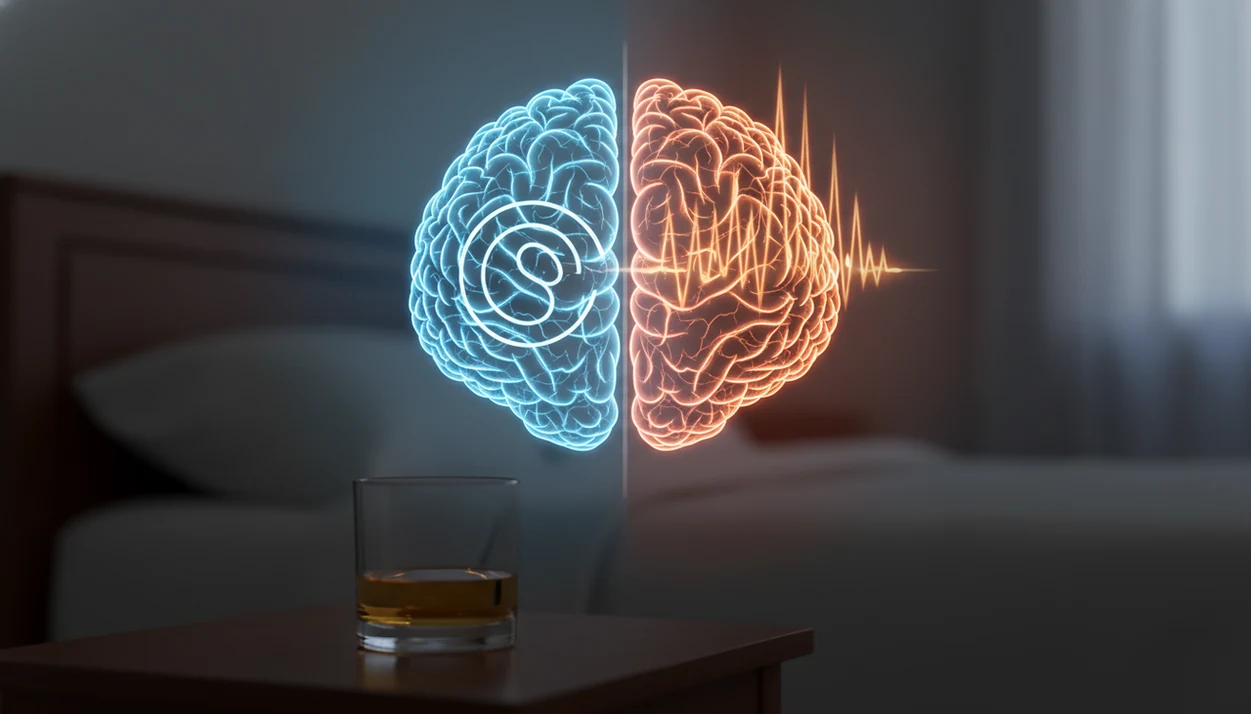
Alcohol can calm you at first because it boosts GABA, the brain’s “brake,” and suppresses glutamate, the brain’s “gas,” but the alcohol gaba glutamate rebound can later leave you anxious, wired, restless, and unable to sleep. This is why alcohol can feel like anxiety relief at night but create hangxiety, racing thoughts, and nervous system overdrive hours later.
Definition: Alcohol rebound anxiety is the anxious, wired, or agitated state that can appear as alcohol wears off and the brain overcorrects from alcohol’s short-term GABA boost and glutamate suppression.
Safety note: this article is educational and cannot diagnose withdrawal, alcohol use disorder, panic attacks, or medication interactions. If you have confusion, hallucinations, seizures, chest pain, severe shaking, or symptoms that feel unsafe, seek urgent medical care rather than trying to manage symptoms alone.
TL;DR
- Alcohol initially increases calming GABA activity and reduces stimulating glutamate activity, which can make anxiety feel temporarily quieter.
- As alcohol leaves your system, GABA function can drop while glutamate activity rebounds, creating hangxiety, racing thoughts, poor sleep, and a pounding-heart feeling.
- Repeated heavy drinking can train the brain toward stronger rebound symptoms, but cutting back is a brain-balance process rather than proof that you need alcohol to relax.
Alcohol GABA Glutamate Rebound in Plain English
Quick answer: Alcohol may feel calming at first because it increases inhibitory GABA signaling and dampens excitatory glutamate activity. As alcohol wears off, the brain can swing the other way, which may leave many people anxious, restless, shaky, or unable to sleep.
Key takeaways
- Hangxiety is often a rebound effect, not proof that something is permanently wrong.
- More drinks, faster drinking, and poor sleep may make rebound anxiety feel stronger.
- Caffeine, nicotine, and more alcohol can worsen the wired feeling for some people.
- Hydration, food, rest, light movement, and a calm environment may help symptoms pass.
- If you drink daily or heavily, cutting back suddenly can be medically risky.
- Tracking drinks, cravings, triggers, and next-day anxiety can reveal patterns.
Alcohol GABA glutamate rebound is the brain’s shift from short-term chemical calm to later overactivation. Alcohol presses the brake system through GABA and quiets the gas system by suppressing glutamate.
That first drink can feel like your shoulders finally drop. The noise softens. Then, hours later, the balance can flip. Less brake, more gas. You may wake with jitteriness, dread, racing thoughts, or that 4 a.m. ceiling-stare feeling.
The plain-English name is the wired-but-tired crash. Your body feels exhausted, but your nervous system acts like something urgent is happening.
This is not just guilt. Shame or memory-review can pile on, but alcohol rebound anxiety has a real neurochemical engine underneath it.
5 Alcohol Rebound Facts for Hangxiety
- Alcohol first boosts calming GABA and suppresses stimulating glutamate. That chemical shift is one reason a drink can feel relaxing or sedating at first.
- The rebound phase can move in the opposite direction. As alcohol clears, GABA function may drop while glutamate activity rises.
- Hangxiety is body alarm plus anxious thinking. Common symptoms include racing thoughts, poor sleep, shaky fingers over a phone screen, irritability, and nervous system overdrive.
- Repeated heavy drinking can change the baseline. The brain may down-regulate GABA systems and up-regulate glutamate pathways, making calm harder to reach naturally.
- Cutting back can feel uncomfortable at first. For many people, early anxiety during reduction reflects rebalancing, not proof that alcohol is necessary.
For alcohol rebound anxiety, reducing the trigger pattern is often more useful than debating whether the anxiety is “real,” because the body alarm is part of the rebound itself.
GABA and Glutamate Changes in the Nervous System
How alcohol rebound works: GABA is inhibitory, meaning it helps quiet neural activity. Glutamate is excitatory, meaning it increases activity and alertness. In everyday language, GABA is the brake and glutamate is the gas.
Alcohol acutely enhances GABA-A signaling and dampens NMDA-type glutamate signaling, mechanisms described in NIAAA's overview of alcohol and neurotransmitter systems (NIAAA). That can create sedation, lowered tension, and short-term relief. As alcohol clears, the brain may compensate in the other direction. Too little brake. Too much gas. The result can feel like restless legs, a tight chest, and a vague “I need something” feeling.
With repeated drinking, the brain may adapt further. Chronic adaptations can include a weaker GABA response and stronger glutamate tone. Human neuroimaging research has found excessive glutamatergic neurotransmission and reduced GABA function during early abstinence, which supports the idea that this rebound is measurable, not imagined.
For a broader brain-chemistry view, alcohol also affects reward and mood systems covered in alcohol and feel good chemicals.
GABA Glutamate Hangxiety Symptoms After Drinking
Why do I wake up anxious after drinking? A common reason is that alcohol wears off while your nervous system is rebounding toward higher activation.
The classic scene is waking at 3 to 4 a.m. with a pounding heart, dry mouth, and a sudden wave of dread. You felt sedated earlier, but the sleep was fragmented. Now the body is alert, even though the room is dark and nothing new has happened.
Symptoms can include racing thoughts, restlessness, shakiness, irritability, and an inability to relax. Shame can add fuel, especially if you replay texts or conversations. But shame alone does not fully explain the physical alarm state.
In a large 2015 survey of Dutch students, about 75% of drinkers reported hangover symptoms, and hangover risk rose sharply after estimated blood alcohol concentration passed about 0.11% to 0.12% (the NIH). If sleep disruption is your main clue, the pattern overlaps with why alcohol makes you tired.
Alcohol Nervous System Overdrive and Repeated Drinking
Alcohol nervous system overdrive can intensify when drinking becomes heavier or more frequent. Tolerance means the same amount of alcohol may feel less calming over time, even as the rebound cost rises.
The brain tries to keep balance. If alcohol repeatedly pushes GABA up and glutamate down, the brain may reduce sensitivity in calming pathways and increase excitatory tone. That can make baseline anxiety worse on sober days. The trap is obvious: drink again to feel normal, then meet the rebound later.
Postponed, not solved.
Per NIDA’s 2022 alcohol research summary, about 29.5 million people in the U.S. had alcohol use disorder. A 2022 psychiatric epidemiology study also reported that about 40.6% of people with past-year alcohol use disorder had a past-year anxiety or mood disorder.
Clinicians typically recommend medical assessment when anxiety, alcohol use, withdrawal symptoms, or mood symptoms start reinforcing each other. The most common medically supported way to reduce alcohol-related risk is a personalized reduction or abstinence plan combined with appropriate clinical support when dependence or withdrawal risk is present.
Alcohol Rebound Anxiety During Cutting Back
Alcohol rebound anxiety during cutting back can feel like being more anxious, wired, or emotionally raw at first. That discomfort can reflect nervous system recalibration, not proof that alcohol was treating the anxiety.
A lime wedge sinking in club soda can feel small, almost too small. But small replacement actions matter because they give the brain a new routine at the same decision point. If your old cue was the first drink after work, the new plan needs a concrete action, not just a promise.
Mild rebound discomfort is different from severe withdrawal. Confusion, seizures, hallucinations, severe shaking, chest pain, or unstable vital signs need urgent medical care.
A private tracker such as Me Quit can support craving logs, streaks, milestones, and drinking-reduction patterns. Use tracking to notice cue-routine-reward loops; do not use any app to self-diagnose withdrawal severity or decide whether medical care is needed.
More step-by-step reduction ideas are collected in the alcohol reduction guides.
How to Use This Information When Hangxiety Hits
When hangxiety hits, use the rebound model as a pause button: the feeling is real, but it is not automatically proof that something is wrong. Treat it as a nervous-system signal first, then decide what care or support is needed.
- Name the pattern. Say, “This may be alcohol rebound anxiety,” before you treat the dread, racing thoughts, or pounding heart as evidence.
- Support your body gently. Drink water and eat something simple if it is safe for you, such as toast, soup, fruit, or another food your stomach can tolerate.
- Skip the rescue drink. Avoid using another drink as a quick reset, because it may calm the alarm briefly while restarting the same rebound loop.
- Record the clues. Write down the trigger, amount you drank, sleep quality, timing, and symptoms so patterns become visible later.
- Choose medical help immediately. Seek urgent care for confusion, hallucinations, seizures, chest pain, severe shaking, unstable symptoms, or any withdrawal signs that feel unsafe.
Alcohol GABA Rebound Myths That Keep Anxiety Going
Myth 1: Alcohol treats anxiety because it feels calming at first. The first phase can feel soothing, but the later GABA-glutamate rebound can make anxiety louder.
Myth 2: Hangxiety is only guilt or overthinking. Memory review can sting, but a racing heart and wired body often come from rebound nervous system activation.
Myth 3: Only severe withdrawal causes rebound symptoms. Even social drinking can lead to poor sleep, early waking, and next-day agitation.
Myth 4: Another drink fixes the problem. It may quiet symptoms briefly, but it postpones the imbalance and can strengthen the loop.
Myth 5: GABA supplements or glutamate-related medications are simple DIY fixes. Gabapentin, withdrawal medications, and other GABA or glutamate-related treatments need clinician oversight, especially when alcohol use is regular or heavy.
For people comparing private tracking options, a best drink less app guide can help separate habit support from medical care.
When to Seek Medical Help
Seek medical help when symptoms move beyond mild hangxiety or when cutting back could trigger withdrawal. If your body feels unstable, unsafe, or hard to control, choose same-day medical advice or emergency care instead of waiting it out.
Heavy regular drinking can make sudden reduction risky because the nervous system may be adapted to alcohol’s presence. Clinician guidance is especially important if you take medications, are pregnant or could be pregnant, have a history of seizures, or live with panic disorder, depression, bipolar disorder, psychosis, trauma symptoms, or suicidal thoughts.
- Call emergency services now for seizures, hallucinations, severe confusion, fainting, chest pain, severe shaking, or symptoms that feel dangerous.
- Seek same-day assessment if anxiety comes with disorientation, repeated vomiting, escalating tremor, very high agitation, or you cannot sleep at all after heavy use.
- Contact a clinician before reducing if you drink heavily most days, have needed alcohol to stop shakes, or have had withdrawal symptoms before.
- Treat mild hangxiety differently when it is mainly dread, poor sleep, regret, and a racing heart that steadily improves; still get help if it worsens or feels unsafe.
Limitations
This page explains a common mechanism, but it cannot predict your exact reaction after drinking.
- Rebound timing and intensity vary by genetics, drinking pattern, sleep debt, mental health, medications, and other substances.
- Medications affecting GABA or glutamate require clinician oversight and are not do-it-yourself fixes.
- This page is educational. It does not diagnose alcohol use disorder, anxiety disorder, or withdrawal severity.
If symptoms feel intense, escalating, or unsafe, choose medical support over another self-test.
FAQ
Does alcohol increase GABA in the brain?
Yes. Alcohol acutely enhances GABA signaling, which contributes to relaxation, lowered tension, and sedation while drinking.
Does alcohol lower glutamate while you are drinking?
Yes. Alcohol temporarily suppresses glutamate activity, which reduces excitatory signaling and can make the brain feel quieter at first.
What causes hangxiety after drinking alcohol?
Hangxiety can come from GABA-glutamate rebound, poor sleep, stress hormones, dehydration, low blood sugar, and anxious thoughts. The body alarm is not always explained by regret alone.
Why do I wake up anxious after drinking alcohol?
Early-morning anxiety after drinking often happens as alcohol wears off, sleep becomes fragmented, and the nervous system rebounds into higher activation. This can cause a pounding heart, dread, and racing thoughts.
How long does alcohol rebound anxiety last?
Mild alcohol rebound anxiety may improve within a day, but heavier or regular drinking can lead to longer symptoms. Exact timelines vary by drinking pattern, health, sleep, and withdrawal risk.
Can alcohol make anxiety worse over time?
Yes. Alcohol can reduce anxiety briefly, but repeated rebound can train the nervous system toward more baseline anxiety and stronger cravings.
Do GABA receptors heal after you stop or reduce drinking?
Brain systems can rebalance over time with reduced drinking or abstinence, but receptor and nervous system timelines vary. No app, supplement, or article can promise an exact healing schedule.
Is hangxiety the same as alcohol withdrawal?
Hangxiety can overlap with mild withdrawal-like rebound symptoms, but it is not always the same as alcohol withdrawal. Severe shaking, confusion, hallucinations, seizures, chest pain, or unstable symptoms require medical help.