Why Alcohol Can Trigger Cortisol Spikes and 3 AM Wake-Ups
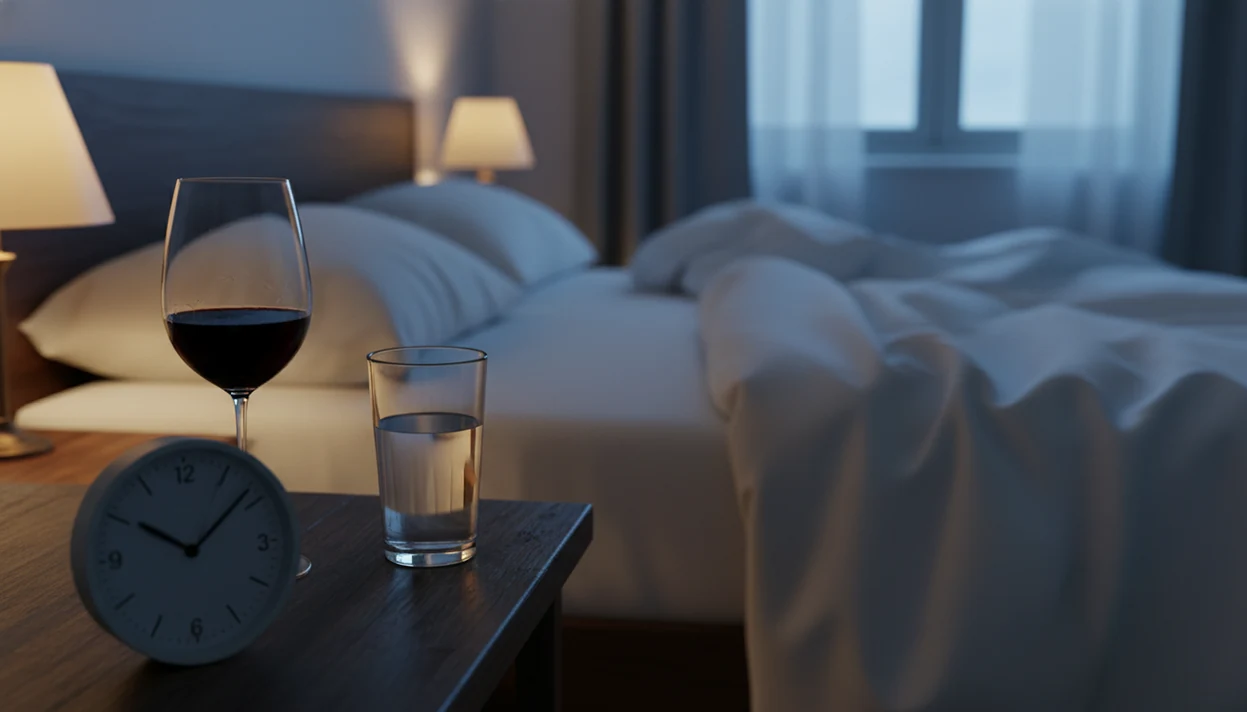
Alcohol can trigger 3 AM wake-ups because its sedating effect wears off just as cortisol naturally starts rising, sleep becomes lighter, and the nervous system becomes more activated. For many people, an alcohol cortisol 3am wake up feels like anxiety, sweating, a racing heart, or suddenly being wide awake.
Scope: This guide explains a common alcohol-related sleep pattern, not a diagnosis. If wake-ups include chest pain, choking, confusion, severe tremors, or withdrawal symptoms, seek medical care.
TL;DR
- Cortisol normally begins rising around 2–3 AM, so alcohol-related sleep disruption often shows up in that early-morning window.
- Alcohol may help you fall asleep faster, but it fragments sleep and increases awakenings in the second half of the night.
- Reducing evening alcohol, tracking wake-ups, and leaving 4–6 alcohol-free hours before bed can reduce 3 AM anxiety and sweating for many people.
Alcohol cortisol 3 AM wake-up pattern at a glance
Quick answer: Alcohol can cause 3 AM wake-ups because it often shifts from being sedating to stimulating as it is metabolized. During the second half of the night, lighter sleep, rising cortisol, blood sugar changes, and nervous system activation may make anxiety, sweating, or a racing heart more noticeable.
Key takeaways
- A 3 AM wake-up after drinking is often a rebound effect, not proof that something is permanently wrong.
- Even moderate alcohol can make sleep feel shorter, lighter, and less restorative.
- Anxiety after drinking may come from both brain chemistry changes and the stress of being awake at night.
- Cutting off alcohol earlier may help some people, but reducing total intake is usually more reliable.
- Frequent sweats, shaking, vomiting, chest pain, or confusion need medical attention.
- If you drink daily or heavily, do not stop suddenly without medical guidance because withdrawal can be dangerous.
- Alcohol can make sleep arrive faster, but it often makes the second half of sleep lighter and more broken.
- Cortisol normally starts rising around 2–3 AM, before it peaks after waking.
- Waking around 3 AM after drinking can feel like anxiety, sweating, dry mouth, a racing heart, or restless thoughts.
- The pattern is common and does not automatically mean something dangerous is happening.
- The useful question is not “What is wrong with me?” It is “What did my body just learn from that drink timing?”
The after-dinner chair facing the open window can feel harmless at 9 PM. By 3 AM, the same evening can show up as a pounding chest and a mind replaying every sentence from the night before.
One rough night is data.
Alcohol cortisol spike timing across the overnight HPA axis
The HPA axis is the body’s stress-timing system, and it helps control the daily cortisol rhythm that makes people more wake-prone in the early morning. HPA stands for hypothalamic-pituitary-adrenal axis. In plain English, it is the brain-body message loop that helps decide when you should be alert.
Under typical conditions, cortisol begins rising between about 2–3 AM and peaks 30–45 minutes after waking, a pattern described in research on the cortisol awakening response the NIH. Alcohol can overlap with that rise by changing sleep depth, temperature regulation, and sympathetic activation. That “sympathetic” piece means fight-or-flight tone. Tight chest. Restless legs. The blunt feeling of “I need something.”
Alcohol metabolism can also make normal stress signals feel louder. However, not every 3 AM wake-up is a lab-confirmed alcohol cortisol spike. The most accurate explanation is usually a timing collision: alcohol wearing off, lighter sleep, and the body’s normal pre-wake cortisol rhythm.
3 AM anxiety after drinking: sweats, racing heart, and regret loops
Why am I waking up at 3 AM after drinking? You may be waking because alcohol’s sedating effect has worn off, your sleep is lighter, and your nervous system is more activated than it was when you fell asleep.
That rebound can feel surprisingly physical. Sweating, a racing heart, dry mouth, stomach sourness, and jumpy thoughts can all arrive together. The mind often adds a regret loop: “Why did I say that?” or “I already messed up, so why not keep going tomorrow?”
That does not automatically mean you have an anxiety disorder. It can happen in people who do not feel anxious during the day. For alcohol hormones anxiety patterns, the practical move is to map the cue, routine, and reward. If the bartender reaches for the usual bottle before you ask, that is a decision point worth noticing.
Alcohol melatonin cortisol effects on REM sleep architecture
- Sleep architecture means the pattern of deep sleep, REM sleep, lighter sleep, and awakenings across the night.
- A review of experimental studies found that alcohol before sleep reduces REM sleep in the first half of the night and increases fragmentation later in a dose-dependent way the NIH.
- Alcohol can interfere with melatonin and circadian signaling, so the body gets mixed messages about sleep timing.
- Later-night REM-heavy sleep is naturally easier to interrupt, especially when alcohol is being metabolized.
- Per the CDC, about 27% of U.S. adults report trouble falling or staying asleep most nights or every night.
Alcohol melatonin cortisol disruption explains why “I slept eight hours” may still feel like a bad night. The clock says enough. Your body disagrees. If fatigue lingers even after cutting back, the pattern may overlap with alcohol chronic fatigue.
Alcohol hormones anxiety loop: cortisol, blood sugar, and cravings
Late drinking can alter overnight blood sugar regulation, especially if dinner was light or the drinks were sweet. A dip can feel like anxiety before your brain has a clear story for it. Heart fast. Mouth dry. Hunger weirdly sharp.
Cortisol, wakefulness, hunger, carb cravings, and morning guilt can then stack together. By breakfast, the brain may ask for a quick reward, not a thoughtful plan. That is how a rough night turns into a pastry, a promise, and then another drink later.
For many people, tracking drink timing and 3 AM wake-ups is easier than guessing because it turns shame into a trigger map. If cravings are part of the loop, the longer pattern is covered in alcohol cravings triggers and coping.
6 steps to reduce alcohol cortisol 3 AM wake-ups
How to use a reduction plan for alcohol-related 3 AM wake-ups:
- Set a bedtime cutoff. Leave 4–6 alcohol-free hours before sleep when possible.
- Reduce quantity. Try one fewer drink than usual before changing everything at once.
- Hydrate and eat normally. Add water and a steady meal, not a punishment plan.
- Log wake-ups. Note drink count, last-drink time, bedtime, wake time, sweats, and anxiety.
- Review patterns weekly. Look for the nights where the body gave you a tiny win.
- Adjust the next decision point. Change the first drink, the last drink, or the setting.
Tools like Me Quit can support private mindful reduction by keeping drink timing, cravings, streaks, and milestones in one place. The most common practical way to reduce alcohol-related sleep disruption is to reduce evening alcohol exposure and protect the last several hours before bed.
Alcohol cortisol spike versus sleep apnea, perimenopause, and stress
Alcohol rebound is one possible cause of 3 AM waking, but it is not the only one. Sleep apnea, perimenopause, reflux, medications, stress, and insomnia can all create similar wake-ups.
| Possible cause | What it may feel like | Clue to watch |
|---|---|---|
| Alcohol rebound | Sweats, racing heart, anxious thoughts | Worse after later or heavier drinking |
| Sleep apnea | Choking, gasping, morning headache | Snoring or witnessed pauses |
| Perimenopause | Heat surges, night sweats | Cycle changes or daytime hot flashes |
| Medications | Alertness, vivid dreams | Starts after a dose change |
| Stress or insomnia | Awake with problem-solving thoughts | Happens even on dry nights |
A systematic review and meta-analysis found alcohol consumption was associated with about a 25% higher risk of sleep apnea the NIH. Research also links insomnia with measurable HPA-axis and cortisol differences the NIH. Clinicians typically recommend medical evaluation for choking, chest pain, severe sweats, withdrawal symptoms, or persistent insomnia.
When to seek medical help for 3 AM wake-ups after alcohol
Seek medical help right away if 3 AM wake-ups after alcohol include chest pain, confusion, choking or gasping, or severe withdrawal signs such as intense shaking, agitation, hallucinations, or seizures. Also get evaluated if the pattern keeps happening, feels unsafe, or appears even when you have not been drinking.
Daily heavy drinking is different from an occasional rough night. Stopping suddenly can trigger dangerous withdrawal for some people, so tapering or quitting may need a clinician’s guidance rather than a private willpower test.
- Call emergency services if chest pain, choking, confusion, seizure-like symptoms, or severe withdrawal signs appear.
- Contact a clinician if you drink heavily most days and want to cut down or stop.
- Ask about other causes when symptoms include snoring, witnessed breathing pauses, morning headaches, hot flashes, cycle changes, reflux, medication changes, or persistent insomnia.
- Track the pattern by noting drink timing, wake time, sweating, anxiety, and dry nights, then bring that record to care.
- Treat tracking as evidence, not a diagnosis. A log can support better questions, but it cannot prove a cortisol problem on its own.
Tracking alcohol hormones anxiety patterns
Logging drinks, timing, sleep, cravings, and wake-ups can reveal patterns faster than memory can. Memory gets foggy after a bad night. A simple note at 3:17 AM is often more useful than a long self-lecture at noon.
Me Quit offers a private app-based path for people who want to drink less while also working on smoking or vaping goals. That matters because habits often travel together. The cigarette urge after the first beer is not random; it is a cue tied to a routine and reward.
Good tools in the Me Quit mequit addiction recovery hub for quit smoking, stop vaping, quit drinking, and mindful alcohol reduction help people track triggers, streaks, milestones, and cravings, not diagnose hormone problems or replace medical care. For app comparisons, the best drink less app guide can help you choose a tracking style.
Limitations
There is no single guaranteed explanation for every 3 AM wake-up after alcohol. The pattern is useful, but it is not a diagnosis.
- Sleep apnea, medications, perimenopause, reflux, trauma, and mental health conditions can contribute.
- Heavy or daily alcohol use may require medical guidance before stopping abruptly.
- Wearable sleep and stress scores can be useful, but they are not diagnostic tests.
Reset the plan.
If you are reducing alcohol and cravings intensify, it may help to understand how long alcohol cravings last so one rough evening does not become the whole story.
FAQ
Why do I wake up at 3 AM after drinking alcohol?
Alcohol can wear off as cortisol naturally begins rising and sleep becomes lighter. That overlap can trigger waking, anxiety, sweating, or a racing heart.
Does alcohol raise cortisol at night?
Alcohol can affect the stress system and may contribute to cortisol-related arousal. It is more accurate to say alcohol can disrupt normal overnight cortisol rhythm than to assume every wake-up is a measured spike.
Can alcohol cause night sweats around 3 AM?
Yes, alcohol can contribute to night sweats through rebound arousal, temperature changes, and fragmented sleep. Severe or repeated sweats should be discussed with a clinician.
Does alcohol lower melatonin or disrupt sleep hormones?
Alcohol can disrupt melatonin signaling and circadian timing. That can make the second half of sleep lighter and easier to interrupt.
Why do I feel anxious the morning after drinking?
Morning anxiety after drinking can come from rebound arousal, poor sleep, dehydration, blood sugar changes, and regret loops. It can happen without a diagnosed anxiety disorder.
How long before bed should I stop drinking alcohol?
A practical target is to stop alcohol 4–6 hours before bedtime when possible. This gives the body more time to metabolize alcohol before the lighter second half of sleep.
Can quitting or reducing alcohol improve sleep?
Reducing alcohol often improves sleep quality over time, especially by lowering late-night awakenings. Sleep may still feel uneven at first while routines and stress rhythms adjust.
When are 3 AM wake-ups after drinking serious?
Seek medical help for chest pain, choking or gasping, confusion, severe withdrawal symptoms, or persistent insomnia. Daily heavy drinking should be reduced with medical guidance rather than stopped abruptly.