
Why Alcohol Blackouts Can Leave You Anxious the Next Day
Quick answer: Alcohol blackout anxiety next day happens because alcohol can stop the hippocampus from saving memories while your brain and body still go through stress, sleep disruption, inflammation, and neurochemical rebound. You may wake up with dread, panic, shame, or a sense that something is wrong even when parts of the night were never recorded as memory.
> Definition: An alcohol blackout is a gap in memory caused by alcohol disrupting the hippocampus’s ability to consolidate new experiences into long-term memories.
TL;DR
- Blackouts are memory-formation failures, not ordinary forgetting or proof that the events are recoverable if you try harder.
- Hangover anxiety after blackout drinking is driven by alcohol’s rebound effects on stress chemistry, poor sleep, physical discomfort, and uncertainty about what happened.
- The safest way to prevent next-day blackout anxiety is to avoid the fast, heavy drinking patterns that cause blackouts; a private drinking log can help some adults notice risky patterns earlier.
At-a-glance facts about alcohol blackout anxiety next day
Quick answer: Next-day anxiety after an alcohol blackout often happens because the brain may fail to store parts of the night while the body still experiences alcohol’s stress effects. Poor sleep, blood-sugar changes, dehydration, inflammation, and neurochemical rebound can leave many people feeling panic, dread, or shame even without clear memories.
Key takeaways
- A blackout is a memory-recording failure, not simply passing out.
- Feeling anxious the next day does not prove you did something wrong.
- Patchy memories can make the brain fill gaps with worst-case scenarios.
- Hydration, food, rest, and a calm environment may reduce symptoms.
- Repeated blackouts are a sign to reduce risk and consider professional support.
- Heavy daily drinking may require medical guidance before cutting down.
- Alcohol blackout anxiety next day means waking up anxious, panicky, or ashamed after drinking and finding missing chunks in your memory.
- Blackouts are hippocampus disruptions, not intentional forgetting. The brain may never have stored the missing events.
- A person can seem awake during a blackout. They may talk, walk, text, pay a tab, flirt, argue, or leave a party while forming no durable memory.
- The anxiety has several drivers: GABA and glutamate rebound, cortisol, poor REM sleep, dehydration, inflammation, low blood sugar, and uncertainty about what happened.
- Even one blackout is useful information. It signals a risky drinking pattern, not a moral defect.
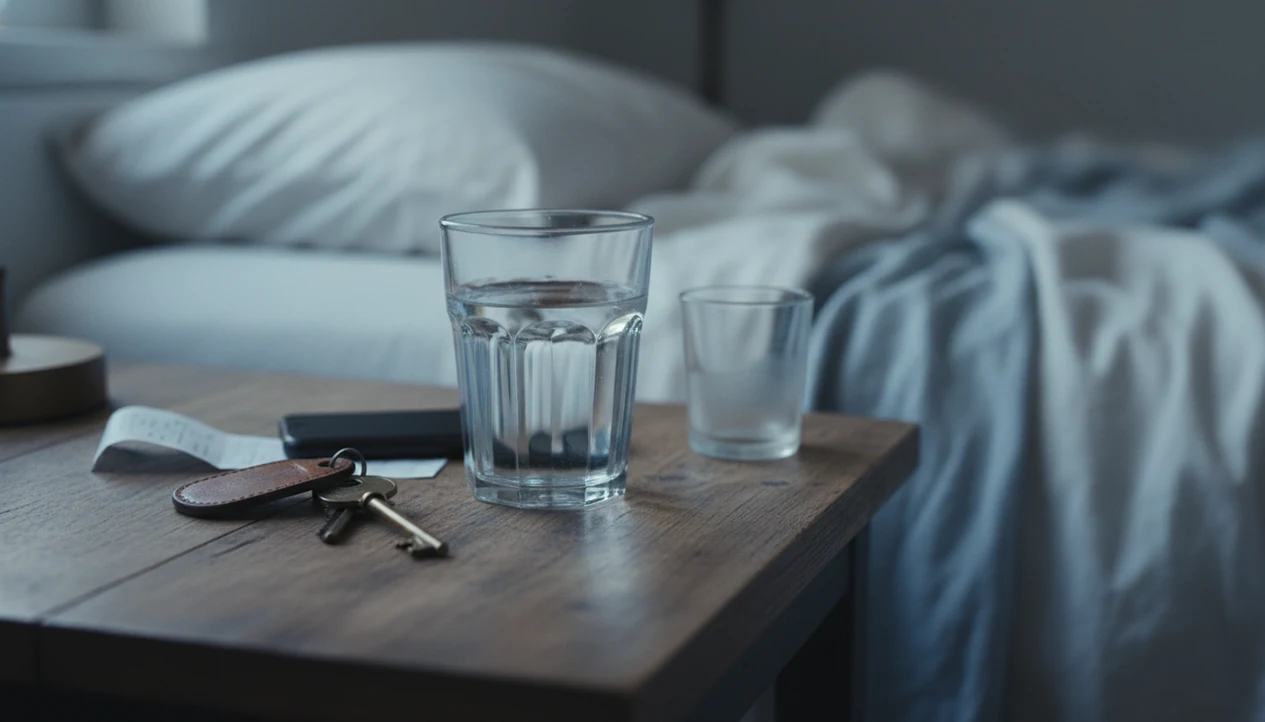
The scariest part is often ordinary-looking evidence. A sent message. A card charge. A photo you don’t remember taking. That gap can make the brain start filling blanks with worst-case stories.
The pocket check is real.
Medical disclaimer and article scope
This article is educational only. It can help you understand alcohol blackout anxiety next day, but it is not a medical diagnosis, treatment plan, or substitute for a clinician who knows your history.
Blackout anxiety can overlap with panic attacks, trauma responses, medication effects, sleep loss, alcohol withdrawal, alcohol use disorder, and other medical or mental-health conditions. A missing memory also means there may be real-world safety questions that deserve calm, practical attention instead of endless self-interrogation.
If you are unsure what to do, use a safety-first order:
- Seek urgent care now for chest pain, severe confusion, seizure, serious vomiting, head injury, loss of consciousness, suicidal thoughts, or signs of alcohol withdrawal.
- Get immediate support if there is any chance of assault, unsafe sex, violence, or being unable to account for how you got home.
- Contact a clinician if blackouts repeat, drinking feels hard to control, anxiety spikes after alcohol, or you are using alcohol to manage fear, sleep, or social situations.
- Consider addiction-specialist evaluation when blackouts keep happening despite promises to cut back.
One blackout is information. Repeated blackouts are a pattern worth taking seriously.
Alcohol blackout mechanism in the hippocampus
Alcohol blackouts happen when a high blood alcohol concentration interrupts hippocampus-based memory consolidation while consciousness and behavior can continue. The hippocampus helps turn short-term experiences into long-term memories. When alcohol rises fast, that transfer can break down.
NIAAA describes blackouts as alcohol-related memory gaps that can happen to anyone who drinks enough, especially when blood alcohol climbs quickly. Shots, drinking on an empty stomach, drinking games, and high-intensity drinking all raise the risk. A person may still respond to music, jokes, a bartender, or a ride-share alert, but the night is not being saved properly.
Fragmentary blackout memory gaps
Fragmentary blackouts are partial gaps. A reminder from a friend, receipt, or location history may bring back flashes, but the recall can still feel patchy.
En bloc blackout memory loss
En bloc blackouts are larger blocks of missing time. If the memory was never encoded, repeated checking usually cannot make it return.
Alcohol hippocampus memory loss process
Alcohol does not simply erase a completed memory; during a blackout, it can stop the memory from being encoded in the first place. Memory is a process: attention, short-term encoding, consolidation, and later retrieval.
Think of it like a phone recording that never started. The room still happened. People still spoke. But there may be no file to replay.
During a blackout, other brain systems may keep running. Speech, movement, habits, emotional reactions, and familiar routines can continue. That is why someone may get home, use their keys, or send a short text without remembering it later. The behavior was possible; the memory record was not.
Some flashes may return because small pieces were encoded before or between blackout periods. Other gaps may stay blank. Hypnosis, therapy, journaling, or asking the same question ten times cannot reliably recover experiences that were never stored. For related body effects from heavy drinking, our alcohol reduction guides cover brain and body patterns in plain language.
Hangover anxiety after blackout drinking
Why am I anxious after a blackout if I cannot remember anything? Because alcohol can calm the nervous system for a few hours, then leave behind rebound arousal as it clears from the body.
Alcohol increases GABA-related calming effects and affects glutamate, the brain’s excitation system. The next day, that balance can swing the other way. Cortisol may be higher. Heart rate can feel jumpy. Nausea, dehydration, low blood sugar, and a headache behind the eyes at dusk can all read as danger to an already tired brain.
Sleep makes it worse. Alcohol may knock you out, but it disrupts REM sleep and normal sleep architecture. That creates a threat-biased morning state, where a neutral phone notification feels like evidence that something bad happened.
This is biology and rumination colliding. You may also feel guilt, embarrassment, or fear about unknown events, but the panic is not “just overthinking.” For many people, reducing heavy drinking improves anxiety more reliably than trying to reason with a hungover brain.
Body stress signals after an alcohol blackout
The phrase “body remembers” can be useful, but it needs care. It does not mean every missing memory is stored somewhere waiting to be unlocked.
Your nervous system can still carry stress after heavy drinking. Maybe there was poor sleep, vomiting, conflict, unsafe travel, sex you are unsure about, or shame from waking up with no clear timeline. Even without a conscious memory, the body may register strain through a tight chest, restless legs, stomach upset, or that blunt “I need something” feeling.
Emotional residue can come from real physical stress plus incomplete information. To reduce spiraling, check objective facts once: texts, bank activity, ride history, location history, and one or two trusted friends. Then stop the loop if nothing new is appearing.
Facts first. Rumination later, if needed.
Self-compassion is not letting yourself off the hook. It is how you stay steady enough to repair what is real and stop punishing yourself for blanks.
Blackout drinking risks and next-day anxiety warning signs
- Blackouts are common in some heavy-drinking groups, but common does not mean harmless.
- A JAMA Psychiatry study found that about 50% of heavy-drinking U.S. college undergraduates reported at least one alcohol-induced blackout in the past year. Source: https://jamanetwork.com/journals/jamapsychiatry
- An NIAAA review reported that 40% of 772 college students had at least one blackout in the previous year, and 9.4% reported six or more. Source: https://pubs.niaaa.nih.gov/publications/arh27-2/186-196.htm
- NIAAA warns that blackouts are linked with a drastically increased risk of injuries and other harms. Source: https://www.niaaa.nih.gov/publications/brochures-and-fact-sheets/alcohol-induced-blackouts
- Red flags include repeated blackouts, drinking faster than planned, panic after drinking, injuries, missing money, risky sex, driving risk, or needing alcohol to manage social anxiety.
The warning sign is not “you are a bad person.” The warning sign is that your plan is not protecting you once alcohol is in the room. That matters at a party cooler packed with cans, but it also matters at dinner when the second drink quietly becomes the fifth.
If blackout anxiety is paired with racing heart or pressure, learn how alcohol can affect cardiovascular strain in alcohol blood pressure heart disease.
Next-day steps for hangover anxiety from a blackout
Use the next morning for stabilization, not interrogation. You need facts, fluids, food, and a slower nervous system.
- Hydrate first. Sip water or an electrolyte drink instead of chugging.
- Eat something steady. Aim for carbs plus protein if your stomach allows it.
- Rest and reduce stimulation. Keep light, noise, scrolling, and caffeine low if they worsen panic.
- Breathe slowly for two minutes. Longer exhales can tell the body the immediate threat has passed.
- Check facts once. Look at messages, receipts, ride history, and trusted friends, then pause the reassurance loop.
- Repair what is confirmed. Apologize or make amends if facts show harm, but don’t invent guilt for unknown events.
Get urgent help for chest pain, severe confusion, injury, suicidal thoughts, possible assault, loss of consciousness, or alcohol withdrawal symptoms.
Tools like Me Quit can support adults who want to drink less by tracking cravings, patterns, streaks, and milestones. Phone-based alcohol tools should make the next decision point clearer, not replace medical care or crisis support.
When to seek medical or crisis help
Seek medical or crisis help right away if the blackout is paired with danger, severe symptoms, or any chance you are not safe. Anxiety can wait; chest pain, seizures, confusion, unconsciousness, serious injury, or suicidal thoughts cannot.
Use a safety-first order:
- Call local emergency services if there is chest pain, trouble breathing, seizure, severe confusion, repeated vomiting, head injury, loss of consciousness, or someone cannot be awakened.
- Get urgent support if there may have been assault, violence, unsafe sex, an injury you cannot explain, or any risk that you drove or rode with an impaired driver.
- Watch for withdrawal signs such as shaking, sweating, fast heartbeat, agitation, hallucinations, worsening anxiety, or seizures, especially if you drink heavily or daily. These can need medical supervision.
- Contact a crisis line or trusted emergency contact if you might hurt yourself, feel unsafe alone, or cannot slow the panic enough to make safe choices.
- Talk with a clinician or addiction specialist if blackouts repeat, drinking feels out of control, or you keep promising yourself it will not happen again.
This is not overreacting. It is choosing the safest next step while your memory and nervous system are unreliable.
Prevention plan for alcohol blackout anxiety episodes
The only reliable way to prevent blackout anxiety is to avoid the drinking levels and speed that cause blackouts. Once your blood alcohol rises fast enough, memory protection is no longer a mindset problem.
Try a simple if-then plan before you go out. If shots start, then switch to a nonalcoholic drink. If you feel pressure to keep up, then leave earlier. Set a drink limit before the first pour, eat beforehand, pace drinks, avoid drinking games, and alternate alcohol with sparkling water in a rocks glass.
After a blackout, consider a 72-hour reset. Watch sleep, mood, cravings, stomach symptoms, and anxiety without alcohol. The pattern often gets clearer by day three.
Tracking can also show links between places, people, emotions, and drink types. A bar patio may be different from a quiet meal. A private alcohol-reduction tracker can help you log cues, cravings, drinking days, streaks, and milestones; it cannot reconstruct missing memories or diagnose alcohol use disorder.
For adults comparing private limit-setting tools, the best drink less app guide explains what to look for.
Limitations
- Mindful drinking and tracking may help some adults reduce risk, but repeated dangerous blackouts or severe alcohol withdrawal may require medically supported care.
- Anxiety after drinking can overlap with panic disorder, social anxiety, trauma, medication interactions, or alcohol use disorder. Don’t self-diagnose from one article.
- Clinicians typically recommend medical evaluation when blackouts are repeated, injuries occur, withdrawal symptoms appear, or drinking feels hard to control.
Alcohol can also affect nutrition and recovery over time; alcohol and b vitamin deficiency explains one common pathway.
FAQ
Why do alcohol blackouts happen?
Alcohol blackouts happen when blood alcohol rises high enough to disrupt the hippocampus’s role in memory consolidation. The person may stay conscious, but the brain may not store the experience as long-term memory.
Can blackout memories come back later?
Fragmentary blackout memories may sometimes return when a cue fills in part of the timeline. Memories that were never encoded may be permanently unavailable.
Why am I anxious after an alcohol blackout?
Anxiety after an alcohol blackout can come from neurochemical rebound, poor sleep, dehydration, nausea, low blood sugar, and uncertainty about what happened. Guilt and rumination can add to the biological anxiety.
Is hangxiety after drinking a withdrawal symptom?
Hangxiety can overlap with alcohol rebound or mild withdrawal, especially after heavy drinking. Severe withdrawal symptoms, confusion, seizures, hallucinations, or worsening physical symptoms need urgent medical care.
Can my body remember stress from a blackout?
The body can show stress responses after a blackout through tension, panic, nausea, or fatigue even when conscious memory is missing. That does not mean all missing memories are stored somewhere.
Are alcohol blackouts dangerous?
Yes, alcohol blackouts increase the risk of injury, unsafe decisions, assault, driving risk, and other harms even if the person seemed awake. Urgent help is needed after injury, possible assault, severe confusion, suicidal thoughts, or withdrawal symptoms.
Do alcohol blackouts mean I have alcoholism?
Alcohol blackouts do not automatically mean alcohol use disorder, and they can happen to anyone who drinks enough. Repeated blackouts are a warning sign to reassess drinking and consider professional support.
How do I stop blacking out when I drink?
The safest prevention is avoiding fast, heavy drinking that raises blood alcohol quickly. Set limits, avoid shots, eat first, alternate nonalcoholic drinks, track triggers in a private log or app, cut back, or seek medical care if stopping feels difficult.