
How to Stop Drinking at Home Without Ignoring Withdrawal Risk
Start with safety
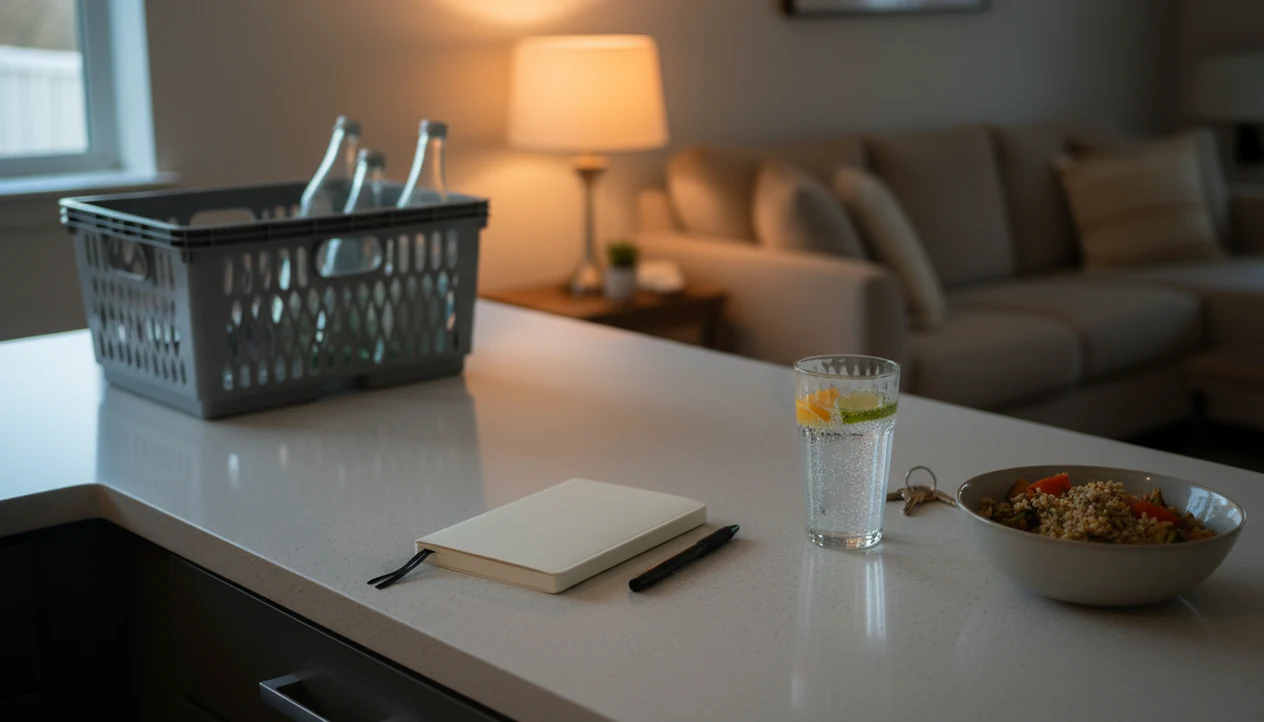
To stop drinking at home, first check your withdrawal risk. Heavy daily drinking, morning drinking, past withdrawal, or seizures require medical advice before you stop. If your risk is low, remove easy access to alcohol, plan the first two evening hours, eat before cravings start, prepare another drink, and record each urge, trigger, and response.
The hardest moment may be 5:40 p.m. in the kitchen, 8 p.m. on the couch, or the hour before bed. Home drinking becomes tied to rooms, times, feelings, and routines, so a useful plan changes those conditions before the usual pour.
Safety comes before habit change. Alcohol withdrawal can intensify several hours after the last drink, even if the first evening feels manageable. A home plan needs clear limits, support, and a way to get medical help quickly if symptoms appear.
Make tonight's plan before the usual drinking hour
The safest first move is to check withdrawal risk before you remove alcohol or set a hard stop date. If you may be dependent, call a clinician first, because abrupt stopping can be dangerous.
For a lower-risk first night, keep the plan concrete: remove alcohol from the house, eat dinner earlier than usual, stock alcohol-free drinks, plan one craving response, and track what happens. The weeknight pour after laptop shutdown is a cue, not a character flaw.
NIAAA survey data found that 37% of U.S. adult drinkers reported drinking 2 to 3 days per week, and 19% reported drinking on 4 or more days per week, so frequent drinking patterns are common. A private craving log can support pattern spotting, streaks, milestones, and mindful alcohol reduction without turning the night into a public announcement.
Is it safe for you to stop drinking at home?
Quitting at home is not safe for everyone, especially when the body has adapted to daily alcohol. Do this safety check before you try to stop drinking alone.
- Heavy daily drinking, morning drinking, or drinking to stop shakes can signal withdrawal risk.
- Prior withdrawal shakes, sweating, hallucinations, seizures, or delirium tremens are medical red flags.
- Pregnancy, serious mental illness, liver disease, and major medical issues call for professional guidance first.
- Abrupt stopping can trigger dangerous withdrawal in dependent drinkers; one review reports about a 3 in 10 risk of clinically significant withdrawal symptoms in severe alcohol use disorder if drinking stops suddenly the NIH.
- Confusion, seizures, hallucinations, chest pain, severe dehydration, or uncontrollable shaking needs emergency care.
Dependence, past seizures, pregnancy, or serious illness changes the plan: arrange a medical assessment before attempting alcohol detox. Don’t tough it out in a locked bathroom.
The first 48 hours can carry the greatest withdrawal risk
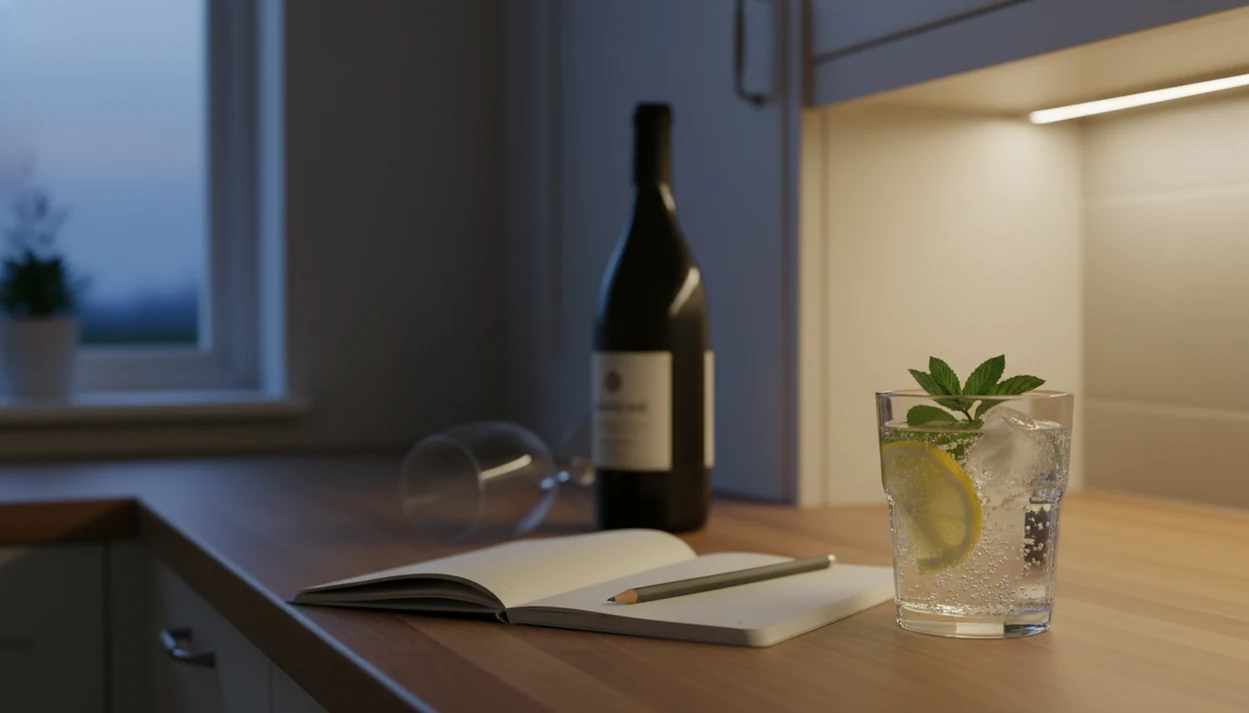
Alcohol withdrawal can begin 6 to 12 hours after the last drink. Symptoms may include anxiety, insomnia, nausea, sweating, a rapid heartbeat, shaking, hallucinations, confusion, or seizures. Official guidance says symptoms are often worst during the first 48 hours and generally improve over 3 to 7 days. Sleep disruption can continue longer and may take about a month to settle.
If a clinician approves a home detox plan, ask who will check on you, how often contact should happen, which symptoms require urgent care, and how you will get there. Tell a trusted person when your last drink was, keep a charged phone nearby, and arrange transportation. Feeling well immediately after stopping does not show that the risk has passed. See NHS guidance on alcohol dependence and withdrawal and NHS alcohol treatment guidance.
Why certain rooms and times trigger a drink
Home drinking habits run on cue-routine-reward loops: a cue starts the urge, the drink becomes the routine, and short relief becomes the reward. The couch, kitchen, TV, stress, dinner, loneliness, and bedtime can all become alcohol cues.
Alcohol can feel calming fast, but the payback often arrives later. Sleep gets lighter, anxiety rebounds, and the same room can feel more strongly linked to drinking tomorrow. That is habit learning, not weakness.
Environment design usually beats willpower because it lowers decision fatigue before the craving window opens. Fewer cues, easier substitutes, and visible progress make the next small step easier. In the U.S., about 29.5 million people aged 12 or older had alcohol use disorder in the past year, according to NIAAA’s 2022 figures. For many readers, the first useful change is simply not sitting in the old drinking chair at 8 p.m.
A six-step reset for nightly drinking
Use this home reset for abstinence or mindful reduction. The point is to make tonight easier before the craving argues back.
- Set a clear goal: Choose no alcohol tonight, or set a drink limit before the evening starts.
- Remove or reduce access: Clear visible bottles, avoid the liquor aisle, or change the route home.
- Plan the first craving window: Eat before the usual drinking time, then do a 10-minute walk or shower.
- Log cravings and drinks: Note the time, trigger, intensity, and whether you drank.
- Review the morning result: Check sleep, mood, money saved, and what made the night easier.
- Reset the next evening: Move furniture, keep alcohol-free drinks visible, and adjust the plan.
For nightly drinkers, planning the first two evening hours is often easier than promising a whole new life because it targets the strongest cue window first. If sleep is the main reason you want change, our guide to quit drinking for better sleep goes deeper.
Call 911 for a seizure, hallucinations, severe confusion, severe shaking, chest pain, or rapidly worsening symptoms. If you drink heavily every day, drink in the morning, have had withdrawal before, are pregnant, or have serious medical or mental health conditions, contact a clinician before reducing or stopping.
How to stop drinking or drink less at home with clear limits
If full abstinence is not your immediate goal, decide what drinking less means before the evening begins. This approach is not appropriate for managing physical dependence without medical guidance. Sudden reduction can be dangerous for someone with morning shakes, sweating, nausea, prior withdrawal, hallucinations, or seizures.
Set the week up before cravings start
- Write down a weekly limit and choose specific alcohol-free days.
- Keep alcohol out of sight or out of the house on nights when you do not plan to drink.
- Buy single servings rather than bulk packs, and measure pours instead of estimating.
- Eat before your usual drinking time. If you plan to reduce rather than stop, delay the first planned drink by 20 to 30 minutes.
- Record every drink, craving, alcohol-free evening, and alternative you tried.
Map home alcohol triggers by room and time
| Cue | Urge | Response to try |
|---|---|---|
| Kitchen while cooking | Wine at 6 p.m. | Eat a snack and open a nonalcoholic drink first |
| Couch during TV | Beer after the opening credits | Change seats or take a 10-minute walk |
| Home office after work | Reward drink at laptop shutdown | Text a support person and leave the room |
| Bedroom before sleep | Drink to feel drowsy | Shower, dim the lights, and use a consistent bedtime cue |
A useful log is specific: “Home office, 5:40 p.m., urge 7 out of 10, seltzer and a 10-minute walk.”
Drinking less can reduce alcohol-related harm, but it does not make self-managed withdrawal safe. CDC guidance on drinking less supports setting concrete limits and tracking intake. Contact a clinician before cutting down if you drink heavily every day, drink in the morning, or have withdrawal symptoms between drinks.
Measure the alcohol, not just the number of glasses
A U.S. standard drink contains about 14 grams of pure alcohol. That is roughly 12 ounces of 5% beer, 5 ounces of 12% wine, or 1.5 ounces of 40% spirits. A large wine glass, strong beer, or generous home pour may contain more than one standard drink.
Measure your usual pour once rather than assuming one glass equals one drink. Write down the serving size and alcohol percentage. CDC defines moderate drinking as no more than two drinks in a day for men and one for women on days alcohol is consumed, but drinking less carries less risk than drinking more. These limits are not a detox plan and do not make drinking risk-free. See CDC alcohol use guidance.
Build an alcohol-free evening around your hardest hour
How do you quit drinking alone at night? Build an evening that changes the reward loop, instead of sitting in the same trigger environment and suffering through it.
The first 30 minutes after work
Start with food, water, and movement. A real dinner or protein snack can reduce the “drink now” feeling that shows up as irritability. Put sparkling water in a rocks glass if that feels supportive, but skip it if the glass itself triggers you. Non-alcoholic beer or wine helps some people and pulls others closer to the old ritual.
The final hour before bed
Set screen boundaries, take a shower, dim the room, and choose a low-friction hobby. Fold laundry, stretch, read five pages, or prep tomorrow’s breakfast. The aim is a clear sleep cue, not a heroic performance. People focused on quit drinking anxiety and mental health may also benefit from writing one sentence about the craving, then closing the note.
Home privacy vs trying to do everything alone
Quitting at home does not have to mean quitting without support. A private plan can still include people, groups, therapy, primary care, or medication.
| Support option | How it helps at home | Important limit |
|---|---|---|
| Trusted person check-in | Adds accountability by text or phone | Pick someone steady, not shaming |
| AA or SMART Recovery | Offers peer support and relapse tools | Group fit varies |
| Online communities | Useful during late-night cravings | Quality and safety differ |
| Therapy | Works on stress, trauma, and coping patterns | Not immediate detox care |
| Primary care | Screens risk and discusses options | Needs honest drinking history |
| Naltrexone or acamprosate | May reduce drinking or support abstinence | Requires clinician guidance |
| Craving-tracking app or journal | Tracks cravings, streaks, milestones, and alcohol goals | Does not replace detox, therapy, or medication |
Good private tracking tools deliver structure and pattern awareness, not medical detox or emergency care.
Mistakes that make home quitting harder or less safe
Home plans usually break down because of missing preparation, overlooked withdrawal risk, or too many familiar drinking cues. They are planning gaps, safety gaps, and cue overload.
- Assuming home-only drinking is harmless can delay help; nightly couch drinking can still affect sleep, mood, relationships, and health.
- Quitting cold turkey despite withdrawal risk can be unsafe, especially after heavy daily drinking or past symptoms.
- Hiding the goal from everyone until you are “successful” removes support during the hardest hours.
- Keeping the same couch, TV show, glass, and alcohol supply asks willpower to fight every cue at once.
- Treating non-alcoholic beer or wine as always safe ignores taste and ritual triggers.
- A large international study found that more than 100 grams of alcohol per week, about 7 U.S. standard drinks, was linked with higher all-cause mortality than lower intake nejm.
If health risk is your main motivator, the quit drinking for heart and liver health guide covers those changes in more detail.
Questions about quitting alcohol at home
Can I quit drinking at home safely?
Some people with low withdrawal risk can stop at home with support and a clear plan. Home quitting may be unsafe after heavy daily drinking, morning drinking, prior withdrawal, seizures, hallucinations, or severe medical problems. A clinician should assess those risks before your last drink.
How do I know if alcohol detox at home is unsafe?
Warning signs include needing alcohol to stop shaking, morning anxiety or nausea, heavy sweating, a rapid heartbeat, prior withdrawal symptoms, hallucinations, confusion, or seizures. Pregnancy, serious mental illness, liver disease, and other major health conditions also call for medical guidance before detox.
When do alcohol withdrawal symptoms start?
Symptoms can begin 6 to 12 hours after the last drink. They are often worst during the first 48 hours and generally improve over 3 to 7 days. Timing and severity vary, so feeling fine for the first few hours does not rule out dangerous withdrawal.
Should I taper alcohol or stop suddenly?
There is no universally safe self-directed taper. Your usual amount, drink strength, medical history, medicines, and any past seizures or delirium change the risk. If physical dependence is possible, ask a clinician to choose between supervised reduction, medication-assisted withdrawal, home monitoring, or inpatient care.
What can I do during a nighttime alcohol craving?
Eat something, change rooms, drink water or another alcohol-free option, take a 10-minute walk, shower, or contact a support person. Record the time, trigger, and urge level. If the craving comes with shaking, sweating, nausea, confusion, or a rapid heartbeat, seek medical advice.
How can I stop drinking every night after work?
Plan the first two hours after work in advance. Remove alcohol, eat early, change out of work clothes, leave the usual drinking room, and schedule a specific activity. Track exactly when the urge starts. A repeated 5:30 p.m. cue is easier to address than a general promise to use more willpower.
Do nonalcoholic beer and wine help?
They help some people preserve a familiar taste or social ritual without regular alcohol. For others, the smell, glass, and taste intensify cravings or lead back to drinking. Try a different beverage if the substitute keeps you focused on alcohol rather than helping the urge pass.
Is drinking only at home still a problem?
Location does not determine risk. Nightly home drinking can affect sleep, mood, blood pressure, relationships, and overall health. Concern is especially warranted if the amount is rising, you cannot keep planned limits, you hide drinking, or you develop withdrawal symptoms between drinks.