How to Make a New Year Drinking Resolution That Lasts
A new year drinking resolution lasts longer when it is specific, measurable, and flexible: choose alcohol-free days, set drink limits, track triggers, and adjust weekly instead of relying on an all-or-nothing promise.
Definition: A New Year drinking resolution is a plan made around New Year to quit drinking, drink less, or add alcohol-free days in a realistic and trackable way.
TL;DR
- Avoid vague goals like “drink less” and set a measurable target, such as two alcohol-free days each week or a weekly drink limit.
- Use New Year motivation as a starting point, but build systems for February and beyond: tracking, support, alternatives, and trigger plans.
- If cutting down causes withdrawal symptoms or repeated loss of control, self-directed reduction may not be enough and professional support is important.
New Year Drinking Resolution Options at a Glance
Quick answer: A New Year drinking resolution is more likely to last when it focuses on repeatable behaviors, such as alcohol-free days, drink limits, and trigger awareness, rather than a vague promise to “be better.” People who drink heavily or feel withdrawal symptoms should talk with a clinician before stopping suddenly, because alcohol withdrawal can be medically risky.
Key takeaways
- Pick one clear target for January, such as no drinking on weeknights or a two-drink limit.
- Track when, where, and why you drink so patterns become easier to change.
- Plan replacements for high-risk moments, such as dinner, stress, loneliness, or late nights.
- Review weekly instead of judging the whole year by one slip.
- If cutting back causes shaking, sweating, anxiety, nausea, or confusion, seek medical advice promptly.
The most workable New Year alcohol goal is the one you can measure on an ordinary week, not just on January 1. Many people do better with graded goals because they create practice, feedback, and streak repair instead of one brittle promise.
| Goal type | Best fit | Example | Watch-out |
|---|---|---|---|
| Quit drinking | Clear health, safety, or recovery goal | No alcohol starting January 1 | May need medical support if withdrawal risk is present |
| Dry January | Short reset and awareness month | Alcohol-free for 31 days | Needs a February plan |
| Weekly drink limit | People who want to drink less in the new year | Maximum seven drinks per week | Limits can slide without tracking |
| Scheduled alcohol-free days | Weeknight habit or holiday rebound | No alcohol Monday to Thursday | Don’t “make up” drinks later |
For many social drinkers, scheduled dry days are easier than a total stop because the next decision point is already chosen.
Small rules reduce arguing with yourself.
Before You Start: Check Safety and Set a Baseline
Before you choose a lower drinking target, make sure the plan is safe and grounded in your real pattern. A baseline gives you something honest to compare against in January, not just a hopeful guess.
- Count your usual weekly drinks first, including pours at home, party drinks, and “just one” extras that rarely make it into memory.
- Check whether stopping suddenly could bring withdrawal risk, especially if you drink heavily, drink daily, wake up needing alcohol, or have had shakes, sweats, panic, confusion, or seizures before.
- Note any safety factors that change the plan, including medications, pregnancy, liver disease, depression, anxiety, trauma symptoms, or other mental health concerns.
- Choose one support person or professional contact before January starts, so help is not a last-minute decision during a craving or rough night.
- Write your starting sleep, mood, spending, and craving patterns for one ordinary week. That record can show progress even before the weekly drink number changes.
Why All-or-Nothing Quit Drinking New Year Resolutions Fail
Why quit drinking New Year resolutions fail: they often turn one drink into proof that the whole plan is ruined. The thought sounds like, “I already messed up, so why not keep going?” That sentence is a habit loop, not a moral verdict.
Holiday drinking can also rebound hard. There are late nights, family stress, office parties, loneliness after the noise drops, and February’s motivation dip. A headache behind the eyes at dusk can feel like a command when the old routine says pour a drink.
The CDC reported that 22.2% of U.S. adults binge drank at least once in the past month in 2022 (CDC alcohol data). That makes risky patterns common, but not harmless. A lapse is a data point. For alcohol reduction, a reset plan is often more useful than restarting the whole year in shame.
How a New Year Drinking Resolution Behavior Loop Works
A lasting New Year drinking resolution works by changing the habit loop: awareness, goal, cue planning, tracking, feedback, and reset. In plain language, you notice what sets off drinking, choose a measurable rule, practice it, and adjust when real life pushes back.
Vague intentions collapse because they do not tell you what to do at 6:30 p.m., at a party, or after a tense commute. A measurable goal does. It says “sparkling water first,” “leave after two,” or “no alcohol tonight because Thursday is green on the calendar.”
Stress, parties, loneliness, cigarettes, and vaping can all become cues. Alcohol and nicotine often share the same bar patio, same group chat, same after-work mood. MeQuit is a quit smoking app that helps adults stop smoking, stop vaping, drink less, and track cravings, streaks, and milestones.
How to Set a New Year Drinking Resolution You Can Track
A trackable New Year drinking goal should name the amount, days, trigger plan, and review point. SMART goal principles help here because the rule becomes visible enough to test.
- Choose one main target, such as no alcohol Monday to Thursday, maximum seven drinks per week, or one alcohol-free day after holidays.
- Set a time window, such as “for the next four weeks,” so the goal feels like an experiment instead of a life sentence.
- Schedule dry days on your calendar before the week gets crowded, then put a replacement drink where the bottle usually sits.
- Plan if-then responses for triggers: if work stress hits, then take a 10-minute walk before deciding.
- Review every Sunday and adjust the next week, rather than treating one missed limit as the end of the resolution.
For people who overdrink after the weekend, a monday fresh start quitting alcohol plan can make the next choice easier.
Five Facts About Reducing Alcohol in the New Year
Reducing alcohol in the New Year can matter even when the goal is not total sobriety. The key is matching the plan to risk level.
- The U.S. Preventive Services Task Force estimates that up to 30% of the U.S. population drinks at increased-risk levels (uspreventiveservicestaskforce alcohol data).
- CDC data show excessive alcohol use is responsible for more than 140,000 U.S. deaths each year, or more than 380 per day (CDC alcohol data).
- The National Institute on Alcohol Abuse and Alcoholism reported that about 29.5 million people ages 12 and older had alcohol use disorder in 2022 (NIAAA alcohol data).
- Partial reductions can lower exposure to alcohol cues and help people notice sleep, mood, spending, and craving patterns.
- Severe dependence, dangerous withdrawal symptoms, or repeated loss of control usually need more support than a self-guided resolution.
Clinicians typically recommend screening and brief counseling for unhealthy alcohol use, with higher levels of care when safety risks are present.
Alcohol-Free Day After Holidays: A Simple First Step
An alcohol-free day after holidays is a reset and awareness tool, not a detox cure. It gives your body and brain one clear signal: today has a different routine.
Pick the day before the craving starts. Remove friction by not keeping alcohol in the easy-reach spot, and choose a replacement action. Tea, seltzer with lime, a shower, a gym class, or going to bed early can all work. The point is not glamour. It is a new cue, routine, reward.
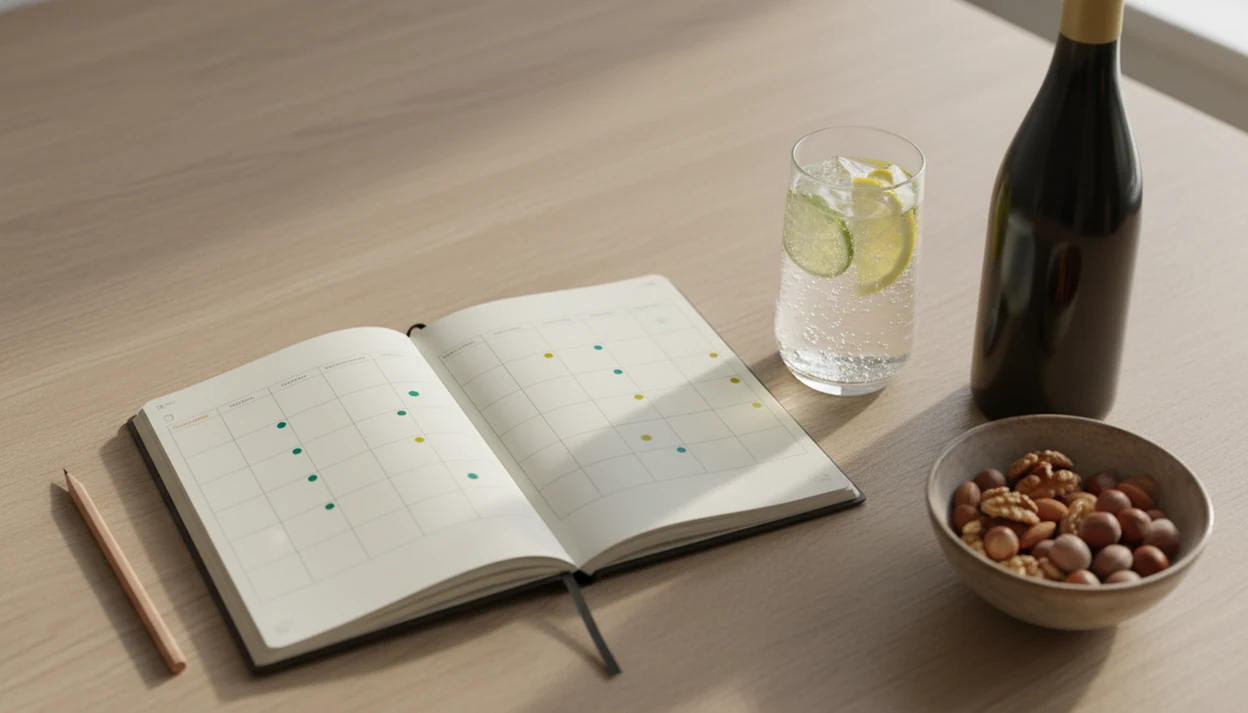
A calendar dry day marked green can feel small, but it gives you evidence. Many people notice better sleep, steadier mood, lower spending, or fewer next-day regrets. However, one dry day should not become permission to binge later. If that pattern shows up, read more on why one drink becomes more.
Me Quit Tracking for Drinking Less in the New Year
Tracking helps because it turns ‘I think I’m drinking less’ into dates, drinks, cravings, triggers, streaks, milestones, and mood patterns. Me Quit can support that private check-in without making the goal feel public.
A Cochrane review found that personalized digital alcohol interventions can reduce weekly alcohol consumption in community adults, although effects vary and digital tracking is not a substitute for treatment when withdrawal or dependence is present (cochrane alcohol data). That is not a cure. It is useful feedback. A progress chart checked before sleep can show whether Friday stress, scrolling in bed, or a lonely Sunday is driving the pattern.
Alcohol triggers can overlap with cigarette and vape cravings. Beer breath during a vape craving is not random; it is a paired cue. Good mequit addiction recovery hub for quit smoking, stop vaping, quit drinking, and mindful alcohol reduction tools deliver craving logs, streaks, limits, and reset prompts, not medical detox or emergency treatment.
Common New Year Drinking Resolution Mistakes
Most resolution mistakes are planning gaps, not character flaws. Fix the gap and the next week gets easier.
- Vague goals: “Drink less” is hard to follow. “No alcohol Monday to Thursday” gives your brain a clear rule.
- No trigger plan: Parties, stress, and loneliness need replacement actions before the urge hits.
- No support: Tell one trusted person, use a peer group, join a digital community, or ask a healthcare professional when needed.
- Slip equals failure: A lapse means review the cue, routine, and reward. Reset the plan.
- Stopping after January: February needs tracking too, especially when novelty fades.
At a party, hold a nonalcoholic drink before someone offers you one. During stress, use a timer and urge surfing for 10 minutes. For loneliness, make one specific contact plan. The alcohol reduction guides library can help you build those smaller experiments.
Signs Your Reduce Alcohol New Year Plan Needs More Support
Does a reduce alcohol New Year plan need more support? Yes, if cutting down brings withdrawal symptoms, repeated inability to reduce, drinking despite harm, or needing alcohol to function.
New Year resolutions are not a substitute for medical detox or treatment. Shakes, sweating, severe anxiety, confusion, hallucinations, or seizures are safety signals, not moments to “push through.” If you have been drinking heavily every day, stopping suddenly can be dangerous.
Support can come from primary care, addiction medicine, therapy, mutual-help groups, or structured programs. Medication may also be part of care for some people; our guide to naltrexone for alcohol cravings explains that topic separately. Asking for help is not a broken resolution. It is choosing the right level of friction for the risk.
Limitations
A self-directed New Year drinking resolution can build awareness and reduce harm, but it has real limits.
- A New Year drinking resolution is not medical detox.
- App tracking helps many people, but it does not replace emergency care, diagnosis, or professional treatment.
- People who are pregnant, taking certain medications, or managing liver disease should seek individualized medical guidance.
Private tools, including Me Quit, can help you notice patterns and make a plan. They cannot make withdrawal medically safe.
FAQ
How do I drink less in the new year?
Set a measurable goal, such as two alcohol-free days each week, a weekly drink limit, and a daily tracking habit. Review the plan weekly and adjust triggers instead of waiting for motivation.
Is Dry January worth it?
Dry January can build awareness of cravings, sleep, mood, and social cues. It works better when you decide what happens after January before the month ends.
What counts as binge drinking?
Binge drinking is commonly defined as 5 or more drinks for men, or 4 or more drinks for women, on one occasion. This pattern increases health and safety risks.
Can one drink ruin sobriety?
One drink is a lapse, not proof that change is over. Reset quickly, identify the trigger, and return to the next planned alcohol-free choice.
Do alcohol-free days help?
Scheduled alcohol-free days reduce exposure to drinking cues and reveal when cravings are strongest. They can also support lower weekly intake when they are not followed by catch-up drinking.
Should I quit drinking or cut back?
Quitting may fit better when alcohol causes harm, loss of control, or medical risk. Cutting back may fit people with lower-risk patterns who can follow limits safely.
Why do I drink more during the holidays?
Holiday drinking often increases because of stress, social cues, loneliness, disrupted routines, and habit loops. Smoking or vaping cues can also make alcohol cravings stronger.
When is alcohol withdrawal dangerous?
Alcohol withdrawal can be dangerous when symptoms include shaking, seizures, hallucinations, confusion, severe anxiety, or heavy daily drinking before stopping. Seek medical support instead of relying on self-directed quitting.