What Happens to Your Body During Binge Drinking
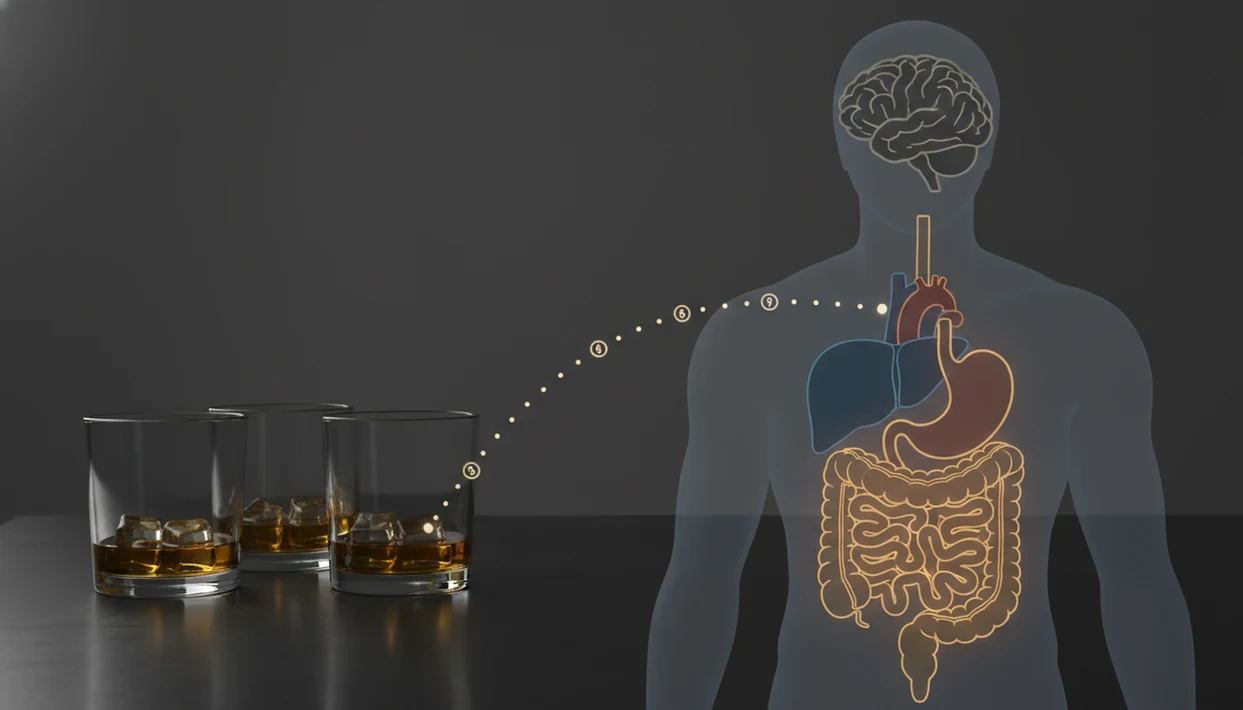
What binge drinking does to your body is rapid, whole-body stress: alcohol first slows the brain and coordination, then burdens the liver, gut, heart, sleep system, and next-day mood regulation. The effects can start within minutes, peak over several hours, and leave anxiety, nausea, poor sleep, and fatigue for a day or more.
> Definition: Binge drinking generally means drinking enough alcohol in about two hours to bring blood alcohol concentration to 0.08% or higher, commonly about 4 drinks for women or 5 drinks for men, according to the CDC: https://www.cdc.gov/alcohol/about-alcohol-use/binge-drinking.html
- Binge drinking is usually 4+ drinks for women or 5+ for men in about two hours, but smaller amounts can still cause impairment depending on body size, food, medications, and tolerance.
- Alcohol affects the brain first, then the liver, gut, heart, temperature control, sleep architecture, hydration, and next-day anxiety.
- Weekend heavy drinking can still raise long-term risks for high blood pressure, liver disease, certain cancers, injuries, and alcohol use disorder.
Binge drinking definition and what happens after 4 drinks
Quick answer: Binge drinking can stress nearly every major body system within hours, especially the brain, liver, gut, heart, sleep cycle, and mood regulation. For many people, the aftereffects are not limited to a hangover and may include anxiety, poor sleep, stomach irritation, fatigue, and stronger cravings the next day.
Key takeaways
- Eating first and pacing drinks may reduce how fast alcohol hits your system.
- Alternating with water can help dehydration, but it does not undo intoxication.
- Next-day anxiety is common because alcohol can disrupt stress and sleep chemistry.
- Repeated weekend binges can add up even if weekday drinking is low.
- Avoid mixing alcohol with sedatives, opioids, or sleep medications unless a clinician says it is safe.
- If you drink heavily every day, get medical advice before stopping suddenly because withdrawal can be dangerous.
Binge drinking generally means drinking enough alcohol in about two hours to reach about 0.08% blood alcohol concentration, often around 4 drinks for women or 5 for men. After 4 drinks, many people already have slower reaction time, weaker judgment, lower inhibition, and early dehydration.
The exact effect depends on sex, weight, food, medications, tolerance, drink size, and speed. Four measured drinks at dinner is different from four heavy pours before a rideshare arrives. The liver workload rises fast because it can only process alcohol at a limited rate.
Warm face. Louder voice. Slower choices.
Per CDC surveillance data, about 21.7% of U.S. adults reported binge drinking at least once in the past 30 days in 2022: https://www.cdc.gov/alcohol/data-stats.htm. That makes it common, but common does not mean low-risk.
Binge drinking timeline: alcohol effects hour by hour
What happens to your body hour by hour during binge drinking? Alcohol moves from a quick brain effect to wider organ stress, then often leaves next-day sleep, mood, and stomach symptoms.
First 1 hour: buzz and slower reactions
In the first hour, alcohol enters the bloodstream and brain inhibition drops. BAC rises faster if drinks come quickly or your stomach is empty. A person may feel warmer and more social, but reaction time is already slipping.
Hours 1 to 6: blackout and organ stress
From 1 to 3 hours, coordination, balance, memory formation, speech, and decision-making worsen. Blackout risk rises as BAC climbs, especially with shots or drinking games. From 3 to 6 hours, the liver keeps metabolizing alcohol while the stomach gets irritated. Urination increases, dehydration starts to show, blood sugar may swing, and heart rate can change.
Next day: hangover and anxiety
From 6 to 12 hours, alcohol may still be present. Sleep becomes broken, REM sleep drops, and heart rate can stay elevated. At 12 to 24 hours or longer, hangover, nausea, headache, shakiness, fatigue, poor focus, and low mood can linger. For more on foggy thinking after drinking, read about brain fog after drinking alcohol.
How to use this binge drinking timeline to reduce risk
Use the timeline as a planning tool, not a permission slip. The point is to notice when your risk usually rises and make the safer choice before alcohol makes that choice harder.
- Identify your usual first signs. Note when the buzz turns into louder speech, slower texting, poor balance, nausea, or memory fuzz after the first drink.
- Set your limit before that hour. Choose a drink cap and stop time while you are sober, especially if your high-risk window usually starts around drink two or three.
- Pair every drink with a buffer. Add food, water, a nonalcoholic drink, or a deliberate pause between alcoholic drinks so the pace does not run the night.
- Stop early if warning signs appear. Treat worsening memory, coordination, breathing, alertness, or repeated vomiting as a hard stop, not a challenge to push through.
- Log the next morning. Track sleep quality, anxiety, nausea, headache, cravings, and regret so patterns become visible before the next weekend plan.
Five body facts about heavy drinking weekend effects
- Binge drinking can reach 0.08% BAC without daily drinking. A weekend-only pattern can still count if enough alcohol is consumed quickly.
- The brain is affected early. Disinhibition, slower reactions, poor coordination, and memory gaps can appear before someone feels “too drunk.”
- The liver has to prioritize alcohol. It converts alcohol to acetaldehyde and then acetate, and inflammation can occur even after one heavy episode.
- The gut takes a hit too. Alcohol can irritate the stomach, affect the pancreas, alter motility, and disrupt the microbiome.
- The after-effects can last for days. Sleep, heart rhythm, blood pressure, anxiety, and next-day mood may stay off after the night ends.
That Sunday “I need something” feeling is not random. It is your nervous system trying to settle.
Brain, liver, gut, and heart effects of binge drinking
Binge drinking works through overlapping body systems, not one clean sequence. The brain, liver, gut, and heart all respond while alcohol is still moving through the bloodstream.
Alcohol increases inhibitory signaling in the brain, which is the plain-language reason people feel loose, slower, and less careful. At higher BAC, it disrupts memory formation, coordination, judgment, and breathing control. The liver converts alcohol into acetaldehyde, then acetate, but its processing speed is limited. When intake outruns clearance, more alcohol keeps circulating.
The gut can become irritated as alcohol affects the stomach lining, motility, inflammation, and the microbiome. The heart may respond with higher blood pressure, faster heart rate, or rhythm disturbances in susceptible people. Clinicians typically recommend avoiding more alcohol and getting urgent help if confusion, breathing problems, or unconsciousness appear.
For many people, reducing binge episodes is easier than relying on a vague promise to “be good” because a limit creates a decision point before the first drink.
Sleep, hangover, and anxiety after binge drinking
Why does alcohol make you sleepy, then anxious the next day? Alcohol may shorten the time it takes to fall asleep, but it fragments sleep later and reduces REM sleep.
NIAAA notes that alcohol can initially make sleep feel easier while later disrupting sleep quality and REM sleep: https://www.niaaa.nih.gov/publications/alcohol-and-sleep.
That is why a full night in bed can still feel useless. The phone says 8 hours. Your body disagrees.
Hangover symptoms often come from several pressures at once: dehydration, low blood sugar, stomach irritation, poor sleep, and elevated nighttime heart rate. “Hangxiety” adds rebound stress chemistry, regret, memory gaps, and a nervous system that feels switched on too high. The craving timer glowing in bed can feel extra loud after a night of drinking, especially if nicotine was part of the same routine.
Caffeine, greasy food, supplements, or detox drinks may reduce symptoms for some people, but they do not reverse impairment or organ stress. The benefits of drinking less alcohol often show up first in sleep, mood, and steadier mornings.
Weekend binge drinking risks that add up over time
Weekend binge drinking is not harmless just because Monday through Thursday are dry. Repeated high-dose episodes still expose the liver, brain, heart, gut, and cancer-related pathways to alcohol stress.
Per the CDC, U.S. adults who binge drink average about 4 binge episodes per month, with about 7 drinks per episode. Globally, heavy alcohol use is associated with more than 200 disease and injury conditions, including liver cirrhosis, some cancers, and cardiovascular disease.
The short-term risks include injuries, blackouts, alcohol poisoning, and risky decisions. Longer-term risks include high blood pressure, liver disease, stroke, some cancers, and alcohol use disorder. This is not a shame point. It is a pattern point.
The most useful reduction plan usually combines a clear drink limit with trigger tracking, because the risky moment often happens before the second or third drink. The wider alcohol reduction guides cover body effects, cravings, and habit loops in more detail.
Practical ways to reduce binge drinking body stress
Reducing binge drinking body stress starts before the first pour. The goal is to add friction to fast drinking and make the next choice easier.
- Set the line early. Choose a drink limit and stop time before going out.
- Slow absorption. Eat beforehand and alternate alcohol with water or a nonalcoholic drink.
- Remove hidden-dose traps. Avoid drinking games, shots, and topping off glasses.
- Track the pattern. Log drinks, cravings, triggers, streaks, and next-day symptoms.
- Plan the reset. If you break a limit, note the cue, routine, and reward instead of saying, “I already messed up, so why not keep going?”
Me Quit can support adults who want private tracking for cravings, drink limits, streaks, and reset prompts across smoking, vaping, and alcohol-reduction goals. It is not diagnosis, detox care, or emergency treatment.
If someone has confusion, repeated vomiting, slow or irregular breathing, pale or blue skin, unconsciousness, or cannot wake up, call emergency services. For app comparisons, the best drink less app guide can help with limits and tracking.
Limitations
A binge drinking timeline is a guide, not a safety calculator. Alcohol effects hour by hour vary widely.
- People with heart, liver, sleep, mental health, pregnancy-related, or medication-related risks may have more severe effects.
- Hangover cures, detox drinks, and supplements cannot undo acute impairment, poisoning risk, or injury risk.
- Call emergency services for alcohol poisoning signs rather than waiting for someone to sleep it off.
If cutting back brings shaking, severe anxiety, seizures, hallucinations, or confusion, seek medical care. Self-guided tracking is not detox support.
FAQ
What counts as binge drinking?
Binge drinking usually means about 4 drinks for women or 5 drinks for men in about two hours, often reaching 0.08% BAC. Smaller amounts can still impair some people.
What happens after 4 drinks?
After 4 drinks, reaction time, judgment, coordination, hydration, and liver workload are commonly affected. The exact impact depends on body size, food, medications, tolerance, and drink strength.
How long does alcohol affect you?
Alcohol can affect coordination and judgment for hours, and after-effects can last into the next day. Poor sleep, nausea, anxiety, headache, and fatigue may linger longer than the drinking period.
Why do blackouts happen?
Blackouts happen when alcohol disrupts memory formation, especially when BAC rises quickly. A person may appear awake and talking but fail to store events into memory.
Why does alcohol cause anxiety?
Alcohol can cause anxiety through rebound nervous system activation, poor sleep, dehydration, and blood sugar changes. Regret or memory gaps can add another layer of stress.
Can one binge damage your liver?
One binge can stress and inflame the liver, although many serious liver diseases develop through repeated heavy exposure. Repeated binges increase long-term risk.
Is weekend binge drinking safer?
Weekend-only binge drinking is not automatically safe. High-dose episodes can still increase risks for injuries, blackouts, blood pressure problems, liver disease, some cancers, and alcohol use disorder.
When is drinking an emergency?
Drinking is an emergency when someone has confusion, repeated vomiting, slow or irregular breathing, pale or blue skin, unconsciousness, or cannot be awakened. Call emergency services rather than letting them sleep it off.