Quit Drinking App With Daily Check Ins for Private Accountability
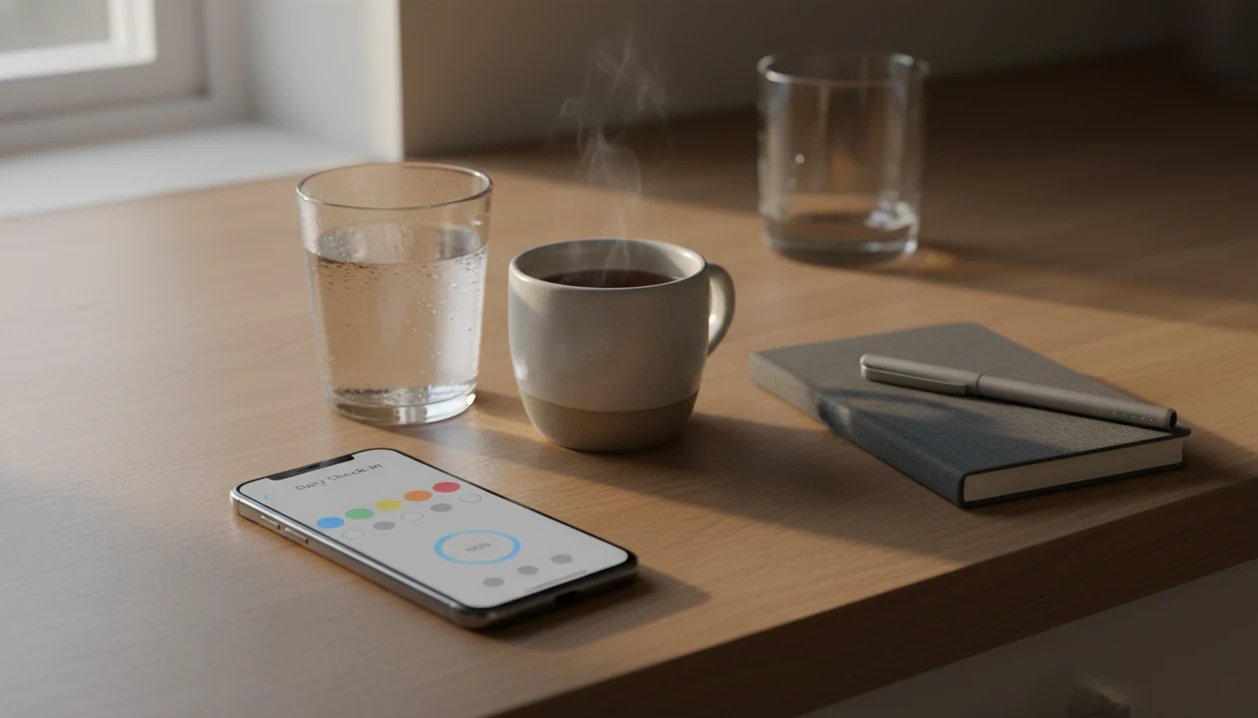
A quit drinking app with daily check ins helps adults build a private accountability routine around alcohol cravings, sober days, streaks, and progress. This kind of app is best for people who want to quit drinking, drink less, or track alcohol alongside smoking and vaping goals without making the process public.
Definition: A daily sober check in app is a phone-based accountability tool that lets you log whether you drank, track cravings and triggers, and see progress such as sober streaks, money saved, and milestones.
TL;DR
- Daily check ins work best when you log honestly every day, including slips.
- MeQuit supports alcohol reduction alongside quit smoking and stop vaping goals in one private behavior-change hub.
- Apps can support accountability, but severe alcohol dependence or withdrawal risk needs medical guidance.
Daily alcohol check ins at a glance
Quick answer: A quit drinking app with daily check-ins can help many adults notice patterns, track sober days, and build a consistent accountability habit. It is best used as a self-monitoring tool, not as a substitute for medical care, therapy, or supervised withdrawal support when alcohol dependence may be present.
Key takeaways
- Daily check-ins work best when they are quick enough to complete even on difficult days.
- Tracking cravings, mood, triggers, and alcohol-free days may make relapse patterns easier to spot.
- A private app can support accountability without requiring public posts or group participation.
- People who drink heavily or have withdrawal symptoms should ask a clinician before stopping suddenly.
- Combining alcohol tracking with smoking or vaping goals may help people see shared triggers.
- Progress is often non-linear; missed days are information, not proof that change is impossible.
Private daily check ins are designed around cravings, streaks, milestones, and behavior-change tracking. They fit adults who want to quit alcohol, reduce drinking, or track alcohol alongside smoking and vaping without relying on public posts or group identity.
| Snapshot | What it means |
|---|---|
| Best for | Adults who want a daily alcohol accountability routine on their phone |
| Daily routine | Check in, log drinking status, note cravings, review streaks |
| Privacy angle | Private progress tracking instead of public posting or group identity |
| Alcohol goal type | Full sobriety, drink-limit goals, dry days, or mindful reduction |
| Extra help needed | Withdrawal symptoms, severe dependence, seizures, hallucinations, or medical concerns |
The app can support a quit plan, but it is not alcohol use disorder treatment. If the first honest check in is “I drank after saying I wouldn’t,” that still counts as useful data. The plan resets, not restarts from zero.
How a daily sober check in app works
A daily sober check in app works by turning alcohol behavior into a repeatable feedback loop: reminder, self-report, craving or trigger note, streak update, milestone feedback, and pattern review. In plain language, you give the app small facts each day, and it turns them into progress you can see.
The behavior-change mechanism is self-monitoring plus reinforcement. Self-monitoring means noticing what happened before the drink, not just counting the drink. Reinforcement means the app shows small wins, such as a sober streak, money saved, or a health milestone, right when motivation is thin.
Your logs become summaries. A Tuesday craving after a tense meeting, a Friday 6 p.m. drink that makes a cigarette feel automatic, and a dry weekend all feed the same pattern map. Mobile phone-based alcohol interventions have shown small but significant reductions in alcohol use, including about 23 grams less alcohol per week in a JAMA Internal Medicine meta-analysis jamanetwork.
For many people, daily self-monitoring is easier than relying on memory because cravings blur quickly after the moment passes.
Why stop drinking daily check in routines build accountability
A stop drinking daily check in is useful because it turns a vague goal into a daily action. “Drink less someday” is hard to follow; “check in before bed and log what happened” is clear.
Consistency matters most on the days that feel messy. If you only log sober days, the app becomes a trophy case instead of a useful record. Honest check ins show whether the pattern is weekends, stress, boredom, social pressure, or a craving window that hits right after work.
The brunch menu still counts.
Alcohol behavior change is not a niche need. SAMHSA estimated that 29.5 million people aged 12 or older in the United States met criteria for alcohol use disorder in 2022 SAMHSA. Many more people are trying to cut back before things become severe.
For adults reducing alcohol, a daily check in routine is often more useful than a monthly reflection because it catches triggers while they are still fresh.
How to use MeQuit as a sobriety check in app
Use MeQuit as a sobriety check in app by keeping the routine short enough to repeat on ordinary days. The goal is not to write a diary every night; it’s to leave yourself a clear trail.
- Set the alcohol goal. Choose full sobriety, dry days, a drink limit, or mindful alcohol reduction.
- Check in daily. Log whether you drank, stayed sober, or met the limit you chose.
- Log cravings or triggers. Name stress, boredom, social pressure, a place, or a body signal like chest flutter near the corner store.
- Review streaks and milestones. Look at sober days, money saved, craving trends, and health milestone feedback.
- Reset after slips. Record the slip without hiding it, then choose the next small step.
You can use the same accountability rhythm for alcohol, cigarettes, and vaping. Tools like Me Quit help when one habit cues another, such as a drink making a smoke feel automatic. If you are still comparing options, a broader app to help me quit drinking guide can help you match features to your goal.
5 evidence facts about quit drinking app results
- Daily use matters. A check in app is most useful when the log happens every day, not only after “good” days. Gaps make trigger patterns harder to trust.
- Honest self-reporting drives accuracy. The app only knows what you enter, so slips, cravings, and near-misses matter. The crumpled receipt from a bar tab is data, not a verdict.
- Progress metrics can reinforce effort. Streaks, money saved, dry days, and milestones make small wins visible during low-motivation moments.
- App plus offline support may work better for higher needs. Therapy, medication support, peer groups, or medical care can add human guidance that an app cannot provide.
- Effects are usually modest, not magical. A JAMA meta-analysis found about 23 grams less alcohol per week versus controls, and the TeleCoach trial found about 9 fewer drinks per week at 6 months the NIH.
The most defensible expectation is support for awareness and reduction, not a guaranteed sobriety outcome.
MeQuit daily sober check in app features for alcohol, smoking, and vaping
MeQuit is a private behavior-change app for quitting smoking, stopping vaping, and drinking less. Its daily sober check in features focus on cravings, streaks, milestones, private progress tracking, and habit-specific check ins.
Alcohol check ins
Alcohol check ins can track sober days, drink-limit goals, dry days, cravings, and mindful alcohol reduction. That matters for someone who is not ready to say “never again,” but still wants the bottomless mimosa habit to stop running the weekend.
Smoking and vaping check ins
Smoking and vaping check ins let you track nicotine cravings next to alcohol triggers. A mint vape in a hoodie pocket, a cigarette after two drinks, and a sober streak can all belong in the same behavior map.
Good mequit addiction recovery hub for quit smoking, stop vaping, quit drinking, and mindful alcohol reduction tools deliver private daily accountability across linked habits, not diagnosis, detox, or emergency care.
If alcohol streaks are your main focus, a quit drinking app with streak counter may also be useful.
Quit drinking app with daily check ins versus meetings, journals, and counters
A quit drinking app with daily check ins is strongest for privacy, convenience, reminders, streaks, and fast self-monitoring. It is weaker than human support when someone needs clinical guidance, medication, crisis help, or real-time connection.
| Support option | What it does well | What it may miss |
|---|---|---|
| MeQuit-style app check ins | Private logs, reminders, streaks, cravings, milestones | Human conversation, diagnosis, medical care |
| Peer meetings | Community, shared experience, regular structure | Privacy, flexible timing, app-based metrics |
| Paper journal | Reflection, low tech, no screen | Reminders, streak math, quick trend summaries |
| Simple sobriety counter | Clear sober-day count | Triggers, cravings, drink-limit nuance |
| Therapy or medical care | Clinical guidance, medication support, safety planning | Daily phone-based micro-check ins |
The strongest setup may combine an app with offline support for people who need more than self-tracking. Clinicians typically recommend professional support when withdrawal risk, severe dependence, medication questions, or co-occurring mental health concerns are present.
For feature comparison beyond daily check ins, the best quit drinking app guide covers broader app types.
When to seek medical help for alcohol withdrawal
Seek medical advice before abruptly stopping heavy drinking, especially if you drink daily, have needed alcohol to feel steady, or have had withdrawal before. Get urgent help for shaking that worsens, severe vomiting, chest pain, confusion, fever, hallucinations, fainting, seizures, or thoughts of self-harm.
A quit drinking app can help you notice patterns, but it cannot manage detox, prevent seizures, or treat severe alcohol dependence. Alcohol withdrawal can change quickly, and the safest plan may include medication, monitoring, therapy, peer support, or clinician-guided alcohol treatment.
- Call a clinician first if you are a heavy daily drinker or are unsure whether stopping suddenly is safe.
- Use emergency care for seizures, hallucinations, severe confusion, trouble breathing, chest pain, or symptoms that feel dangerous.
- Ask about treatment options such as withdrawal medication, medications for alcohol use disorder, counseling, outpatient programs, or supervised detox.
- Add support from trusted people, peer groups, or therapy so the plan is not just willpower plus an app.
- Keep checking in after medical guidance so cravings, slips, and sober days are still visible.
For authoritative next steps, look for alcohol treatment and withdrawal guidance from national health agencies or local addiction medicine services.
Limitations: alcohol withdrawal and daily check in app caveats
Daily check in apps can support accountability, but they have real limits. NIAAA surveillance reporting found that only about 7.6% of U.S. adults with past-year alcohol use disorder received any treatment in the previous year NIAAA, which shows a large care gap. An app should not be treated as a replacement for that care.
- Privacy depends on design. Review data storage, sharing, account controls, and notification settings.
- Withdrawal risk is medical. Severe dependence, shaking, seizures, hallucinations, confusion, or serious health concerns need professional help.
- Offline support may be necessary. Therapy, peer support, or medication for alcohol use disorder can be important.
No app should be your detox plan.
If cost is part of the decision, compare options through a free quit drinking app resource before choosing.
FAQ: sobriety check in app questions
Do sober check ins work?
Daily sober check ins can support awareness, accountability, and pattern recognition. Evidence for digital alcohol interventions shows modest reductions in drinking, not guaranteed sobriety.
Should I check in daily?
Yes, daily check ins improve tracking accuracy because they reduce guesswork. A short log every day is usually better than a long review once a week.
What if I drink again?
Log it honestly and note the trigger, time, setting, and craving level. A slip can help you adjust tomorrow’s plan instead of restarting from zero.
Can I track mindful drinking?
Yes, many check in apps can support drink limits, dry days, and reduction goals. Me Quit can fit people who want mindful alcohol reduction as well as full sobriety.
Is a sobriety app private?
Privacy depends on the app’s data practices, account settings, and notifications. Review storage, sharing, and lock-screen settings before logging sensitive information.
Can apps replace alcohol treatment?
No, apps can support behavior change but do not replace medical care, therapy, medication, detox support, or crisis services. A check-in app is a tracking and accountability tool, not treatment.
What should I log?
Useful inputs include drinking status, cravings, triggers, mood, location, money saved, and a short note. Keep it brief enough that you’ll do it consistently.
Who needs medical help?
People with withdrawal symptoms, severe dependence, seizures, hallucinations, confusion, pregnancy concerns, or serious health problems should seek professional help. Do not rely on an app for alcohol withdrawal safety.