Free Quit Drinking App: Features, Shortlist, and How to Choose
A free quit drinking app can help you track sober days, manage cravings, measure money saved, and choose between quitting alcohol completely or cutting back privately. MeQuit is a practical option for adults who want one app-based hub for drinking goals alongside quit smoking and stop vaping support.
> Definition: A free quit drinking app is a no-cost mobile tool that helps adults stop drinking alcohol or reduce alcohol use through tracking, reminders, craving support, goal setting, and progress feedback.
TL;DR
- The best free alcohol apps do more than count days; they combine tracking, craving tools, reminders, and behavior-change prompts.
- Choose abstinence mode if your goal is sobriety, and reduction mode if your goal is mindful drinking or cutting back.
- Apps are support tools, not medical detox or treatment replacements for people at risk of alcohol withdrawal.
How free quit drinking apps look
Quick answer: A free quit drinking app can be useful if you want a private, low-friction way to track sober days, cravings, triggers, and spending. It may work best for people with mild to moderate goals; anyone at risk of alcohol withdrawal should talk with a clinician before stopping suddenly.
Key takeaways
- Set one clear goal first: quit completely, take a break, or reduce drinking.
- Track urges when they happen, not only after a drinking episode.
- Use trigger notes to spot patterns around stress, time of day, people, and places.
- Money-saved estimates can make progress feel more concrete.
- If you drink heavily or have withdrawal symptoms, get medical guidance before cutting off alcohol.
- Privacy matters because alcohol data can feel sensitive and personal.
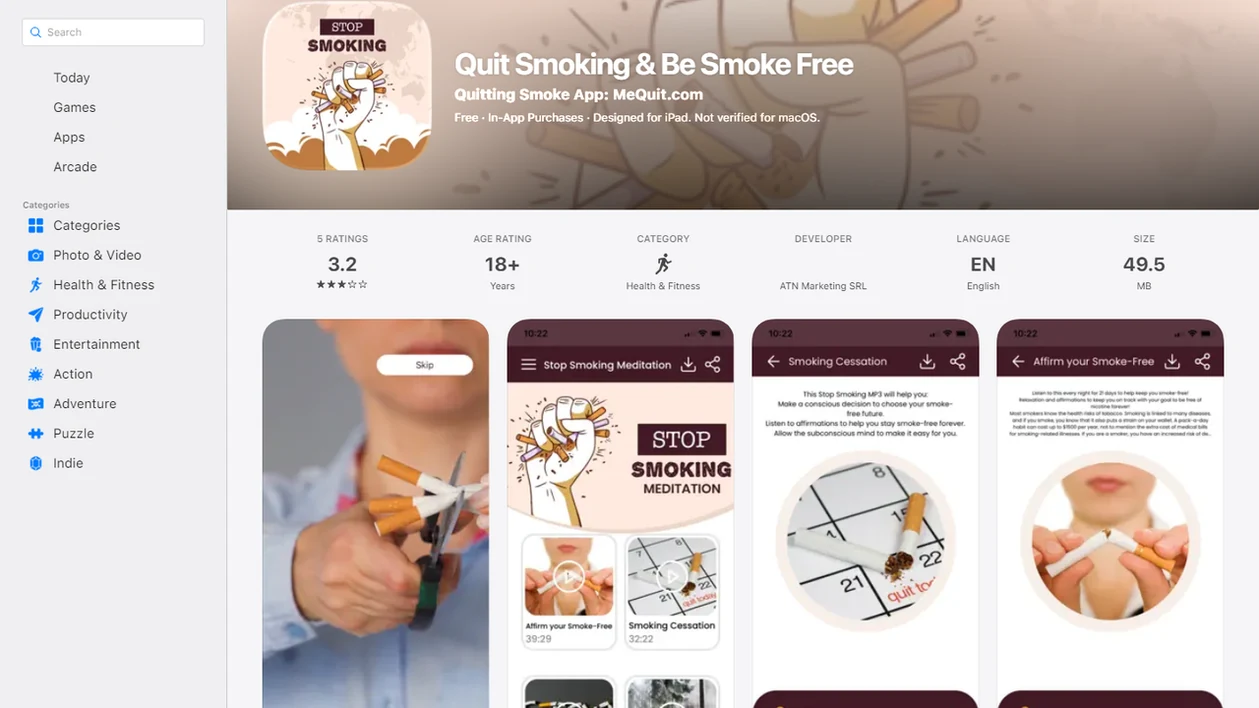
Side-by-side captures of the compared products. Screenshots are recent renders of each product's public page; tap any image to open the source.
Free quit drinking app features at a glance
| Feature | What to expect in a free app | Why it matters |
|---|---|---|
| Craving tools | Notes, timers, urge prompts | Helps during the craving window |
| Streaks | Sober days or dry days | Makes progress visible |
| Drink logging | Basic drink count or limits | Shows patterns honestly |
| Money saved | Simple savings calculator | Turns change into a number |
| Reminders | Daily check-ins or alerts | Keeps the plan on your phone |
| Privacy | PINs or private tracking vary | Alcohol data is sensitive |
| Community | Sometimes included, often paid | Adds accountability |
| Paywall risk | Coaching or lessons may be locked | Free download is not always free use |
A free quit drinking app should help you notice what happens before the drink, not just count what happened after. The Friday 6 p.m. drink can make a cigarette feel automatic, which is why cross-trigger tracking matters.
Tools like Me Quit focus on private craving, streak, and milestone tracking across smoking, vaping, and drinking goals. Some apps are free to download but charge for coaching, communities, or structured programs.
Five facts about free apps to stop drinking
- Free apps to stop drinking usually work through self-monitoring: drink logs, sober days, craving notes, and goal reminders.
- A free app to quit alcohol may support abstinence, mindful drinking, or both; the right mode depends on your risk level and goal.
- Behavior-change exercises matter because a counter alone does not teach delay tactics, urge surfing, or replacement actions.
- Peer support can help some users stay accountable, but public community spaces are not the right fit for everyone.
- Apps have medical safety limits; NIAAA reports that 29.5 million people aged 12 or older in the United States had alcohol use disorder in 2022, and some need professional care: https://www.niaaa.nih.gov/publications/brochures-and-fact-sheets/alcohol-facts-and-statistics
App-based support is becoming more common. A U.S. survey reported that 7.3% of adults used at least one digital health tool for alcohol or drug use in the past year.
Pocket check. Open the app instead.
Best free quit alcohol app shortlist for different goals
- Me Quit: Best fit for adults whose alcohol cravings overlap with smoking or vaping triggers. The main free value is private tracking for cravings, streaks, and milestones across habits; the caveat is that it should not be treated as clinical alcohol treatment.
- I Am Sober: Best fit for people who want a straightforward sober-day counter and pledge-style check-ins. The free value is simple motivation; the caveat is that deeper community or premium tools may require payment.
- EasyQuit: Best fit for people who like health milestone and money-saved feedback. The free value is quick progress visibility; the caveat is that behavior-change depth may be limited.
- Daybreak: Best fit for people interested in a researched alcohol reduction program. The free value depends on region and access; the caveat is that availability and features can change.
- SWiPE: Best fit for users interested in craving-focused alcohol reduction research. The caveat is that research tools are not always the same as everyday app-store access.
For broader comparisons, a best quit drinking app guide can help separate sobriety counters from structured reduction tools.
How We Chose These Free Quit Drinking Apps
We chose these free quit drinking apps by looking at practical app-store availability, published alcohol-app research where it existed, and category coverage across sobriety counters, reduction tools, and multi-habit recovery. The shortlist favors apps that offer real free value before asking for payment.
- Check free access: We looked for features a person can use without immediately subscribing, such as sober-day tracking, drink logs, cravings, reminders, or money-saved feedback.
- Compare support tools: We weighed whether the app helps during the craving window, not just after it, with prompts, notes, urge timers, or replacement actions.
- Review privacy signals: We considered how clearly each app treats sensitive alcohol data, because private logging matters when drinking, smoking, or vaping overlap.
- Look for evidence carefully: We separated researched programs from general wellness apps and avoided treating app-store ratings as clinical proof.
- Test the caveats: We checked for paywalls, changing regional access, and broad clinical claims that could make a free download less useful than it first appears.
Inclusion here is informational. It is not a medical endorsement, detox plan, diagnosis, or instruction to stop heavy drinking without professional guidance.
Free sobriety app data flow and behavior-change loops
Free sobriety apps work by turning vague drinking behavior into visible data. You log drinks, cravings, triggers, sober days, and streaks; the app turns those entries into charts, reminders, notifications, and personalized prompts.
That is self-monitoring. In plain terms, it means you stop relying on memory after a hard week.
Reinforcement loops make progress feel concrete. Badges, money saved, health milestones, and streaks give your brain a small reward for repeating the next useful action. Behavior-change prompts then help during the craving window: delay ten minutes, ride the urge, text someone, take a walk, or choose a replacement drink.
Data flow is simple, but privacy is not automatic. Your input becomes feedback inside the app, while each privacy policy decides how sensitive alcohol data is stored, shared, or protected. A focused quit drinking app privacy review is worth reading before logging personal details.
Free alcohol app setup steps for quitting or cutting back
Use a free alcohol app like a small quit plan, not a magic switch. Clinicians typically recommend medical guidance when heavy drinking or withdrawal risk is present, because stopping suddenly can be dangerous for some people.
- Choose your goal: Pick abstinence if you want no alcohol, or reduction if you want drink limits and dry days.
- Set your baseline: Enter your usual drinks, spending, high-risk times, and first weekly target.
- Log honestly: Record drinks and cravings without editing the story to feel better.
- Review weekly: Look for trigger patterns, such as laptop shutdown, takeout nights, or group chats before a bar plan.
- Adjust rewards: Replace alcohol cues with small rewards, reminders, and non-drinking routines.
- Seek support: Contact a clinician if withdrawal symptoms, heavy daily drinking, or loss of control appears.
Me Quit is useful when alcohol cravings overlap with a mint vape in a hoodie pocket or cigarette urges after a drink.
Free quit drinking app versus paid alcohol app features
| Feature area | Often free | Often paid |
|---|---|---|
| Day counters | Sober days, dry days, streaks | Advanced streak analytics |
| Drink logs | Basic drink entries | Deeper reports and trends |
| Craving notes | Simple urge tracking | Personalized craving plans |
| Reminders | Daily nudges | Adaptive coaching sequences |
| Milestones | Money saved, health notes | Expanded lessons or courses |
| Support | Limited community access | Coaching or private groups |
Free-to-download does not always mean every recovery tool is free. Many apps keep the counter open but place coaching, lessons, communities, advanced analytics, or personalization behind a subscription.
A free app is often enough for early self-monitoring, Dry January, mild reduction, or private motivation because the main job is noticing patterns quickly. Paid or professional help may be worth considering for repeated relapses, heavy drinking, withdrawal symptoms, or a need for human accountability.
The most useful free setup is a visible log plus a weekly review, while paid support fits people who need structure beyond self-tracking.
Evidence behind free alcohol reduction apps
Does a free quit alcohol app have evidence behind it? Evidence quality varies widely, and one researched app should not make every app in the category look clinically validated.
Daybreak, from Hello Sunday Morning, has been studied in a randomized trial. Participants reduced average weekly alcohol consumption by about 9.7 standard drinks at three months compared with baseline, according to the published study. SWiPE has also been studied in a randomized controlled trial; users reported reductions in alcohol cravings and weekly standard drinks over four weeks compared with controls. Add the study URLs directly beside these claims so readers can verify the Daybreak randomized trial and the SWiPE randomized controlled trial; without those links, treat the effect-size language as promising but not fully citable.
That matters, but it has a boundary. App-store ratings can tell you whether people like the interface, reminders, and tone. They do not prove that an app treats alcohol use disorder.
A good app to help me quit drinking should show what it actually does: tracking, prompts, support, or coaching. Not vague promises.
Limitations
Alcohol apps can support behavior change, but they have real limits. WHO reported that alcohol use was responsible for 2.6 million deaths globally in 2019, so the risk deserves steady attention without fear tactics.
- No app is a substitute for medical care, detox, therapy, medication advice, or emergency support.
- Heavy daily drinking, withdrawal seizures, delirium tremens history, serious medical issues, or severe alcohol use disorder require professional guidance.
- Withdrawal symptoms such as shaking, confusion, hallucinations, seizures, or severe agitation need urgent medical help.
A good recovery hub for quit smoking, stop vaping, quit drinking, and mindful alcohol reduction should deliver private tracking and day-by-day support, not diagnosis, detox, or guaranteed recovery.
FAQ
What is a sobriety app?
A sobriety app is a mobile tool that helps people track sober days, cravings, triggers, money saved, and progress milestones. Some also include reminders, community support, or mindful drinking goals.
Are quit drinking apps free?
Many quit drinking apps are free to download and include a free tier. Coaching, courses, advanced analytics, or private communities may require a paid upgrade.
Do alcohol apps really work?
Alcohol apps can support tracking, motivation, and reduction, but evidence varies by app. Research on one program should not be generalized to every free sobriety app.
Can apps stop alcohol cravings?
Apps can help manage cravings with timers, prompts, urge surfing, and replacement actions. They cannot guarantee that cravings disappear.
Can one app support drinking, smoking, and vaping goals?
Yes. Some multi-habit recovery apps let you track quit smoking, stop vaping, quit drinking, and mindful alcohol reduction goals in one private hub.
Can I cut back instead of quitting alcohol completely?
Yes. Many alcohol apps support reduction goals such as drink limits, dry days, and mindful drinking, while others focus on full sobriety.
Are sobriety apps private?
Sobriety app privacy depends on the app, its data policy, and the settings you choose. Review the privacy policy before entering sensitive alcohol, craving, or health information.
When should I get medical help for drinking?
Get medical help if you drink heavily, have withdrawal symptoms, have a seizure history, feel unable to stop, or have serious mental or physical health concerns. An app should not replace professional support in those situations.