NRT and App Tracking for Smoking Cessation Plans
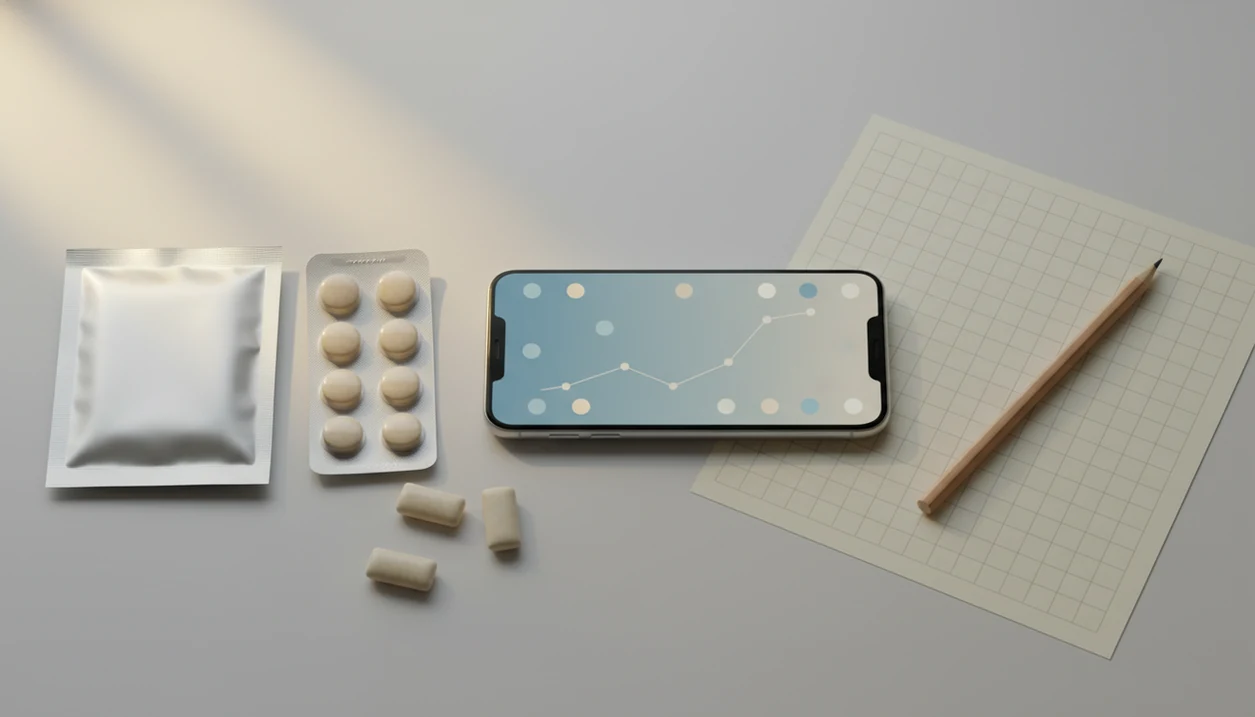
NRT and app tracking helps you record nicotine patches, gum, lozenges, cravings, triggers, slips, and milestones in one place so patterns are easier to see. It can support a quit plan, but it should not tell you what dose to use or replace product instructions or clinician advice.
NRT means nicotine replacement therapy, including products such as patches, gum, lozenges, sprays, or inhalers that deliver nicotine without the toxic chemicals in cigarettes.
- Use an app to log NRT use, cravings, mood, triggers, slips, and wins together.
- Tracking can reveal patterns, but medication choices and dosing belong with labels and clinicians.
- MeQuit is a quit smoking app that helps adults stop smoking, stop vaping, drink less, and track cravings, streaks, and milestones.
NRT and App Tracking at a Glance
Quick answer: NRT and app tracking can help you see how nicotine replacement use, cravings, triggers, and slips relate over time. It is best used as a personal record and discussion aid, not as a tool for choosing doses or changing medication instructions without a clinician.
Key takeaways
- Track the product type, timing, cravings, triggers, and any slips in the same daily log.
- Use product labels and clinician guidance for dosing, especially if you use more than one NRT product.
- Patterns often matter more than single bad days; review several days at a time.
- Record side effects or concerns so they are easier to discuss with a pharmacist or clinician.
- A tracking app may support motivation, but it should not replace counseling, medical care, or safety instructions.
- If withdrawal feels severe, mood changes are intense, or you have heart, pregnancy, or medication concerns, seek medical advice.
NRT and app tracking means using a quit app to record nicotine replacement therapy alongside real-life smoking triggers. The app can track behavior, but it should not provide medication instructions.
A useful log connects patches, gum, lozenges, cravings, mood, slips, and milestones. That matters because the first morning cigarette before coffee may be a different problem than the Friday 6 p.m. drink that makes smoking feel automatic. One is routine. The other is cue stacking.
Apps such as Me Quit can help keep these records in one private place, especially when cigarette, vape, and alcohol triggers overlap. Good mequit addiction recovery hub for quit smoking, stop vaping, quit drinking, and mindful alcohol reduction tools show patterns and next steps, not medical dosing decisions.
Five Facts About NRT and App Tracking
- NRT has strong evidence behind it. A Cochrane review found that all licensed forms of NRT increased quitting rates by about 50% to 60% compared with placebo or no NRT (cochrane smoking data).
- Combination NRT has evidence too. A Cochrane review found that using a nicotine patch with a rapid-acting option, such as gum or lozenge, can improve quit rates compared with one type of NRT alone, but product choice belongs with labels and clinicians (cochrane smoking data).
- Apps add behavior support, not medication management. They can help you notice a craving window, a missed patch log, or a trigger pattern.
- Mobile recovery app evidence is promising but modest overall. Reviews of mobile-phone cessation support suggest benefits for some users, while app-only evidence is still less consistent than medication and counseling evidence (cochrane smoking data).
- Engagement matters. An unopened app cannot help during the lighter click in a jacket pocket moment. If you’re comparing the evidence, our guide on are quit smoking apps effective goes deeper.
Before You Start NRT App Tracking
Before you start NRT app tracking, set the safety and privacy rules first. The app should record your plan clearly, not become the place where medication decisions are guessed during a craving.
- Confirm your NRT product, strength, and intended use from the package label, prescription, pharmacist, or clinician before you enter it into the app.
- Choose the events you want to log while you are calm, such as patch use, gum or lozenge use, cravings, slips, alcohol cues, vaping cues, mood, and stressful routines.
- Set privacy options before adding sensitive notes about health, smoking, vaping, alcohol, or substance use, especially if notifications may appear on a shared screen.
- Schedule a pattern review, such as once a week or before a clinician, pharmacist, or counselor appointment, so the data has somewhere useful to go.
- Know when to ask for professional help, including severe symptoms, pregnancy, complex medical history, side effects, uncertainty about combining products, or any dosing question the label does not answer.
A little setup makes the later logs more honest. It also keeps the app in its lane: pattern support, not medical authority.
How NRT and App Tracking Works
NRT and app tracking works by pairing nicotine replacement logs with craving, context, and outcome data so repeated trigger patterns become visible. In plain English, it turns scattered quit-plan moments into a timeline you can review.
A typical log might include patch placement, gum use, lozenge use, craving intensity, mood, time, place, sleep, stress, and whether a slip happened. Over several days, the app may show that cravings spike after lunch, during driving, or after a poor night’s sleep. That is habit-loop data: cue, urge, response, result.
Then the support layer matters. Reminders, reflection prompts, CBT-style questions, and recovery check-ins can help you choose a small next step before the craving window takes over. The app observes patterns. It does not calculate a medical dose, change a schedule, or override product instructions.
Three minutes can be enough.
How to Use a Quit Smoking With NRT App
The safest way to use a quit smoking with NRT app is to track what happened, not ask the app to decide your medication plan. Clinicians typically recommend following product labels, prescriptions, or pharmacist guidance for NRT dosing questions.
- Set your quit plan with your chosen NRT products, such as patch, gum, or lozenge, using label or clinician guidance.
- Log each NRT event, including the date, time, routine, and whether it matched your plan.
- Rate cravings before and after short-acting NRT, without changing use based only on the app.
- Record triggers such as stress, driving, alcohol, vaping, meals, or social settings.
- Review slips as data, including what happened before and what helped afterward.
- Share weekly patterns with a clinician, pharmacist, or cessation counselor if medication questions come up.
For most adults using NRT, app tracking is most useful when it links cravings to context because the same urge often repeats at the same time, place, or social cue.
What to Track in a Nicotine Patch Tracker
What should you track in a nicotine patch tracker? Track whether the patch was used according to your plan or product label, then connect that record to cravings, sleep, mood, and missed days.
Useful fields include time logged, daily routine, craving level, mood, sleep quality, and notes about skin irritation if relevant. Keep the entry factual. For example, “missed morning log after rushing to work” is more useful than “bad day.” If you smelled stale smoke on a winter coat and wanted a cigarette, log that too.
A tracker should not tell you when to apply, remove, or change patches. Missed-use patterns can still be useful. If missed days cluster on weekends or travel days, bring that summary to a clinician or pharmacist instead of guessing alone.
What to Track in a Nicotine Gum Tracker
What should you track in a nicotine gum tracker? Track craving intensity before and after gum or lozenge use, plus the trigger, location, stress level, social context, and whether smoking or vaping happened.
Short-acting NRT logs work best when they sit next to craving events. A note like “mint vape in hoodie pocket, stress 8/10, used lozenge, did not smoke” gives more information than a simple checkmark. The pocket check is real.
Avoid using the app for chewing technique, dosing frequency, or product-specific instructions. Those details belong to the label, prescription, pharmacist, or clinician. Over time, gum and lozenge logs may show high-risk times, such as after dinner, after meetings, or outside a pub exit through the smoking area.
Common NRT App Tracking Mistakes
The biggest NRT app tracking mistake is treating the app like a medication authority. It is not a substitute for NRT labels, prescriptions, pharmacists, or clinician guidance.
Another common mistake is logging only patches or gum while ignoring cravings, triggers, mood, alcohol, and vaping. That leaves out the story. A crumpled pack in the car console may explain more than the NRT checkbox does.
Slips also need a different frame. Do not treat a cigarette or vape lapse as proof that the quit plan is broken. Log it as data, then reset, not restart from zero. If alcohol is part of the pattern, our guide on do drink less apps work explains how tracking drink cues can support behavior change.
Streaks can motivate, but they can also sting. Use them as feedback, not a verdict.
NRT App Tracking Pattern Review
A weekly NRT app tracking review should look for patterns in cravings, slips, missed logs, and high-risk times. Progress is not only a longer streak; it is also seeing the next risky hour sooner.
| Pattern to review | What it may show | What to do with it |
|---|---|---|
| Craving spikes | Time, place, or mood cues | Plan a coping action before that window |
| Slips | Repeated trigger patterns | Discuss the pattern without shame |
| Missed logs | Busy routines or avoidance | Simplify reminders or log later |
| Alcohol links | Drinking may lower smoking resistance | Track drink limits or dry days |
| Sleep and stress | Withdrawal may feel worse when depleted | Bring summaries to a professional |
Milestones and money saved can help you keep going, but they are not proof of medical success. If privacy affects what you log, read quit smoking app privacy before entering sensitive health notes.
Limitations
NRT and app tracking can support a quit plan, but it has real limits. The tool is only as good as the plan, the logs, and the support around it.
- Apps cannot determine the right NRT product, dose, schedule, or duration.
- Mobile addiction app evidence shows small average effects overall, not guaranteed results.
- Severe withdrawal, urgent symptoms, pregnancy, complex medical history, or medication questions need professional care.
Private progress tracking can help. It still does not replace care.
FAQ
Does NRT still contain nicotine?
Yes. NRT contains nicotine, but it avoids many toxic chemicals found in cigarette smoke.
Can apps track nicotine patches?
Yes. Apps can log patch use, missed days, cravings, mood, sleep, and related patterns.
Can apps track nicotine gum?
Yes. A nicotine gum tracker can pair gum or lozenge use with cravings, triggers, mood, and slips.
Can an app set my NRT dose?
No. Apps should not set NRT doses, and users should follow product labels, prescriptions, or clinician advice.
Can you combine patches and gum?
Combination NRT has evidence, but it should be handled with product instructions and professional guidance. Do not combine products based only on an app prompt.
Do cravings stop with NRT?
NRT may reduce cravings, but it usually does not remove them instantly. Craving tracking can show when extra behavioral support is needed.
Should I log smoking slips?
Yes. Smoking slips are useful pattern data, not a reason to restart from zero.
What triggers should I track?
Common triggers include stress, alcohol, meals, driving, social settings, sleep loss, and time of day.
Is an NRT tracking app a medical app?
No. An NRT tracking app can support behavior tracking, cravings, milestones, and recovery habits, but it should not replace medical care, NRT instructions, or clinician guidance.