Definition: A drink limit planner is a behavior-change tool that lets users pre-set how many alcoholic drinks they will have per day or week, track actual intake against that goal, and adjust their plan based on real-world triggers and patterns.
At A Glance: What A Drink Limit Planner Does
Quick answer: A drink limit planner is a simple way to decide your alcohol limits before the moment of temptation. It often works best when you set clear caps, choose dry days, identify triggers, and review what happened without judgment.
Key takeaways
- Set a specific drink cap before the day starts, not while you are already drinking.
- Plan alcohol-free days to reduce automatic or habit-based drinking.
- Write down likely triggers such as stress, boredom, celebrations, or certain friends.
- Decide your exit plan in advance, such as switching to soda or leaving early.
- Track slips as information, not failure, so the next plan can be more realistic.
- If you drink heavily or feel withdrawal symptoms, talk with a clinician before cutting down suddenly.
A drink limit planner turns “I’ll drink less tonight” into a clear number, a time frame, and a check-in point. It supports reduction, not forced abstinence.
- A drink limit planner sets caps first. You choose daily and weekly drink limits before the bartender reaches for the usual bottle.
- It is different from quitting. Many people use an alcohol limit planner to cut back, add dry days, or test a lower-risk routine.
- CDC guidance gives a reference point. The CDC defines moderate drinking as up to 1 drink per day for women and up to 2 for men: https://www.cdc.gov/alcohol/about-alcohol-use/moderate-alcohol-use.html
- Alcohol risk is broader than hangovers. The WHO links alcohol use with more than 200 disease and injury conditions: https://www.who.int/news-room/fact-sheets/detail/alcohol
- Me Quit packages the workflow in one place. Me Quit mequit addiction recovery hub for quit smoking, stop vaping, quit drinking, and mindful alcohol reduction connects drink caps, dry days, trigger notes, and weekly summaries.
Small numbers are easier to remember at 9 p.m.
For social drinkers who need a firm ceiling before the first round, Me Quit fits because it shows the daily limit and remaining drinks in the same progress view.
How A Mindful Drinking Planner Works
A mindful drinking planner works by using pre-commitment, trigger mapping, and feedback loops. In plain terms, you make the decision before the craving window opens.
Pre-commitment reduces decision fatigue at the point of temptation. A numeric limit, such as “2 drinks Friday, 0 Sunday,” is easier to follow than a loose promise. The plan also names trigger patterns, like stress after work, a taxi queue beside glowing vape tips, or the Friday 6 p.m. drink that makes a cigarette feel automatic. That detail matters because routine disruption is part of the behavior change, not decoration.
The feedback loop comes from comparing planned intake with actual intake. If the same trigger keeps showing up before overshooting, the planner has useful data. Dry days add cognitive rest periods, giving the brain a break from expecting alcohol every evening.
The most evidence-backed approach to cutting back is a specific drinking limit combined with trigger awareness and repeated review, because the plan improves when real behavior is measured.
When repeated limit violations show up, Me Quit prompts the next small step, including professional support when tracking is no longer enough.
How To Use The MeQuit Drink Limit Planner
Use the MeQuit drink limit planner by setting the number first, then building the week around likely pressure points. The setup should take minutes, not become another project.
- Set a weekly drink cap and dry days. Choose a realistic total, then mark zero-drink days before the week gets busy.
- Log your triggers. Add social events, stress, routines, and places where the first drink usually appears.
- Choose pacing strategies and substitutes. Pair each trigger with a plan, such as alternating with sparkling water or leaving before the second venue.
- Track each drink in real time. Count drinks against the daily limit while the night is still happening.
- Review your weekly summary. Adjust goals up or down based on patterns, not guilt.
Thumb hovering over a reset button is familiar.
After a missed limit, when the next morning feels messy, Me Quit helps you reset, not restart from zero, by linking the drink event to a trigger note and weekly goal review. If alcohol is your main focus, the download drink less app page explains the broader reduction workflow.
When To Use An Alcohol Limit Planner
Use an alcohol limit planner when you want structure before a predictable drinking situation. It is most useful when the risk is pattern-based, not medically urgent.
Good times to use one include nights out with friends, coworker drinks, weddings, holidays, and weekends where routines collapse. It also helps after a heavier stretch, when gradual reduction feels more realistic than an all-or-nothing rule. Dry-day scheduling works well for people who want visible breaks, especially after noticing the beer fridge hum during dinner prep becomes its own cue.
Risk thresholds matter. The CDC describes binge drinking as 4 or more drinks for women, or 5 or more drinks for men, on one occasion: https://www.cdc.gov/alcohol/about-alcohol-use/binge-drinking.html Reaching that level often, blacking out, or feeling unable to stop calls for clinical support, not just a nicer chart.
For people trying to reduce weekend drinking, a planner is often easier than willpower alone because it moves decisions earlier in the week.
Ready to start your quit?
A drink limit planner helps you set specific daily and weekly alcohol caps, schedule dry days, and prepare for social triggers before cravings hit. Me Quit gives you structure…
What The Drink Less Planner Looks Like In MeQuit
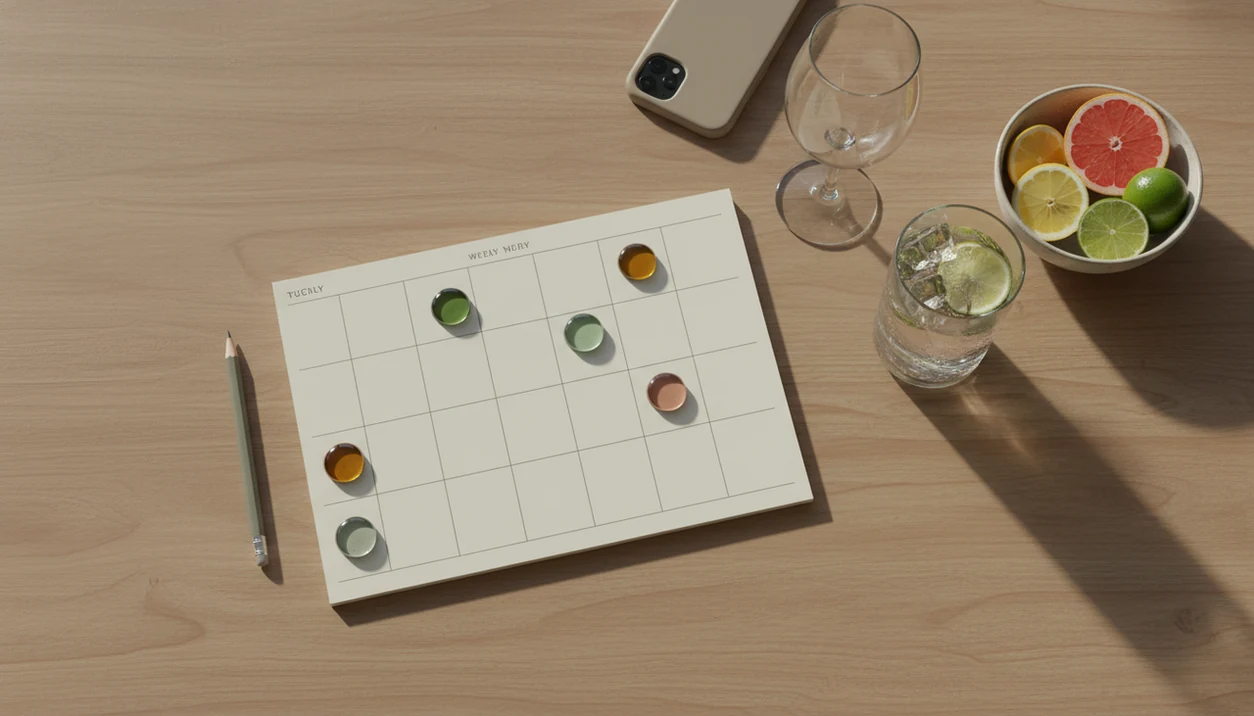
The drink less planner in Me Quit shows your limit, your dry days, and your trigger notes in a simple weekly view. The point is quick feedback while the choice is still active.
You can set daily and weekly limits, then watch a visual progress bar move as drinks are logged. Dry days appear on a calendar with streak tracking, so alcohol-free nights are visible instead of forgotten. Each drinking event can carry a trigger note, such as stress, social pressure, celebration, or boredom.
Before planned social events, check-in reminders help you review the cap before the first order. Weekly summaries use trend arrows to show whether intake is rising, falling, or staying flat. No scolding language. Just data.
When social pressure is the issue, Me Quit covers the gap between intention and action because reminders appear before the event and drink counts update during it.
People who already track drinks can compare the broader logging flow in the download alcohol tracker app guide.
Drink Limit Planner Vs Other Alcohol Reduction Tools
A drink limit planner is more useful when it combines counting, planning, and trigger review. Mindful drinking is not just drinking slowly; it includes planning, monitoring, and changing social habits.
| Tool | What it does | Main gap |
|---|---|---|
| Willpower alone | Relies on memory and motivation in the moment | No tracking, no trigger awareness, high slip risk |
| Generic tally apps | Count drinks during the day or night | Often skip dry-day scheduling and trigger notes |
| Paper diaries | Let you write down drinks after the fact | No reminders, easy to skip, hard to spot patterns |
| Me Quit | Combines daily goals, weekly goals, trigger logs, dry-day streaks, and escalation prompts | Still requires honest logging |
A mindful drinking planner should deliver specific limits, trigger awareness, and support prompts, not vague moderation slogans.
If your priority is changing the pattern before it repeats, Me Quit earns the spot because the weekly summary connects limits, dry days, and trigger patterns in one review.
Apps like Reframe, Sunnyside-style programs, or GetSober may focus more narrowly on alcohol coaching or sobriety identity. Me Quit also covers nicotine and alcohol crossover triggers.
Related MeQuit Features For Drinking Less
Me Quit supports drinking less with tools that sit next to the drink limit planner. That matters because the urge to drink rarely arrives as a clean, isolated thought.
The craving tracker helps log alcohol urges during a three-minute craving instead of arguing with yourself for an hour. Streak and milestone tracking makes dry days visible. A health timeline can mark recovery milestones as intake drops over time. Me Quit also includes quit smoking and stop vaping support, which helps when alcohol makes nicotine feel automatic.
For people who smoke when they drink, Me Quit mequit addiction recovery hub for quit smoking, stop vaping, quit drinking, and mindful alcohol reduction connects the cigarette craving and the drink trigger in the same habit picture. The nicotine side is covered in the download quit smoking app guide, and vape-specific support is covered in the download quit vaping app guide.
Evidence Behind Drink Limit Planning
Drink limit planning is grounded in setting a clear target before drinking starts and checking actual intake against it. The goal is practical risk reduction, not pretending that tracking alone is treatment.
CDC guidance defines moderate drinking as up to 1 drink per day for women and up to 2 for men, and binge drinking as 4 or more drinks for women or 5 or more for men on one occasion. NIAAA defines a U.S. standard drink as about 14 grams of pure alcohol, which is roughly 12 ounces of regular beer, 5 ounces of wine, or 1.5 ounces of 80-proof spirits. Those reference points make the number in a planner less vague.
- Choose a daily cap before the first drink, using standard-drink math instead of glass size.
- Log drinks as they happen, because self-monitoring turns memory into usable feedback.
- Review trigger patterns after the night, then adjust the next limit or exit plan.
- Escalate when tracking is not enough. Withdrawal symptoms, blackouts, repeated loss of control, or feeling unsafe call for professional help; SAMHSA’s National Helpline is a 24/7 resource for alcohol concerns.
Me Quit can support reduction by making limits and patterns visible, but it does not diagnose or treat alcohol use disorder.
Limitations
A drink limit planner can support behavior change, but it cannot make alcohol safe for every person. Some situations need professional care from the start.
- A planner is not a clinical diagnosis or treatment for alcohol use disorder.
- Lower limits are not automatically safe during pregnancy, liver disease, medication interactions, or certain mental health conditions.
- Personal risk depends on health history, medications, drinking speed, and drinking pattern, not just the final count.
Me Quit can flag patterns and encourage support, but it does not replace a clinician, detox service, emergency care, or therapy.