Can Nutrient Deficiencies Trigger Alcohol Cravings?
Yes, nutrient deficiencies alcohol cravings can be connected because low magnesium, B vitamins, omega-3 fatty acids, zinc, unstable blood sugar, stress, and loneliness can all make the urge to drink feel stronger. Nutrition is not a stand-alone cure, but improving meals, sleep, connection, and craving tracking can make cravings easier to understand and manage.
Body chemistry alcohol cravings are urges to drink that are intensified by biological states such as nutrient depletion, blood sugar swings, poor sleep, stress hormones, low mood, or alcohol-related brain changes.
- Alcohol can deplete nutrients that help regulate mood, stress, sleep, and energy, including B vitamins, magnesium, zinc, folate, and omega-3s.
- Magnesium deficiency and low omega-3 intake may worsen anxiety, fatigue, low mood, and nervous system stress, which can indirectly intensify alcohol cravings.
- Loneliness and emotional stress are powerful craving triggers, so reducing cravings usually requires nutrition, behavior change, connection, and medical support when needed.
At-a-glance: nutrient deficiencies, alcohol cravings, and body chemistry
Quick answer: Nutrient gaps may contribute to alcohol cravings for some people, especially when they affect sleep, mood, stress tolerance, or blood sugar stability. Correcting diet alone is unlikely to remove cravings, but it can make urges easier to interpret alongside trigger tracking, social support, and medical care when needed.
Key takeaways
- Alcohol cravings are often shaped by several inputs at once: nutrition, stress, sleep, habit, and environment.
- Skipping meals can make cravings feel more urgent because hunger and low energy can mimic emotional distress.
- A basic pattern of protein, fiber-rich carbohydrates, healthy fats, and hydration may reduce craving volatility for many people.
- Supplements should be discussed with a clinician, especially if you take medications or have liver, kidney, heart, or mental health conditions.
- Sudden reduction after heavy daily drinking can cause dangerous withdrawal and should be medically supervised.
- Tracking the time, mood, meal pattern, and trigger before each urge can reveal whether cravings follow predictable body or life patterns.
Nutrient deficiencies can intensify alcohol cravings indirectly by worsening mood, sleep, stress tolerance, energy, and blood sugar stability. The main nutrients to watch are B vitamins, thiamine, magnesium, zinc, folate, and omega-3 fatty acids.
Alcohol can reduce appetite, irritate the gut, disturb sleep, and change how nutrients are absorbed or used. That can leave someone feeling flat, wired, shaky, tired, or “off.” A weeknight pour after laptop shutdown may feel like the solution, but the body might also be asking for dinner, water, sleep, or contact with another person.
Supplements can support a larger plan, but they are not a guaranteed craving cure. The most useful craving plan usually combines regular meals, trigger mapping, social support, safer alcohol goals, and clinician guidance when needed.
Tools like Me Quit can fit into that plan when the goal is pattern awareness, not medical diagnosis. Me Quit helps adults track cravings, streaks, milestones, and alcohol-reduction cues alongside quit smoking and stop vaping goals.
Five evidence facts about nutrient deficiencies and alcohol cravings
- Heavy or frequent drinking can reduce appetite, impair absorption, and disrupt nutrient use, so cravings may show up in a body that is underfed or depleted.
- Alcohol dependence is commonly associated with micronutrient deficiencies; one study reported that 95% of patients with alcohol dependence had at least one micronutrient deficiency, with common deficits in vitamins A, C, thiamine, B2, B6, and folate the NIH.
- Magnesium deficiency is reported in 30–80% of people with alcohol use disorder, depending on the population and testing methods. the NIH.
- Low omega-3 status is associated with mood symptoms, inflammation, relapse risk, and liver health concerns in alcohol-related research, but omega-3s are not a proven direct cure for cravings.
- Loneliness and social isolation are associated with increased alcohol use disorder risk; a meta-analysis found a 29% increase in incident alcohol use disorder. That matters on quiet evenings when the phone is silent and the drink feels like company.
Body chemistry mechanisms behind alcohol cravings
Body chemistry alcohol cravings are urges to drink that are shaped by reward pathways, stress systems, sleep quality, blood sugar, gut function, and nutrient absorption. In plain language, the brain learns that alcohol gives quick relief, then asks for that relief again at the next decision point.
Alcohol affects dopamine and stress signaling, which can make ordinary discomfort feel urgent. Poor sleep then lowers frustration tolerance. Blood sugar dips can add shakiness or a hollow “I need something” feeling. Gut irritation can make nutrient absorption worse, and low nutrient status can feed back into mood. That two-way gut-nutrition-mood loop is easy to miss.
Not every craving is a deficiency. Some cravings come from habit loops, like passing the same store after work or seeing the brunch menu with bottomless mimosas. For people trying to understand why cravings feel physical, the related guide on physical alcohol cravings explains those body cues in more detail.
The useful question is simple: what does my body need before alcohol enters the plan?
Magnesium deficiency, alcohol cravings, and nervous system stress
Does magnesium deficiency make alcohol cravings worse? Low magnesium may make cravings feel stronger by increasing fatigue, tension, poor sleep, irritability, and nervous system discomfort, but direct proof that magnesium supplements eliminate alcohol cravings is limited.
Magnesium supports nerve signaling, muscle function, energy metabolism, sleep, and stress regulation. When it runs low, some people notice restless legs, tight shoulders, twitchy muscles, or a wired-but-tired feeling at night. That state can make drinking feel tempting because alcohol has been practiced as the fast “off switch.”
Still, magnesium is not a stand-alone alcohol treatment. It is one possible part of a broader support plan. Clinicians typically recommend medical guidance for people with heavy alcohol use, withdrawal symptoms, liver disease, kidney disease, pregnancy, or medication interactions before starting supplements.
Ask about testing first. That is especially important if you have kidney disease, take heart or blood pressure medications, or have a history of severe withdrawal.
Omega-3 fats, alcohol cravings, mood, and relapse risk
Omega-3 fatty acids are brain- and mood-supporting fats found in fatty fish and some plant foods. Low omega-3 status has been associated with depression, anxiety, inflammation, fatty liver concerns, and relapse risk in alcohol-related research, but omega-3s are not a proven direct cure for alcohol cravings.
Food-first options are usually the cleanest starting point. Salmon, sardines, trout, chia seeds, ground flax, walnuts, and some fortified foods can raise intake without turning your craving plan into a supplement cabinet. A simple lunch upgrade might be tuna on whole-grain toast with fruit, instead of skipping lunch and meeting a craving at 5 p.m.
For adults cutting back, omega-3s usually work best as a mood and nutrition support, while craving tracking fits people who need to spot repeat drinking cues.
Supplements may not be safe for everyone. Check with a clinician if you take blood thinners, have surgery planned, are pregnant, or manage liver disease.
Blood sugar, protein, and meal timing in alcohol cravings
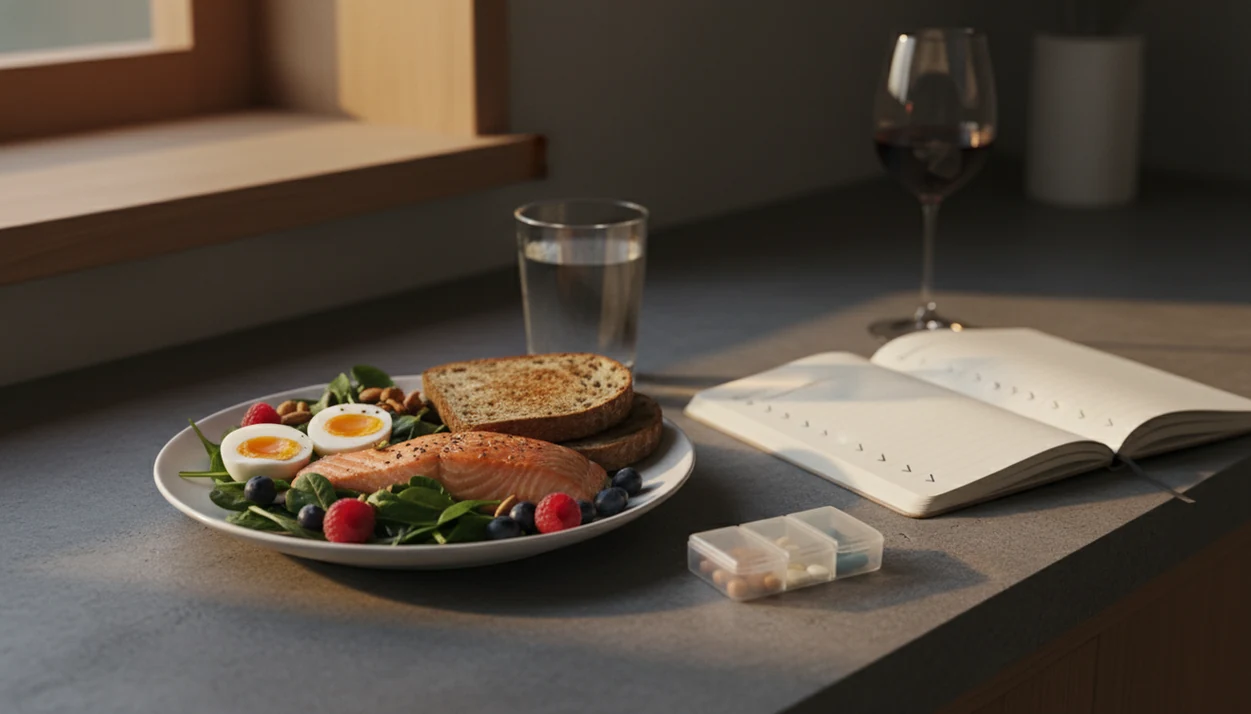
Skipping meals, low protein, dehydration, and blood sugar dips can mimic or intensify alcohol cravings. A steadier plate cannot erase emotional triggers, but it can lower the physical vulnerability that makes a drink feel urgent.
Four craving-buffer basics:
- Protein: Eggs, Greek yogurt, tofu, chicken, lentils, or tuna help keep hunger from turning into a craving by late afternoon.
- Fiber-rich carbohydrate: Oats, beans, fruit, potatoes, or whole-grain bread give slower energy than candy or alcohol.
- Healthy fat: Avocado, olive oil, nuts, seeds, or peanut butter can make a snack last longer.
- Fluids: Water, tea, broth, or an electrolyte drink can help when dry mouth gets mistaken for wanting alcohol.
Try a snack before the high-risk window: yogurt with walnuts, hummus with pita, a turkey sandwich, or oatmeal with ground flax. Regular meals reduce body-driven craving pressure, but they do not remove habit cues. If one drink often turns into more after dinner, the pattern work belongs in a separate plan, like the guide on why one drink becomes more.
Loneliness, alcohol cravings, and brain chemistry triggers
Does loneliness increase alcohol cravings? Yes, loneliness is not just a feeling; it can shift stress, reward, and threat systems in ways that make drinking urges stronger.
A meta-analysis found that social isolation and loneliness are associated with a 29% increase in incident alcohol use disorder the NIH. That does not mean loneliness causes every drinking problem. It means disconnection is a real risk factor, especially when the evening routine already includes alcohol.
Isolation, boredom, shame, and lack of support can make cravings louder after sunset. The apartment gets quiet. The group chat slows down. A person starts thinking, “I already messed up, so why not keep going?” That sentence is a craving cue, not a character report.
Small connection actions count. Text one person. Attend a meeting. Join a low-pressure class. Log the craving before answering it. For people who drink to decompress alone, the guide on how to relax without alcohol gives replacement actions that do not depend on alcohol as the reward.
Nutrition and craving tracking plan for alcohol reduction
Use nutrition and craving tracking as a two-week experiment, not a moral scorecard. The goal is to find repeat patterns in hunger, loneliness, sleep, and alcohol exposure before the craving takes over.
- Log the craving with time, hunger level, mood, sleep, loneliness, location, and alcohol cue.
- Stabilize meals before your usual high-risk window with protein, fiber-rich carbohydrate, healthy fat, and fluids.
- Name the trigger as body, emotion, place, person, or routine, then choose one replacement action.
- Add friction by moving alcohol out of reach, changing the route home, or making tea before deciding.
- Review weekly and adjust one variable at a time, such as dinner timing, bedtime, or social contact.
For many adults, tracking cravings works better than guessing because it turns a vague urge into a visible trigger map. A private app can make that easier. Me Quit lets people track cravings, streaks, and milestones while drinking less, without needing a public group identity.
A good craving-tracking tool should show patterns, support resets, and avoid promising diagnosis, detox care, or instant craving removal.
When to seek medical help for alcohol cravings or withdrawal
Seek medical help right away if alcohol cravings come with withdrawal symptoms that feel intense, unusual, or unsafe. This guide is educational only and is not medical advice, diagnosis, detox planning, or a substitute for care from a licensed clinician.
- Get urgent care for seizures, hallucinations, confusion, severe shaking, or vomiting, especially if symptoms begin after cutting down or stopping alcohol.
- Call a clinician before changing course if you drink heavily every day. Stopping suddenly can be dangerous, and a supervised plan may be safer than trying to push through at home.
- Flag higher-risk situations such as pregnancy, liver disease, kidney disease, or a history of withdrawal seizures, delirium, hospitalization, or other withdrawal complications.
- Discuss medications and supplements before starting them, including magnesium, omega-3s, sleep aids, anti-craving medicines, or herbal products, because interactions and dosing matter.
- Use tracking as support, not triage when symptoms are medical. Log patterns when you are stable, but choose professional help when the body is sending alarm signals.
Limitations
Nutrition can support alcohol reduction, but it has clear limits. Treat nutrient work as one layer of the plan, not the whole plan.
- Severe alcohol withdrawal can be dangerous and may require medical supervision.
- Thiamine deficiency can be serious. Alcohol use disorder is a major cause, and Wernicke–Korsakoff syndrome develops in up to 12–14% of patients with chronic alcoholism in some series virginia alcohol data.
- Pregnancy, chronic heavy drinking, seizures, confusion, hallucinations, or prior withdrawal complications call for clinician guidance, not self-management alone.
Reset the plan.
If medication is part of the conversation, learn about naltrexone for alcohol cravings and discuss it with a licensed prescriber.
FAQ
Can deficiencies cause alcohol cravings?
Deficiencies can intensify alcohol cravings indirectly through mood, energy, sleep, stress, and blood sugar changes. They are rarely the only cause.
Does magnesium reduce alcohol cravings?
Magnesium may support nervous system balance, sleep, and withdrawal comfort when someone is deficient. Evidence that magnesium directly reduces alcohol cravings by itself is limited.
Can omega-3 help alcohol cravings?
Omega-3s may support mood, brain health, and inflammation balance. They are not a proven stand-alone treatment for alcohol cravings.
What vitamins do heavy drinkers commonly lack?
Heavy drinkers commonly lack thiamine, other B vitamins, folate, magnesium, zinc, vitamin A, and vitamin C. Chronic heavy drinking should be discussed with a clinician.
Can low blood sugar feel like an alcohol craving?
Yes, hunger, blood sugar dips, dehydration, and low protein intake can feel like an urge to drink. Eating a balanced meal or snack may reduce the physical intensity.
Why do I crave alcohol at night?
Night cravings often come from fatigue, skipped meals, stress, loneliness, habit cues, and lower self-control after a long day. Me Quit can help log the pattern, but medical care is needed for withdrawal risk.
Does loneliness increase alcohol cravings?
Yes, loneliness can increase stress and reward-seeking, and it is associated with higher alcohol use disorder risk. Social support, meetings, texting someone, or private tracking can help interrupt the loop.
When is alcohol withdrawal dangerous?
Alcohol withdrawal can be dangerous with seizures, confusion, hallucinations, severe shaking, vomiting, pregnancy, liver disease, kidney disease, or past withdrawal complications. Seek urgent medical care or supervised detox support in those situations.