How To Quit Drinking: A Step-by-Step Stop Drinking Plan

The safest way to follow how to quit drinking is to make a written stop drinking plan, choose a quit date, remove alcohol, build support, and get medical guidance if you drink heavily or have withdrawal symptoms. A private craving-and-progress log can help adults track cravings, streaks, milestones, and patterns while they build alcohol-free routines.
> Quitting drinking means stopping alcohol use completely and replacing drinking routines with safer coping skills, support systems, and relapse-prevention habits.
- Do not quit cold turkey without medical advice if you drink heavily, drink daily, or have had withdrawal symptoms.
- A practical stop drinking plan includes a quit date, reasons, trigger plan, support contacts, and a craving response.
- Tracking cravings, sober streaks, slips, and milestones helps turn quitting alcohol into a daily behavior-change process.
How to quit drinking safely if withdrawal is possible
Quick answer: To quit drinking, start with a written plan: set a quit date, remove alcohol, identify triggers, line up support, and decide what you will do when cravings hit. If you drink heavily, have had withdrawal before, or feel shaky, sweaty, anxious, confused, or unwell when you stop, get medical guidance before quitting abruptly.
Key takeaways
- A clear quit date and alcohol-free home reduce last-minute decisions.
- Cravings often pass faster when you delay, distract, hydrate, eat, or contact support.
- Tracking triggers can reveal patterns such as stress, boredom, conflict, or certain places.
- Withdrawal can be medically serious; heavy drinkers should not detox alone.
- A slip does not erase progress; review what happened and restart the next safe step.
- Medication and counseling may help many people, especially with repeated relapse or dependence.
If you drink heavily, drink daily, or have used alcohol for a long time, do not stop suddenly without medical advice. Alcohol withdrawal can be dangerous, and some people need supervised detox, medication, or urgent care before they quit.
Call a doctor, urgent care, detox service, or emergency service before stopping if you have had seizures, confusion, hallucinations, severe shaking, chest pain, or repeated vomiting. A night sweat and shaky hands may feel “normal” after drinking, but they can be a warning sign.
Safety first. Plans come after.
Alcohol use disorder is common, not rare. In 2022, an estimated 29.5 million people aged 12 or older in the United States had AUD, according to NIAAA NIAAA alcohol data. If symptoms worry you, read more about stop drinking withdrawal symptoms and get medical guidance.
How alcohol dependence works in a quit drinking plan
Alcohol dependence works through habit loops, withdrawal pressure, and learned cues that teach the brain to expect alcohol for reward, stress relief, sleep, social confidence, or emotional escape.
The cue may be Friday at 6 p.m., a certain friend texting, payday, loneliness, boredom, or walking past the same bar after work. Over time, the brain links the cue with relief. Then the craving arrives before you have made a conscious decision.
Cravings usually rise, peak, and pass. That pattern makes delay tools useful, especially during a three-minute craving window when arguing with yourself can turn into an hour.
Private craving, streak, and milestone logs can support behavior change, but they do not treat withdrawal or diagnose alcohol dependence. For many people, a written quit plan is easier than “trying harder” because it gives the next action before the craving is loud.
At-a-glance stop drinking plan for alcohol-free days
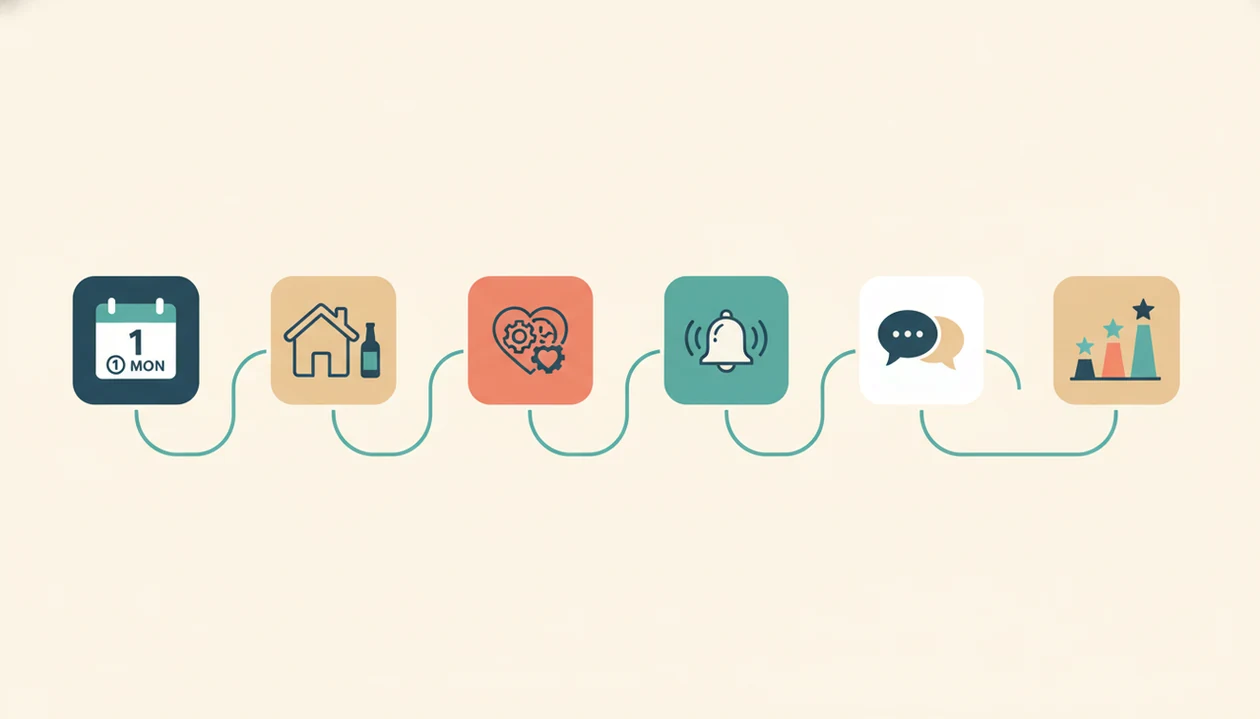
A stop drinking plan should be written down, not kept as a loose promise in your head. The more specific the plan, the less you have to decide during a craving.
| Plan part | What to write down |
|---|---|
| Safety check | Withdrawal history, daily drinking pattern, doctor or detox contact |
| Quit date | The first alcohol-free day and the evening before it |
| Alcohol removal | What leaves the house, car, desk, and usual hiding spots |
| Trigger plan | Bars, brunch plans, stress, weekends, sleep problems, certain people |
| Support | Clinician, therapist, medication, mutual-help group, trusted friend, or digital tool |
| Craving plan | Delay, eat, hydrate, walk, text someone, change location |
| Tracking | Sober streak, craving log, money saved, slips, health milestone |
| Relapse reset | Stop the episode, get safe, log it, restart the plan |
Professional treatment is underused. NIAAA reports that only about 7.6% of U.S. adults with past-year AUD received treatment in the previous year. A quit drinking timeline can help you map early changes day by day.
How to use a stop drinking plan step by step
Use a stop drinking plan as a daily script, not a document you write once and forget. Put it where you can reach it fast, usually on your phone.
- Set a quit date and add reminders for the night before, the first morning, and the first high-risk evening.
- Write your reasons in a notes app, including concrete ones like sleep, money saved, parenting, health, or avoiding stale alcohol breath at work.
- Remove alcohol from your home, bag, car, and delivery apps before the quit date begins.
- Tell support people what you need: no drinks offered, a check-in text, or a ride away from a risky place.
- Plan cravings with a 10-minute delay, water, food, movement, a message, and a craving log.
- Track daily progress with sober streaks, slips, notes, and milestones.
Use any tracker as a support layer: it can record cravings, streaks, dry days, slips, and milestones, but it cannot provide detox, diagnosis, medication, or emergency care.
Quit drinking steps for triggers, cravings, and routines
Cravings are temporary signals, not commands and not moral failures. Your job is to change the next 10 minutes, not solve the whole year tonight.
- Bars and alcohol at home are access triggers. Removing bottles and avoiding high-risk places improves the odds of staying alcohol-free.
- Drinking friends can be cue triggers. Meet for breakfast, a walk, or a movie instead of the usual table with pitchers.
- Loneliness, stress, and boredom are emotion triggers. Drink water, eat something, walk outside, or message one person before deciding anything.
- Celebrations can feel like permission triggers. A brunch menu with bottomless mimosas is easier to handle when you choose your drink before arriving.
- Sleep problems can restart the loop. Log the craving, change location, and use a non-alcohol wind-down plan.
Open the app if your hand is already reaching. If you want a phone-first walkthrough, the how to quit drinking with phone guide covers setup in more detail.
How to stop drinking alcohol with support options
You can combine support options instead of choosing one “right” path. Clinicians typically recommend matching care to withdrawal risk, alcohol use severity, mental health needs, and safety at home.
- Clinician support. A doctor can assess withdrawal risk, liver health, medications, and whether detox support is needed.
- Therapy or counseling. CBT-style work can help you spot trigger patterns and build replacement routines.
- Mutual-help groups. AA is one option, not the only option; SMART Recovery, counseling, and other groups fit some people better.
- Medication. A Cochrane review found that acamprosate increased continuous abstinence rates compared with placebo in people with alcohol dependence cochranelibrary.
- Trusted people and app tracking. Friends, family, and digital logs can add accountability between appointments.
Medication is medical care. Don’t start, stop, or compare prescriptions without a clinician. If AA does not fit you, quit drinking without AA may help you compare alternatives.
How to quit alcohol on your phone with MeQuit tracking
How can a phone help me quit alcohol? A phone can hold your written plan, craving log, sober streak, reasons list, emergency contacts, and progress milestones in one place.
Daily check-ins work because they make the plan visible before the craving takes over. In the morning, set an intention. During a craving, log the trigger and choose a delay action. At night, write one sentence about what worked. After a slip, add a note instead of deleting the streak in anger.
A private reset matters.
Me Quit is private behavior-change support for adults who want to stop drinking, drink less, quit smoking, or stop vaping. Good mequit addiction recovery hub for quit smoking, stop vaping, quit drinking, and mindful alcohol reduction deliver craving logs, streaks, dry days, and trigger notes, not detox, diagnosis, or emergency treatment.
Integrated tracking helps when habits overlap, such as game-night cans beside cigarette packs or a vape kept in a car cup holder.
Relapse reset steps after drinking again
A slip is a setback, not proof that quitting is impossible. The next step is to stop the episode from becoming a binge and collect useful information while it is still fresh.
Use a short reset sequence: stop drinking, get somewhere safe, eat or hydrate if you can, and avoid driving. Then log what happened. Name the trigger, such as stress, sleep loss, a party, or the whiskey smell on a borrowed hoodie. Contact support before shame starts writing the story.
Remove remaining alcohol if it is still nearby. Restart the plan the same day or the next morning, depending on safety.
Reset, not restart from zero.
Tracking helps because relapse data shows where the plan was thin. For some people, the strongest prevention plan is abstinence plus treatment, support, and a written response for the next identical trigger.
Medical scope and sources for this quit drinking guide
This guide is educational support for adults planning alcohol-free days; it is not a diagnosis, detox plan, emergency service, or substitute for medical care. The goal is to help you organize safer next steps while recognizing when a clinician needs to be involved.
The medical framing draws on public-health and clinical evidence sources such as NIAAA, SAMHSA, CDC, and Cochrane-style reviews, especially for alcohol use disorder, withdrawal risk, treatment options, and population statistics. Because alcohol guidance and national estimates change, alcohol statistics and clinical recommendations should be reviewed on a regular update cycle, with older numbers checked against current agency releases and major evidence reviews.
Before changing alcohol use, contact a clinician if you drink daily or heavily, have had withdrawal symptoms, take medications, are pregnant, have liver disease, have seizures, feel unsafe, or have thoughts of self-harm. Medication choices, tapering decisions, and withdrawal care depend on your health history, drinking pattern, and risk level. That assessment needs a qualified professional, not a streak counter or a checklist.
Limitations
Self-help plans can be useful, but they have real limits. Alcohol withdrawal, severe dependence, and mental health crises need more than a checklist.
- Mindful reduction may not fit severe alcohol use disorder when abstinence and medical care are needed.
- No single method works for everyone; some people need therapy, medication, detox, inpatient care, or several attempts.
- Pregnancy, medication interactions, liver disease, and suicidal thoughts should be discussed with qualified professionals urgently.
If you are tracking health changes, a quit drinking benefits timeline can be motivating, but symptoms should still be checked by a clinician.
FAQ
Can I quit drinking cold turkey?
Cold turkey quitting can be risky if you drink heavily, drink daily, or have had withdrawal symptoms. Talk with a doctor, detox service, urgent care, or emergency service before stopping suddenly if risk is possible.
What is alcohol withdrawal?
Alcohol withdrawal is the body’s reaction when alcohol drops after regular or heavy use. Symptoms can include anxiety, sweating, shaking, nausea, insomnia, seizures, confusion, or hallucinations.
How long do alcohol cravings last after quitting?
Alcohol cravings often rise, peak, and pass within minutes, but patterns vary by person and trigger. Some craving patterns can return for weeks or months in familiar situations.
What helps alcohol cravings when I want to drink?
Delay for 10 minutes, drink water, eat, move your body, message someone, change location, and log the craving. The goal is to outlast the craving window without debating the whole quit plan.
Should I remove all alcohol from my home?
Yes, removing alcohol reduces easy access and lowers relapse risk. It also keeps one difficult moment from becoming an automatic pour.
Do alcohol support groups help?
Mutual-help groups can help by adding structure, accountability, and people who understand the pattern. AA is one option, and alternatives include SMART Recovery, therapy, medication support, trusted people, and app-based tracking.
Can prescription treatment help with alcohol use disorder?
Yes, some prescription medications can support abstinence or reduction for alcohol use disorder. A clinician should decide whether medication is appropriate and monitor side effects or interactions.
What should I do if I relapse and drink again?
Stop the episode, get safe, remove remaining alcohol, and contact support. Then log the trigger and restart the plan without using the lapse as permission to binge.
Can an app help me quit drinking?
An app can help with reminders, craving logs, sober streaks, reasons, milestones, and private accountability. Me Quit can support tracking, but it does not replace medical care, detox, therapy, emergency help, or medication.
How do I stay sober after I quit drinking?
Stay sober by keeping routines predictable, avoiding high-risk triggers, using support, tracking cravings, and planning relapse responses in advance. Long-term recovery usually works better as a maintained system than as a one-time decision.