
Try Dry App Review: A Free Alcohol Tracking App

Try Dry is the official app for Alcohol Change UK’s Dry January challenge, but it can be used throughout the year. It supports complete abstinence and smaller changes, such as skipping Friday work drinks or choosing specific alcohol-free days.
This review is based on the US App Store listing, the official user guide and independent research. We did not use the app ourselves. The main question is not simply how many badges it offers, but if its planning and tracking tools match the change you want to make.
Our verdict
Try Dry is a strong free choice for tracking alcohol, planning dry days and trying Dry January without committing to permanent sobriety. It has no ads or subscription, according to its official guide. Its biggest limits are UK-centered alcohol measurements, reliance on self-reported data and a lack of clinical treatment or withdrawal support.
Is the Try Dry app worth downloading?
Try Dry is worth considering if you want a free, structured alcohol diary with flexible goals. It is less suitable if you need treatment, live crisis support, intensive coaching or medical help with withdrawal.
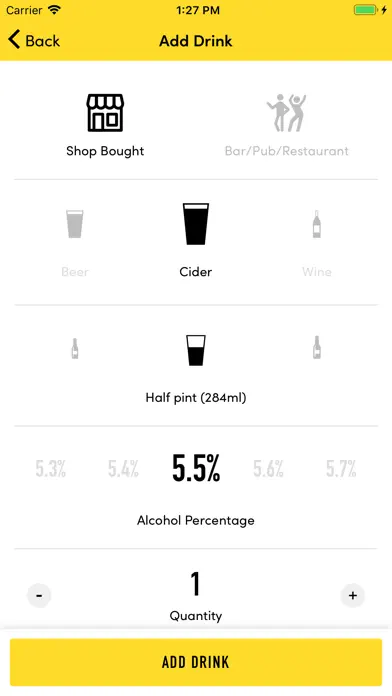
According to the US App Store listing for Try Dry, the app supports planned drinking, custom goals and special missions. You can aim for a completely dry month, reduce how often you drink or choose selected drinking days.
- Best for: Dry January, Sober October, alcohol-free days and gradual reduction.
- Main strength: Useful tracking and planning without a subscription.
- Main drawback: UK-centered alcohol units may feel unfamiliar to US users.
- Not designed for: Diagnosis, detoxification, medication, psychotherapy or emergency support.

Try Dry app facts
Try Dry is a free Health & Fitness app connected to Alcohol Change UK’s Dry January campaign. The developer shown on the US App Store is Alcohol Research UK.
| Fact | Details |
|---|---|
| Developer | Alcohol Research UK |
| Price to download | Free |
| Ongoing cost | No subscription, hidden costs or advertising according to the official guide |
| US App Store rating | 4.8 out of 5 |
| US rating count | 2,934 ratings |
| First released | December 11, 2018 |
| Last updated | September 1, 2026 |
| Platforms | Apple and Android |
Ratings can change after publication. A high store rating shows broad user satisfaction, but it does not establish that an app treats alcohol dependence or produces a particular health result.
What does Try Dry do?
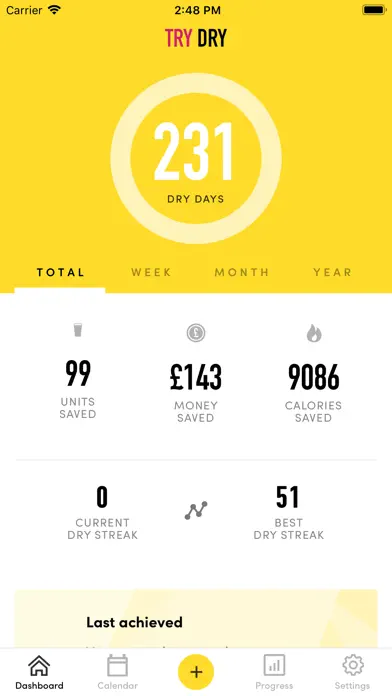
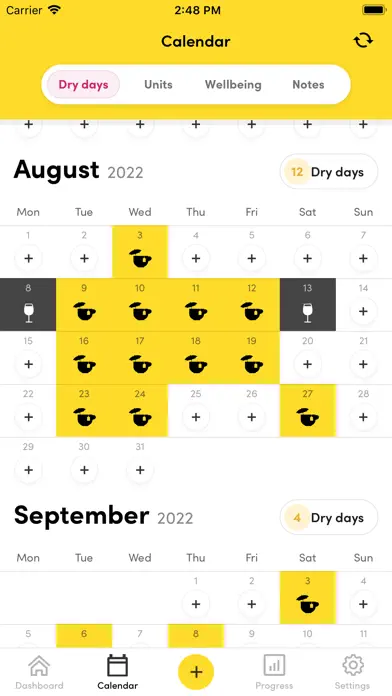
Try Dry combines an alcohol diary with goals, reminders and feedback about patterns. Its main value is helping you compare planned drinking with what actually happened.
The Alcohol Change UK user guide describes tools for recording alcohol units, calories, money, mood, energy, sleep and cravings. The app also includes charts, notes, badges, missions, a drinking-risk quiz and optional coaching emails.
- Choose a goal, such as drinking less, limiting drinking to selected days or stopping for a set period.
- Enter planned drinks or alcohol-free days before the week begins.
- Record what you actually drink instead of relying on memory the next morning.
- Add context such as cravings, mood, sleep or energy.
- Review the chart for repeat situations, such as the first drink after work or heavier weekends.
- Adjust the next goal based on the pattern you found.
Useful setup: Plan the coming seven days before a predictable drinking occasion. A decision made on Sunday afternoon may be easier to follow than one made at 6 p.m. on Friday.
How much does Try Dry cost?
Try Dry is free to download and use, with no advertised subscription. The official guide says there are no hidden costs and no advertising.
That makes the cost model unusually simple compared with many alcohol apps that use a free download followed by a trial or recurring membership. Try Dry is available for Apple devices, and its official guide also links to an Android version on Google Play.
Free access does not mean the app offers clinical care. The drinking-risk quiz and tracking data should be treated as informational tools, not a diagnosis or a decision about withdrawal safety.
Does research show that Try Dry works?
Research supports Dry January as a promising behavior-change campaign, but it does not prove that the Try Dry app alone causes people to drink less. Most available findings concern the broader campaign, its participants and its support tools.
A 2022 peer-reviewed observational evaluation examined temporary abstinence and longer-term drinking changes among Dry January participants. It identified Try Dry as the campaign’s official digital aid and described its tracking of alcohol units, calories and money.
Alcohol Change UK also reports that people using Dry January tools were twice as likely to complete the month alcohol-free, and that 70% were drinking significantly less six months later. Those figures come from a campaign evaluation summarized by the sponsoring charity, so they should not be read as app-only results. The charity’s summary of the Dry January findings does not establish that downloading the app will produce the same outcome for every user.
The studies also tend to involve people who actively choose a drinking challenge. Their results may not apply to people with severe alcohol-use disorder, people who cannot stop safely or people who rarely engage with the app.
Who is Try Dry best for?
Try Dry best suits adults who want a concrete view of when, why and how much they drink. It works for abstinence challenges and moderation, rather than requiring a permanent sobriety commitment.
- Someone trying a first alcohol-free month.
- Someone who wants three or four alcohol-free days each week.
- Someone curious about links among drinking, sleep, mood, energy and cravings.
- Someone who wants accountability without paying for a subscription.
- Someone who prefers private self-monitoring over a community-centered app.
It may also help expose routines that broad goals miss. For example, logging can show that the difficult point is not the whole weekend, but the first drink after Friday work, or that poor sleep follows one particular type of evening. Our guide to tracking alcohol-free progress explains how to use that information without treating every slip as failure.
Heavy daily drinkers and anyone with previous alcohol withdrawal should not stop suddenly without medical advice. Seek urgent care for seizures, hallucinations, severe confusion or rapidly worsening symptoms, and get prompt medical advice for tremor, sweating, anxiety, nausea or vomiting after reducing alcohol.
What are the real limits of Try Dry?
Try Dry’s main limits are its UK measurement conventions, self-reported records and lack of medical or crisis care. A streak or risk score cannot tell you if stopping alcohol suddenly is safe.
A 2025 analysis of real-world alcohol app reviews found that some Try Dry users considered its UK-origin measurement system inflexible, particularly when trying to change units for American use. US users should check how the app defines an alcohol unit instead of assuming it means one US standard drink. Our standard drink calculator can help you estimate drinks using serving size and alcohol percentage.
All entries depend on honest and reasonably accurate logging. Pours at home, cocktails and shared bottles can be hard to estimate. Calories and money saved are estimates, and mood or sleep changes can have several causes.
Independent comparisons describe Try Dry as a tracking and motivational tool, not clinical treatment. It does not replace addiction treatment, therapy, medication, supervised detoxification or peer support. It also cannot prove that someone is not dependent just because they completed a dry month.
What are the best Try Dry alternatives?
The best alternative depends on your goal: structured lessons, moderation coaching, a sobriety community or a simple day counter. Among released apps, these are reasonable options ranked by fit for common needs.
- Reframe: Best fit for people who want a longer educational program, tracking and community features. The listing describes a 160-day program and auto-renewing subscriptions after a seven-day trial. Read our Reframe app review.
- Sunnyside: Best fit for moderation and planning rather than an abstinence-only goal. It focuses on mindful drinking, tracking and coaching. See our Sunnyside review.
- I Am Sober: Best fit for sobriety pledges, milestone tracking and a large community. It is more abstinence-centered than Try Dry. Read our I Am Sober review.
- Nomo: Best fit for straightforward sobriety clocks, with optional accountability, journaling and community tools. See our Nomo review.
MeQuit’s own alcohol app, Drink Lens, is in App Store and Google Play review and is not ranked here.
How should you start using Try Dry?
Start with seven days of honest tracking and one specific goal, rather than trying to rebuild every drinking habit at once. If you may be physically dependent, speak with a clinician before setting an alcohol-free goal.
- Record your usual drinking pattern before choosing an aggressive target.
- Pick a measurable goal, such as designated alcohol-free days.
- Plan for the first predictable trigger, such as work drinks or alcohol kept at home.
- Log drinks soon after having them, while quantities are easier to remember.
- Review sleep, mood and cravings after one week.
- Keep the goal, reduce it or seek more support based on what you observed.
An app can provide structure, but it does not need to be your only support. If repeated plans are not working, or drinking is affecting health, work or relationships, see our guide on how to stop drinking safely and talk with a qualified health professional.
Try Dry app FAQ
Is the Try Dry app really free?
Yes. According to Alcohol Change UK’s official guide and the US App Store listing, Try Dry is free to download and use, with no subscription, hidden costs or advertising. Optional coaching emails are also listed among its support features. Mobile data charges from your phone provider may still apply.
Can I use Try Dry outside January?
Yes. Although Try Dry is the official Dry January app, it is designed for use throughout the year. You can use it for Sober October, another alcohol-free period or an ongoing reduction goal. Its planned drinking and custom goal tools do not require a January start date.
Can Try Dry help me cut down instead of quit?
Yes. Try Dry supports moderation as well as complete abstinence. You can plan selected drinking days, set custom goals and compare planned drinking with actual drinking. That flexibility distinguishes it from sobriety-only counters, although accurate results still depend on consistent and honest logging.
Does the Try Dry app work in the United States?
The app is available through the US App Store, but its alcohol measurement system comes from the UK. Some American users may find the unit settings unfamiliar. Check the app’s definition carefully because one UK alcohol unit is not automatically the same thing as one US standard drink.
Is Try Dry a medical treatment for alcohol dependence?
No. Try Dry is a behavior-change and tracking app, not an FDA-authorized treatment, detoxification service or substitute for professional care. Its quiz, charts and streaks cannot diagnose alcohol-use disorder or assess withdrawal risk. People concerned about dependence should speak with a clinician.
Can Try Dry tell me if it is safe to stop drinking?
No. An app cannot determine if unsupervised withdrawal is safe. Heavy daily drinking, previous withdrawal, morning drinking or symptoms after cutting down can signal higher risk. Do not stop suddenly without medical advice if physical dependence may be present. Seizures, hallucinations and severe confusion require emergency care.
What happens if I drink during Dry January?
Record what happened and continue tracking rather than abandoning the month. Note the time, setting, amount, craving and what you had planned. That entry can reveal a trigger and help you adjust the next week. A missed goal does not erase earlier alcohol-free days or the information you gained.
Are alcohol tracking apps effective?
Tracking can make patterns visible and support planning, but app results vary. Research on Dry January is encouraging, although it does not isolate the effect of Try Dry from the wider campaign. Apps are most useful when entries are accurate, goals are specific and extra support is added when needed.