
Reframe App Review: Is It Worth the Subscription?
The short answer
Reframe may be worth considering if you want structured daily lessons, drink tracking, community support and tools for cutting down or quitting alcohol. The free download leads to a paid subscription, with several plans listed. Its strong App Store rating shows user satisfaction, but independent research has not established that Reframe itself treats alcohol-use disorder.
Reframe is one of the most visible alcohol reduction apps, but its pricing, evidence and safety limits need more explanation than a star rating provides. This review is based on the current App Store listing, independent reviews and published research on digital alcohol interventions. We did not use the app ourselves.
The practical question is not simply if Reframe is good. It is if its lesson-heavy format matches your goal, budget and level of alcohol use. An app can help with the Friday work drinks or the automatic pour after dinner, but it cannot determine if stopping without medical support is safe.
Reframe review verdict
Reframe looks best suited to adults who want a structured, daily self-help program for reducing or stopping alcohol and who are comfortable paying for a subscription. It is less suitable for someone wanting a completely free tracker, a simple sobriety clock or clinical treatment for alcohol dependence.
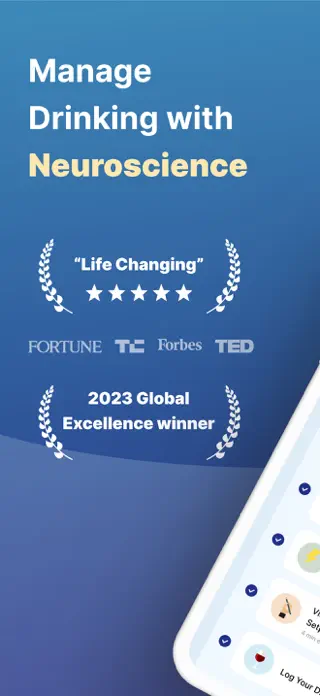
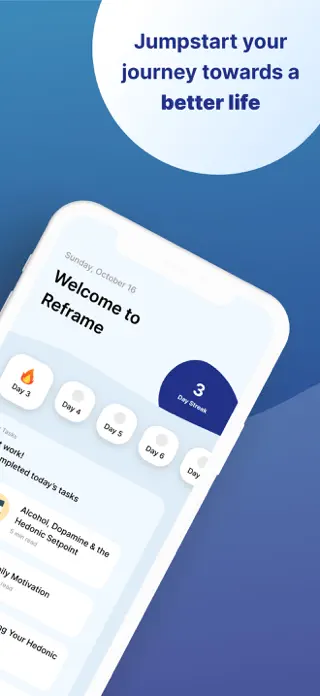
According to the Reframe App Store listing, the program combines education, progress tracking, community support and practical exercises. That is a fuller package than a basic drink counter. The roughly 160-day course may also feel demanding if you mainly want to log Saturday drinks and set a weekly limit.
- Main strengths: structured lessons, moderation and abstinence goals, drink logging, trigger tools, a large number of ratings and optional human coaching.
- Main drawbacks: subscription complexity, a long program, reported billing complaints and no identified independent trial showing that Reframe itself improves alcohol outcomes.
- Bottom line: reasonable as a behavior-change aid for someone without dangerous withdrawal risk, but not a substitute for medical assessment or alcohol treatment.

Reframe app facts and current cost
Reframe is free to download, but full access uses an automatically renewing subscription. The US App Store lists several monthly and annual products, so there is no single price that applies to every account or offer.
| Fact | Details |
|---|---|
| Developer | Glucobit Inc. |
| Price to download | Free |
| Subscription examples | $13.99 or $19.99 monthly, and $79.99, $99.99 or $119.99 annually |
| US App Store rating | 4.7 out of 5 from 44,911 ratings |
| Platforms | iPhone and iPad through the App Store, plus Android through Google Play |
| First released | February 19, 2020 |
| Last update | October 3, 2026 |
The store presents products with names such as Access, Silver and Premium, sometimes with repeated annual options. Prices can vary by promotion, account, country and tier. An independent Reframe price comparison also notes this variation. Check the confirmation screen for the exact billing period, price and included services before subscribing.
Public listings and independent reviews report a seven-day trial for some subscriptions. Trials generally renew automatically unless canceled. Optional human coaching may cost extra: one independent comparison reported about $79.99 for a one-time session and up to $249.99 per month for a package with three video sessions and messaging. Those prices may change and should not be assumed to be part of the base subscription.
Before starting a trial, take a screenshot of the offer and set a calendar reminder at least 24 hours before the displayed renewal time.
What Reframe does each day
Reframe combines a long educational course with drink logging, goal setting, craving tools and community support. It can be configured around cutting down or stopping rather than requiring one goal from every user.
The core program runs for roughly 160 days. Daily lessons explain alcohol, habits, triggers and behavior change, while tracking tools let users record drinking and progress. An independent review of Reframe describes meditations, exercises and coaching alongside the educational material.
- Daily education: short material intended to explain drinking patterns and support new responses.
- Drink tracking: records alcohol use so patterns become easier to see over time.
- Goals: supports both moderation and alcohol-free plans.
- Trigger and craving tools: provides activities for moments such as a work happy hour, an argument or the usual evening drink.
- Community: offers a private space for members to discuss progress.
- Coaching: paid options have included individual access and live calls.
This breadth is useful only if you will open the app consistently. Someone who wants daily structure may appreciate a new lesson each morning. Someone who mainly needs a fast place to mark alcohol-free days may find 160 days of content excessive.
Who Reframe is most likely to suit
Reframe may suit adults who want to change recurring drinking habits but do not need medically supervised withdrawal. It is particularly relevant for people who respond well to lessons, written reflection, goals and repeated check-ins.
- You want to cut down rather than commit immediately to permanent abstinence.
- You want to stop drinking and prefer a daily curriculum instead of a bare sobriety counter.
- Your drinking clusters around recognizable cues, such as Friday drinks, dinner, stress or social events.
- You value a built-in community and may want paid coaching.
- You can commit several months to a structured program and accept an ongoing subscription.
It may be a poor fit if cost is the main concern, if you dislike daily educational content or if you only want a free calendar. It is also not the right first step for someone with previous withdrawal symptoms, withdrawal seizures or heavy daily drinking. Those situations call for medical advice before making a major reduction.
Get medical advice before substantially reducing or stopping if you drink heavily every day, have had withdrawal before or have experienced a withdrawal seizure. Call 911 for a seizure, severe confusion, hallucinations, collapse, trouble breathing or other immediate danger.
What the evidence does and does not show
Research supports describing Reframe as a structured self-help tool, not as a clinically proven treatment for alcohol-use disorder. Its high App Store rating reflects user satisfaction, but ratings cannot establish medical effectiveness or safety.
Reframe has publicized large reductions in alcohol use among its members. Independent commentary has reported company claims that 91% of users substantially reduced drinking within three months and 81% did so within two months. Those claims do not, by themselves, establish independent measurement, representative sampling, a control group or peer-reviewed publication.
A targeted search reported by an independent comparison found no published Reframe-specific study connecting use of the app with alcohol outcomes as of August 31, 2026. Broader research on digital alcohol programs suggests that online and mobile interventions can produce small reductions in consumption, but results vary and study quality is mixed. Evidence about digital programs generally should not be treated as proof for this particular app.
The fair conclusion is that Reframe contains tools commonly used for behavior change and may help some people stay focused. There is not enough independent Reframe-specific evidence to promise a particular reduction, abstinence rate or clinical result.
Reframe complaints and practical limitations
The biggest practical concerns are subscription clarity, cancellation complaints and the amount of content. These issues will not affect every subscriber, but they are worth checking before accepting a trial.
Users report unexpected charges, cancellation difficulty and refund disputes in independent review aggregations. These are reports rather than verified findings about every account. Still, the large number of similarly named subscription products can make it difficult to tell what is included and when billing begins. A collection of Reframe user reviews documents some of these complaints.
- Plan confusion: multiple monthly, annual and tiered products appear in the store.
- Renewal risk: a trial can become a paid subscription if it is not canceled in time.
- Content load: a 160-day course requires more attention than a simple tracker.
- Coaching cost: human support may be a separate, significantly more expensive purchase.
- Evidence gap: positive reviews are not the same as independent clinical outcome research.
- Medical limit: the app cannot assess physical dependence or make withdrawal safe.
Subscription management depends on where payment was made. For an Apple subscription, check Settings, your name, then Subscriptions. Confirm that the subscription shows an expiration date rather than a future renewal date after cancellation.
How to decide if Reframe is worth it
Reframe is worth the cost only if its structure changes measurable drinking behavior, not simply because you complete lessons or maintain a streak. A short baseline and review period can help you judge that clearly.
- Record seven baseline days. Write down each drink, drinking day, strongest trigger, craving, sleep quality and any possible withdrawal symptoms.
- Choose one measurable target. Examples include a set number of alcohol-free days or a clear maximum number of drinks. Do not make an abrupt reduction without medical advice if you may be physically dependent.
- Use the relevant features. Complete lessons, log drinks honestly and open a craving exercise during the actual 6 p.m. trigger rather than only reading about it later.
- Review after two to four weeks. Compare drinking days, total drinks, cravings, sleep and money spent with the baseline.
- Decide deliberately. Continue if the change is meaningful and the price is manageable. Cancel if you are mainly opening lessons without changing behavior, or seek more support if control is getting harder.
Also consider opportunity cost. An annual plan can be reasonable for someone using the program most days, but poor value for someone who needs a basic counter twice a week. You can compare its approach directly in our Reframe versus Sunnyside guide.
Judge the app by changes in drinking, cravings and daily life, not by badges, lesson completion or time spent on screen.
Alternatives to Reframe
The strongest alternative depends on your goal: free behavior tracking, moderation coaching, an abstinence community or a simple sobriety clock. The following released apps are ranked by fit for common Reframe alternatives, not by clinical effectiveness.
- Try Dry: Best fit for a free option supporting both planned drinking and alcohol-free goals. The listing describes unit, calorie and money tracking, custom goals and special missions. Read our Try Dry app review.
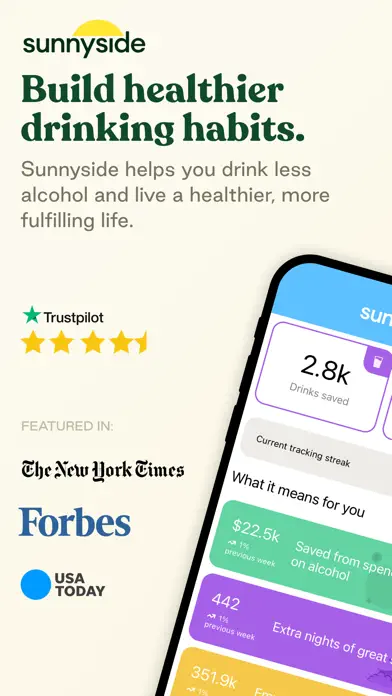
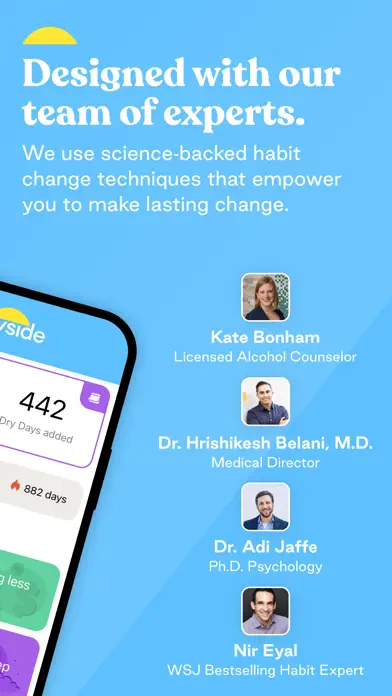
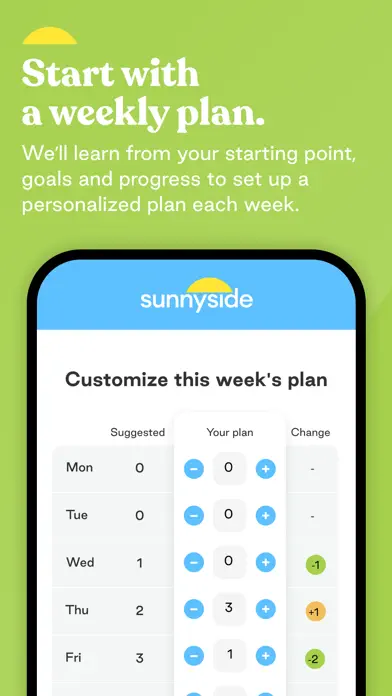
- Sunnyside: Best fit for people focused specifically on mindful drinking and moderation rather than sobriety. It emphasizes planning, tracking and coaching. See our Sunnyside review.
- I Am Sober: Best fit for abstinence tracking and a large established community. It includes sober-day tracking, daily pledges and progress notes. See the I Am Sober review.
- Nomo: Best fit for simple sobriety clocks with optional community and accountability features. Read our Nomo review.
Drink Lens, the MeQuit alcohol app, is pending store approval and is not available to download. It is not ranked here because it has not been released.
None of these apps can diagnose alcohol-use disorder or manage dangerous withdrawal. If tracking repeatedly shows that you cannot stay within your limit, drinking is affecting work or relationships, or you experience symptoms when alcohol wears off, talk with a clinician about behavioral treatment, support groups and medication options.
Alcohol reduction app FAQ
Do alcohol reduction apps actually work?
Research on digital alcohol interventions finds small average reductions in drinking, but results vary and study quality is mixed. An app may help with tracking, reminders and coping plans. It should not replace medical assessment or treatment when physical dependence, severe alcohol-use disorder or dangerous withdrawal risk may be present.
Can an app help me drink less without quitting completely?
Some apps support moderation through drink logging, planned alcohol-free days and weekly limits. Start with one measurable target and compare it with a seven-day baseline. If you repeatedly exceed the target, lose control once drinking begins or have withdrawal symptoms, seek professional advice rather than relying only on an app.
How long should I use a drinking app before judging it?
Record a seven-day baseline, then use the app consistently for two to four weeks. Compare total drinks, drinking days, cravings, sleep and money spent. Lesson completion alone is not enough. Look for a meaningful change in alcohol use and daily functioning before paying for a longer subscription.
Is a high App Store rating proof that an alcohol app works?
No. A high rating can show that many users like the design, content or support, but it does not prove clinical effectiveness or safety. Stronger evidence comes from independent studies measuring alcohol outcomes, ideally with comparison groups, clear follow-up periods and transparent reporting.
Is it safe to stop drinking with help from an app?
Not always. Alcohol withdrawal can be life-threatening for people who are physically dependent. Symptoms may begin about 6 to 24 hours after a major reduction, with seizures often occurring within 12 to 48 hours. Heavy daily drinkers and anyone with previous withdrawal should get medical advice before stopping.
What should I track when trying to drink less?
Track the number and timing of drinks, drinking days, strongest triggers, cravings, sleep and money spent. Also record symptoms that occur when alcohol wears off, such as shaking, sweating, nausea, agitation or a racing heart. Those symptoms deserve medical attention, especially after heavy or prolonged drinking.
When is an alcohol app not enough?
An app is not enough if you have withdrawal symptoms, cannot control the amount once you start, drink despite serious health or relationship harm, or need alcohol to function normally. A clinician can assess severity and discuss behavioral therapies, mutual-support groups, supervised withdrawal and approved medications.