

How to Quit Smoking When You Have ADHD
The quick version
To quit smoking with ADHD, move the plan out of your head and into visible prompts, timed reminders, and short replacement actions. Track only the triggers that help you act differently. Use nicotine replacement or prescription medication when appropriate, add behavioral support, and prepare extra help for boredom, task changes, stress, and temporary concentration problems during withdrawal.
A cigarette may be tied to starting work, driving, calming down after conflict, or getting through a dull task. With ADHD, those links can become especially automatic. Forgetting the plan, acting before thinking, and seeking quick stimulation can all make a craving harder to interrupt.
That does not mean you lack discipline or cannot quit. It means your plan needs to work during the exact moments when attention and impulse control are strained. The strongest setup is usually simple, visible, medically informed, and quick to restart after a slip.
Why ADHD changes the shape of a quit plan
ADHD does not make quitting impossible, but it often makes the quit plan need more structure. A standard “just don’t smoke” plan leaves too many gaps for impulsivity, boredom, emotional swings, and forgotten intentions.
Many people with ADHD smoke around transitions: before starting work, after an argument, during a task switch, or when the first morning cigarette before coffee feels automatic. Smoking is roughly twice as common among people with ADHD as in the general population, according to Columbia University Irving Medical Center columbia.
The common misconception is that nicotine is the only way to focus. It can feel that way in the moment, but ADHD treatment, replacement routines, nicotine support, and better cue design can reduce the need to use cigarettes as a focus tool. For ADHD smoking cessation, structure is not extra. It is the plan.
Smoking, withdrawal, and ADHD: five useful facts
- People with ADHD are more likely to smoke and may have stronger cravings or withdrawal than people without ADHD.
- Standard cessation tools still matter, including nicotine replacement, prescription medications, counseling, and quitlines.
- In one clinical trial of smokers with ADHD, 43% quit using behavioral counseling plus the nicotine patch, compared with typical general-trial quit rates of about 20-30%, per Columbia’s summary of the research columbia.
- A Cochrane review found that adding behavioral support, such as counseling or quitlines, to medication increases abstinence by about 10-20 percentage points cochrane smoking data.
- Multiple quit attempts are normal. They show where the plan needs more support, not that the person is broken.
One well-supported approach combines cessation medication or nicotine replacement with behavioral support. For ADHD, that support often needs shorter steps and more visible cues.
Find the stimulation loop behind each cigarette
ADHD nicotine habits often follow a cue-craving-response-reward loop: a cue appears, the brain wants quick stimulation or relief, smoking becomes the response, and nicotine delivers a short reward.
The cue might be boredom, stress, task switching, conflict, fatigue, or needing to focus. Nicotine can feel like a fast tool for attention, but the same loop can connect cigarettes with vaping, caffeine, scrolling, snacking, or the Friday 6 p.m. drink that makes a cigarette feel automatic.
A useful craving log records the exact cue and body state, not just the cigarette count. “3:40 p.m., unfinished invoice, restless, 8/10 craving” is more useful than “smoked again.” It shows the trigger pattern.
A loop.
This model is not a diagnosis or moral judgment. Small interruptions become more useful when they are part of broader support for smoking cessation and mental health.
Talk with a clinician or pharmacist before changing ADHD medication or combining it with nicotine replacement, varenicline, or bupropion. Get urgent help for suicidal thoughts, severe mood changes, panic symptoms, or any symptoms that feel dangerous.
Put reminders where cravings actually happen
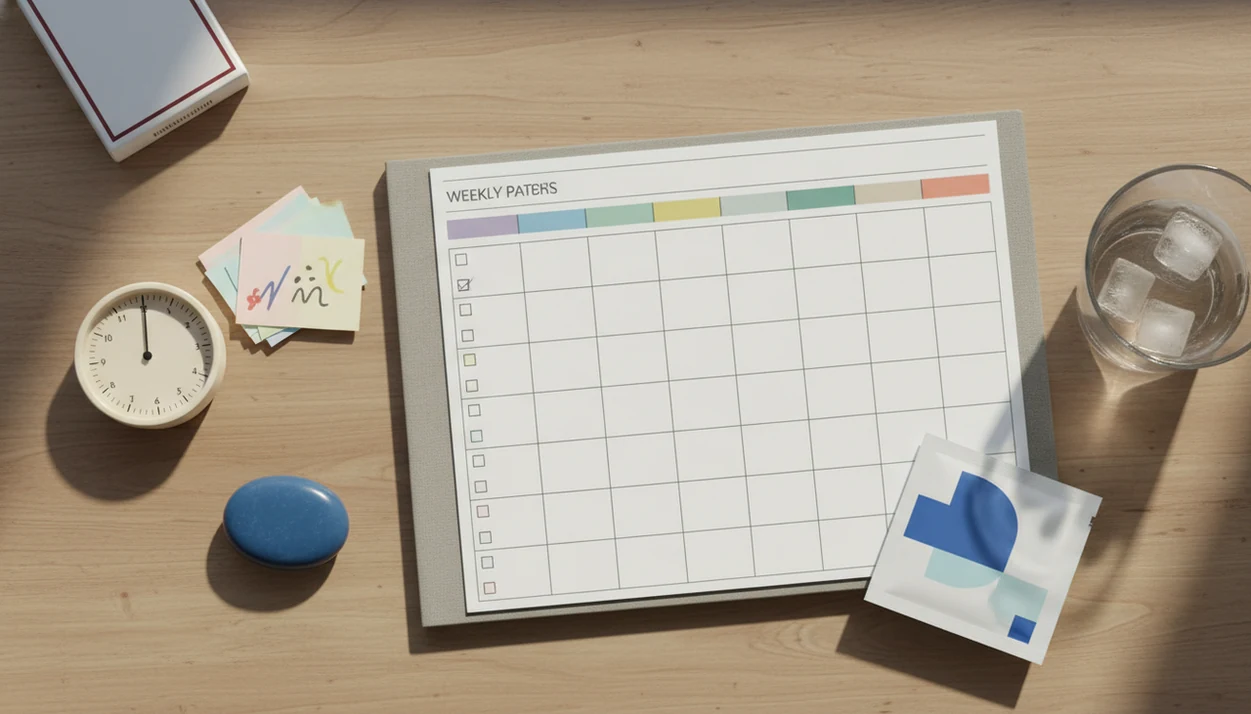
Use quit smoking reminders with ADHD by making them specific, visible, and tied to real trigger windows. Too many alerts become background noise, so reminder customization matters.
- Set a quit date or cut-down target that fits the next seven to fourteen days.
- Place visual cues in smoking trigger locations, such as the car, doorway, desk, or jacket pocket.
- Schedule timed reminders for high-risk windows, including wake-up, breaks, after meals, and evening boredom.
- Log each craving with the trigger, intensity, whether you smoked, and what helped.
- Reward small milestones and reset after slips by changing one cue, not rewriting the whole plan.
A reminder that says “pause for three minutes before the corner store” works better than a vague “stay strong.” The thumb hovering over a reset button is a real quit moment. Keep that button easy to find.
Match support to your ADHD treatment day
Look for cravings that cluster when ADHD medication is wearing off, during task changes, after poor sleep, or when a demanding task begins. Put reminders, nicotine replacement, planned breaks, and support calls near those windows. In one randomized clinical trial of smokers with ADHD, a subgroup with more severe ADHD and substantial symptom improvement had abstinence rates of 70% with extended-release methylphenidate and 37% with placebo. The finding did not apply uniformly to all participants.
Do not change or stop prescribed ADHD medication to improve a quit attempt. Show your craving pattern to the prescriber and discuss timing, sleep, appetite, anxiety, and symptom coverage.
Build a craving log you can finish in one minute
An ADHD-friendly craving log should be short enough to use during a three-minute craving. If it takes too long, it will not survive a stressful Tuesday.
Keep the log to five quick fields:
- Time and place: Record when and where the urge hit.
- Trigger: Note boredom, transition time, unfinished tasks, conflict, fatigue, or needing to focus.
- Mood and intensity: Use a 1-10 rating instead of a long journal entry.
- Outcome: Mark cigarette avoided, cigarette smoked, vape used, or delayed.
- Replacement action: Add the action that helped, such as walking, water, music, breathing, or a timed focus sprint.
Reviewing the log shows high-risk windows, which improves reminder timing.
Medication, counseling, and structure work better together
ADHD smoking cessation usually works better when medical tools and behavior supports are combined. Start with proven cessation support, then shape it around the times when attention, impulses, and routines cause trouble.
| Tool | What it helps | ADHD-friendly adaptation | Note |
|---|---|---|---|
| Nicotine patch | Baseline withdrawal | Pair with timed check-ins | Ask about dosing and safety |
| Gum or lozenges | Sudden cravings | Keep in trigger locations | Useful for impulsive spikes |
| Prescription cessation medications | Cravings and dependence | Use pill reminders | Requires clinician guidance |
| Counseling or quitlines | Planning and accountability | Use short action steps | Adds support to medication |
| ADHD treatment | Symptoms and regulation | Coordinate with quit plan | Not stand-alone cessation treatment |
| Reminders | Time blindness | Fewer, clearer alerts | Too many alerts backfire |
| Craving tracking | Trigger patterns | One-minute logs | Review weekly |
Research on smokers with ADHD found methylphenidate or atomoxetine reduced cotinine levels and withdrawal symptoms, suggesting possible support for cessation the NIH. Before combining nicotine replacement products or adding a prescription option, check the plan with a clinician or pharmacist. For food-related replacement concerns, quit smoking without weight gain may help you plan substitutions.
Give cessation medication enough time to work
Quit-smoking medicine is generally meant for sustained use, not only for the worst afternoon craving. The CDC says most options work best when used for 6 to 12 weeks or longer, depending on the medicine and plan. A consistent schedule also removes repeated decisions from a day already strained by withdrawal.
A nicotine patch supplies a steady level of nicotine, while gum or a lozenge can address sudden cravings. The CDC notes that a patch plus gum or a lozenge may work well. Follow product directions and ask a clinician or pharmacist about dosing, health conditions, pregnancy, and other medications.
Medication questions and signs you need clinical help
Bring in a clinician or pharmacist when medication timing, strong symptoms, or other health conditions make a basic quit plan insufficient. This is especially important with ADHD because timing, stimulation, sleep, and withdrawal can all overlap.
- Ask before you combine nicotine patches with gum, lozenges, prescription cessation medication, or other nicotine products. More support is not automatically safer.
- Check in if your ADHD medication timing, dose, appetite effects, sleep, or focus patterns change during a quit attempt. A small schedule shift can change the whole day.
- Get urgent support for severe withdrawal, major mood changes, panic symptoms, or any suicidal thoughts. Do not try to “track through” a crisis.
- Tell a professional if you are pregnant, have heart disease, or take complex medications, including multiple prescriptions or medications with stimulant effects.
- Use a quitline, counselor, or structured program when the same slip keeps happening after the same trigger, such as driving, conflict, alcohol, or late-night boredom.
Professional help is not a failure state. It is another layer of the quit system.
ADHD and smoking questions
Is quitting smoking harder when you have ADHD?
It can be harder because withdrawal may temporarily worsen concentration, irritability, restlessness, and impulse control. Smoking may also be strongly tied to boredom, task changes, or attempts to focus. Medication, behavioral support, visible reminders, and a simple urge plan can reduce the number of decisions you must make during difficult moments.
Does nicotine actually help ADHD focus?
Nicotine can create short-lived alertness or relief, but cigarettes also build a cycle of dependence, withdrawal, and temporary relief. That cycle can feel like treatment even when it is maintaining the problem. ADHD should be treated directly, while nicotine withdrawal is managed with appropriate cessation support rather than continued smoking.
Can ADHD medication help me stop smoking?
Better control of ADHD symptoms may help some people follow a quit plan, but ADHD medication is not a stand-alone smoking treatment. Research findings are not uniform across all adults with ADHD. Do not start, stop, or change a stimulant or other prescribed medication solely to quit smoking without discussing it with the prescriber.
Can I use a nicotine patch while taking stimulant medication?
There is no single answer for every person. A clinician or pharmacist should consider your stimulant dose, blood pressure, heart history, sleep, anxiety, pregnancy status, and other medications. Do not assume that combining treatments is automatically unsafe or automatically appropriate. Bring a complete medication list when asking.
Why do I crave cigarettes when my ADHD medication wears off?
That period may bring returning ADHD symptoms, fatigue, hunger, irritability, or a familiar transition cue. Track the time for several days rather than guessing. Then discuss symptom coverage with your prescriber and place a planned snack, break, reminder, support contact, or approved nicotine replacement near that window.
What can replace the stimulation I get from smoking?
Use options that are fast and easy to start: a brisk walk, cold water, strong mint gum, music, a brief movement break, or a timed work sprint. Match the replacement to the trigger. Boredom may need movement or novelty, while stress may respond better to slower breathing and a change of location.
What should my ADHD-friendly urge plan say?
Keep it short enough to read during a craving: wait 5 to 10 minutes, leave the smoking location, drink water, walk or move, and use approved nicotine replacement as directed. Add one person or quitline you can contact. Put the plan on your phone, desk, car dashboard, or another high-risk location.