

quitSTART App Review: Useful Free Help With Limits

Our short verdict
quitSTART is a solid free app for cigarette smokers who want tailored tips, craving distractions, progress tracking and support after a slip. It has no paid tier identified in official listings. Its strongest qualities are accessibility and practical tools, but published research does not establish a reliable long-term quit rate. It is less suitable for tracking vaping or nicotine pouches.
The quitSTART app comes from Smokefree.gov, a smoking cessation resource created by the National Cancer Institute. It is designed especially for teens and young adults, though other adults can use it. The iPhone App Store version history dates to January 2012, and the app has accumulated 2,424 US ratings.
Our editorial team reviewed its current store information and published research, not the app through hands-on use. Here is what it offers for the 7 a.m. coffee cigarette, a craving after lunch or a slip on Friday night, plus where its support stops.
What does the quitSTART app do?
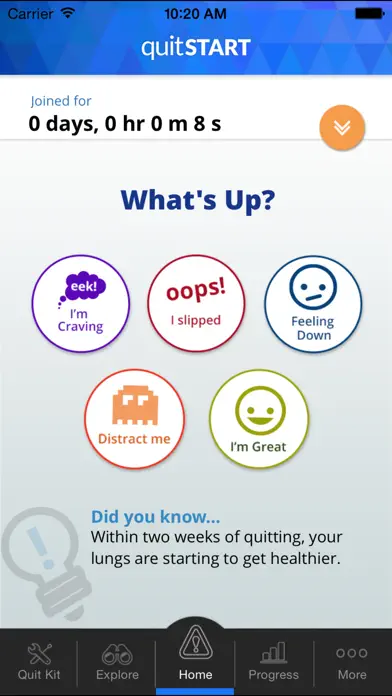
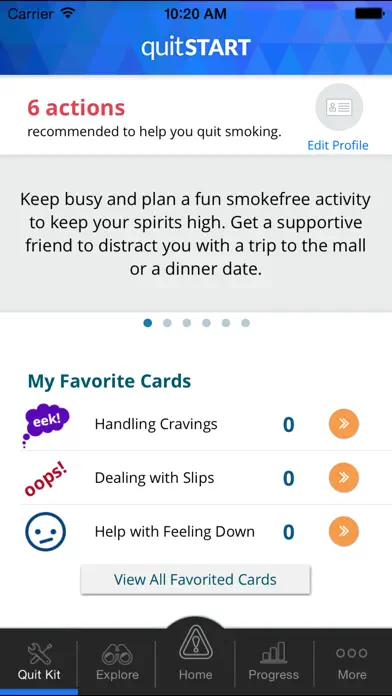
quitSTART builds smoking guidance around the history and goals entered by the user. According to the official Google Play listing, it combines preparation, progress tracking, craving support and help returning to a quit attempt after smoking.
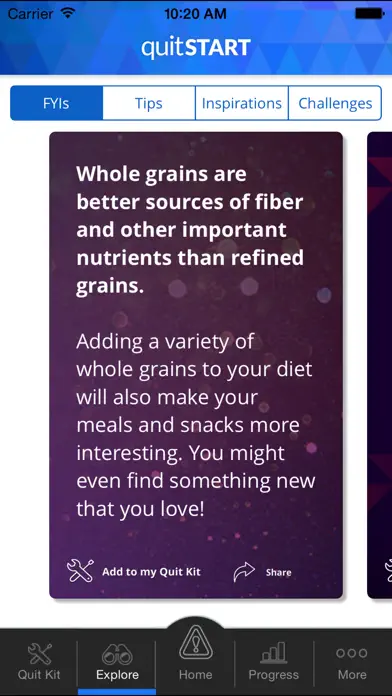
- Tailored tips, inspiration and challenges
- A quit date and preparation guidance
- Smoke-free progress and milestone badges
- Games and other distractions for cravings
- Tools for bad moods and difficult moments
- A Quit Kit for saving useful material
- Support for getting back on track after a slip
The Smokefree.gov description also says users can mark smoking-related places and receive location-based tips. That may help if the car, work parking lot or a particular coffee shop regularly triggers smoking. More trigger-planning ideas are available in our guide to cravings and triggers.
How much does quitSTART cost?
quitSTART is free to download, with no paid tier identified in the official listings. The Smokefree Teen tools page also describes it as a free smartphone app.
It is available for iPhone and Android. There is no subscription price to compare, no identified premium upgrade and no need to decide which features justify a monthly payment. That makes it a practical first app for someone who wants structured support without a new bill.
quitSTART facts at a glance
quitSTART is an established Health & Fitness app with a substantial US rating history. The figures below come from the US iPhone App Store listing checked in October 2026.
| Fact | Details |
|---|---|
| Developer | ICF International, Inc. |
| Price to download | Free |
| US App Store rating | 4.6 out of 5 |
| US rating count | 2,424 |
| First iPhone release | January 18, 2012 |
| Last update | August 13, 2026 |
| Platforms | iPhone and Android |
What does quitSTART do well?
quitSTART does well at turning common quitting problems into specific actions. Instead of showing only a smoke-free counter, it provides something to open when a craving, bad mood or slip happens.
- Craving games offer an immediate distraction when lighting up feels automatic.
- Badges make early milestones visible during a week when progress can feel slow.
- Tailored tips can connect support to a person's smoking history and quit goal.
- Slip support avoids treating one cigarette as proof that the whole attempt is over.
- Location reminders may interrupt routines tied to the car, workplace or social settings.
The tone and feature set are especially appropriate for younger smokers. A 2021 study involving young adults ages 18 to 35 with serious mental illness found acceptable usability for quitSTART and QuitGuide, with quitSTART engagement and usability ratings improving over time. The study did not establish long-term cessation effectiveness.
What are the app's real limits?
quitSTART is primarily a cigarette-smoking app, not an all-purpose nicotine tracker or complete treatment plan. People quitting disposable vapes, refillable vapes or nicotine pouches may find that its language and progress measures do not match what they use.
- It does not provide dedicated pod, puff or pouch tracking.
- Badges and completed prompts show activity, not proof of continued abstinence.
- An app cannot determine which medication is medically appropriate.
- Games may help someone wait out a craving, but they do not remove withdrawal.
- Its published studies do not provide a dependable long-term quit percentage for typical users.
Nicotine withdrawal can begin within a few hours, peak during the first few days and ease over the following weeks. Our nicotine withdrawal timeline explains what to expect and when symptoms deserve medical attention.
Call 1-800-QUIT-NOW for free state-based quitting support. Contact a clinician if withdrawal feels unmanageable, your mood becomes severely depressed, or you want help selecting nicotine replacement or prescription medication. Call 988 for immediate help with suicidal thoughts or a mental health crisis.
What does published research say?
Published research supports quitSTART as a usable smoking cessation tool, but it does not prove that the app produces long-term quitting for everyone. The studies mainly examine usability, engagement and short-term outcomes.
A 2024 analysis included 131 smokers trying to quit. The average perceived-usability score was 59.1 on the study's modified measure. Higher perceived usability was associated with short-term cessation, but an association cannot show that the app caused the outcome. Usability also differed across racial groups. The full analysis is available through PubMed Central.
A 2025 randomized study compared 81 adult smokers using quitSTART, with 40 assigned incentives for completing assessment prompts and 41 receiving no incentives. The incentive group completed an average of 13.3 prompts, compared with 4.7 in the other group. Self-reported four-week cessation was 17.5 percent in the incentive group and 36.6 percent without incentives. That cessation difference was not statistically significant.
More taps, prompts or badges do not necessarily mean a better quit outcome. Judge an app by useful changes such as fewer cigarettes, sustained abstinence and getting appropriate treatment.
Who is quitSTART best suited to?
quitSTART best suits cigarette smokers who want free, low-pressure support and short activities they can use during the day. It is particularly relevant to teens and young adults, although its tools are not restricted to those age groups.
It may fit someone who wants to set a quit date, collect tips and recover quickly after a slip. It is less well matched to people who need detailed vape or pouch tracking, a gradual daily limit, intensive counseling or medication guidance. For a broader plan, see how to quit smoking and discuss treatment options with a clinician.
What are the best quitSTART alternatives?
The best alternative depends on the nicotine product and the kind of structure needed. NicLess fits multi-product tracking, while the MeQuit program fits people who prefer a lesson-based course.
NicLess and the MeQuit program are made by the team behind MeQuit, and readers who want a long rating history can start with the established apps listed below. quitSTART itself also has a substantial history, with 2,424 US ratings.
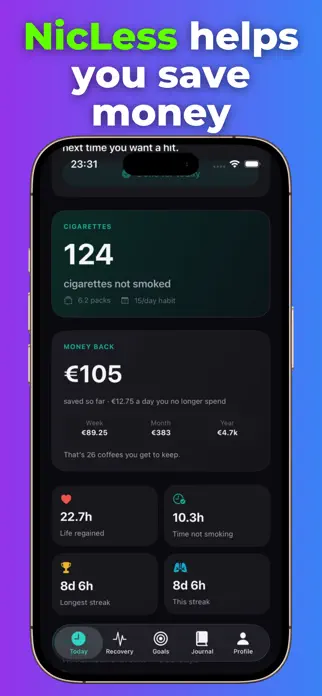
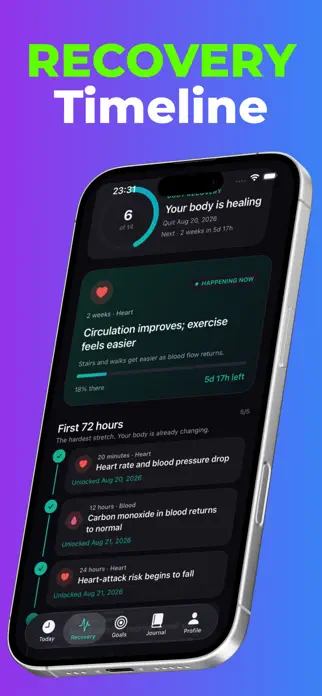
- NicLess: A free-download iPhone tracker for cigarettes, vapes and nicotine pouches. It includes cut-down pacing, a craving button, a slip button and on-device data with no account. It launched in September 2026 and has no US ratings yet.
- MeQuit Quit Smoking program: A free-download iPhone course using CBT, cue exposure, conditioning ideas and hypnosis-style exercises. It takes about 8 to 10 hours in total and has 5 US ratings. It does not track cigarettes.
- Smoke Free: An established cigarette-focused tracker with 4.8 stars from 57,273 US ratings. It tracks time, money, cigarettes avoided and craving patterns. Read our Smoke Free app review.
- Kwit: A gamified smoking app with progress statistics, breathing tools and CBT-based craving support. It has 4.7 stars from 2,824 US ratings. See how Kwit compares with Smoke Free.
Is quitSTART worth downloading?
Yes, quitSTART is worth considering if you smoke cigarettes and want a free app with tailored tips, craving distractions and compassionate slip support. Its 4.6-star rating from 2,424 US ratings also gives prospective users more feedback history than many newer quit apps.
Use it as one part of a quit plan rather than a replacement for counseling or medical treatment. The strongest plan may combine an app with social support, a quitline, and appropriate quit-smoking medication. Choose another tracker if vaping or pouches are your main nicotine source.
Quit smoking app FAQ
Do quit smoking apps actually work?
Quit-smoking apps can provide reminders, tracking, coping exercises and support during cravings. Research results vary by app and study population, so downloading an app does not guarantee abstinence. An app is more useful when paired with a clear quit plan, appropriate medication, counseling or quitline support.
What should a good smoking cessation app include?
Look for a quit-date plan, quick craving tools, progress tracking, trigger notes and a nonjudgmental way to record slips. The app should match the product you use. Cigarette counters may be frustrating for someone trying to track vape pods, puffs or nicotine pouches.
Can an app help during a cigarette craving?
An app can interrupt the automatic routine by offering breathing guidance, a game, a reminder or a reason for quitting. Open the tool before buying or lighting a cigarette. If coffee is the trigger, move to another room, drink water and give the urge time to change.
Should I use a quit-smoking app with medication?
Many people use behavioral support and medication together. An app can organize triggers and progress, while nicotine replacement or prescription medicine addresses other parts of dependence. Ask a clinician or pharmacist what is appropriate, especially during pregnancy, while breastfeeding or if you have medical or mental health concerns.
Can a smoking app also help someone quit vaping?
Some coping tools, including trigger notes and craving distractions, can apply to vaping. However, cigarette-focused counters may not reflect frequent vaping or pod use. Someone quitting a vape may prefer an app that tracks that product directly and allows a gradual reduction before the quit date.
Can teenagers use a free quit smoking app?
Yes. Some free apps are designed especially for teens and young adults. For example, quitSTART provides tailored tips, craving games, progress badges, and support after a slip. An app should complement, not replace, help from a clinician or quitline. A teenager who has strong withdrawal, severe low mood, or suicidal thoughts needs prompt professional support.
How can I tell if a quit smoking app is helping me?
Judge the app by behavior and outcomes, not taps or badges alone. Useful signs include following a quit plan, smoking fewer or no cigarettes, responding to cravings without smoking, and returning quickly after a slip. Research has not established a dependable long term quit rate for every app. If the app is not changing what you do, add quitline, counseling, or medication support.
References
- Google Play: quitSTART Quit Smoking
- Smokefree Teen: Tools for Quitting
- Smokefree Women: quitSTART
- JMIR Mental Health: quitSTART and QuitGuide Usability Study
- PubMed Central: quitSTART Perceived Usability Analysis
- JMIR: Incentives and quitSTART Engagement Study
- National Institute on Drug Abuse: Tobacco, Nicotine, and E-Cigarettes