

Kwit vs Smoke Free: A Practical App Comparison

The short answer
Choose Kwit if gamified progress, motivation cards, and visual rewards help you stay engaged. Choose Smoke Free if you want detailed quit tracking, craving records, health milestones, and structured missions through its Pro plan. Smoke Free has a much longer rating history and verified Android availability, but neither app has been proved superior for long-term quitting.
Kwit and Smoke Free can both track a quit attempt, money saved, cigarettes avoided, cravings, and health progress. The main difference is how they organize that support. Kwit leans into visual progress and motivational tools. Smoke Free puts more emphasis on detailed tracking, craving patterns, and behavioral tasks.
The right choice becomes clearer when you picture the hard moments: the cigarette with 7 a.m. coffee, the drive home, or Friday drinks with coworkers. Pick the app whose tools you are most likely to open in that moment, not simply the one with the higher star rating.
Kwit vs Smoke Free at a glance
Kwit is the stronger fit for people motivated by game-like progress and encouragement. Smoke Free is better suited to people who want detailed records and a task-based quit plan, although its structured missions are part of the Pro offering.
| Decision factor | Kwit | Smoke Free |
|---|---|---|
| Main style | Gamified progress and motivation | Detailed tracking and behavioral tasks |
| Core tracking | Quit time, cigarettes avoided, money saved, health progress | Quit time, cigarettes not smoked, money saved, health progress |
| Craving support | Craving tracking, breathing, motivation cards | Craving records, notes, tips, and progress graphs |
| Structured plan | Additional strategies and insights require premium access | Daily missions are promoted as a Pro feature |
| Apple devices | iPhone, iOS 18.1 or later | iPhone and Apple Watch, iOS 16.0 or later |
| Android | Not established by the current US iPhone listing | Current Google Play listing verified |
| US App Store rating | 4.7 from 2,824 ratings | 4.8 from 57,273 ratings |
| Best fit | Visual motivation and rewards | Tracking, craving analysis, and scheduled tasks |
Both apps are established. Kwit’s US App Store listing dates to 2012, while Smoke Free’s listing dates to 2013. Both were updated in 2026.
Which app has the more useful quitting workflow?
Smoke Free offers the more structured workflow if you pay for Pro, while Kwit offers a more visual and motivational experience. The better design is the one that turns a craving into a specific action.
Kwit’s approach
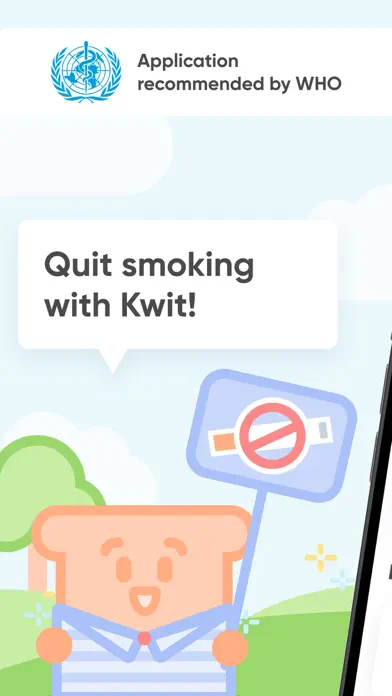
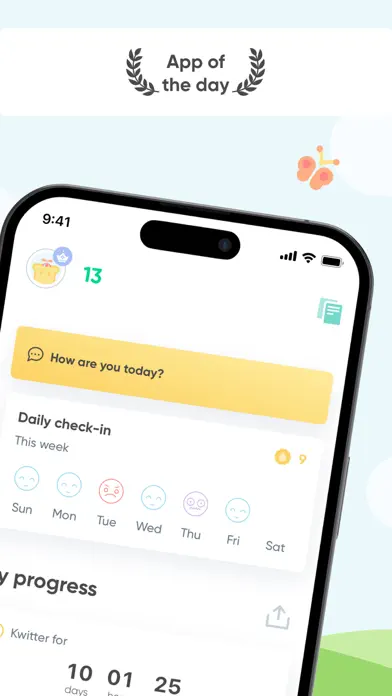
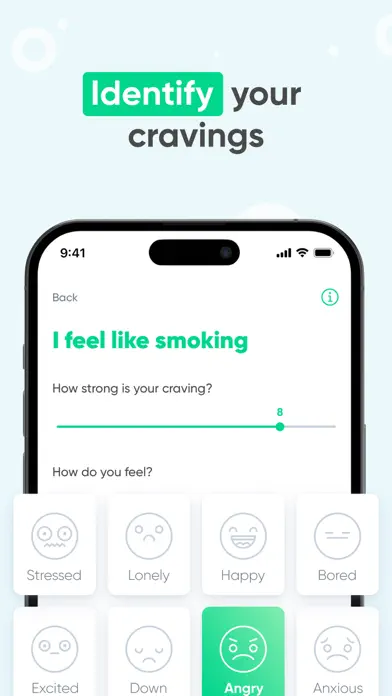
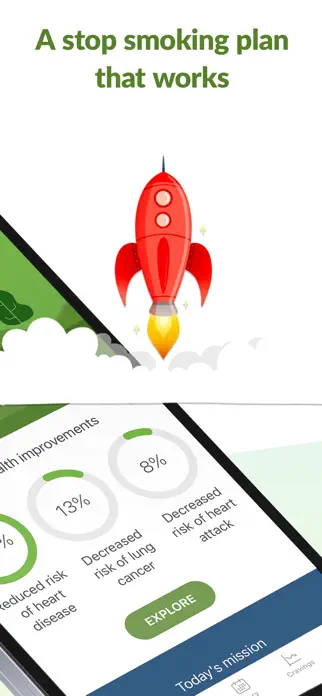
Kwit displays smoke-free time, money saved, cigarettes avoided, health progress, and time regained. Its current listing also describes guided breathing, motivation cards, craving tools, and cognitive behavioral therapy techniques. Premium access adds more strategies, reports, insights, and broader tracking features.
Smoke Free’s approach
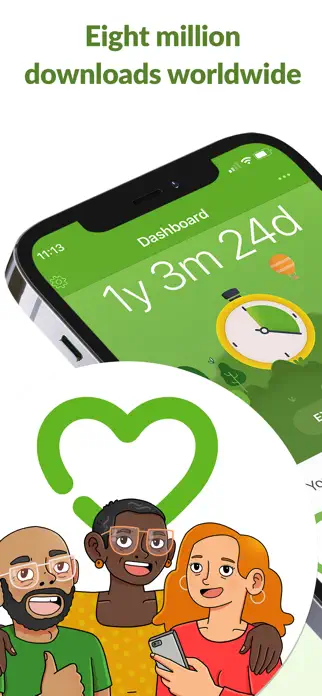
Smoke Free tracks quit time, money saved, cigarettes not smoked, health milestones, and life regained. You can record cravings and notes, then use graphs to look for patterns. Its short daily missions form a more directed stop-smoking plan, but the current listing presents those missions as part of Pro rather than the basic free experience.
Before subscribing, open the app and confirm that the tool you want most, such as missions or advanced reports, is included in the plan shown on your screen.

Which is better during cravings and possible slips?
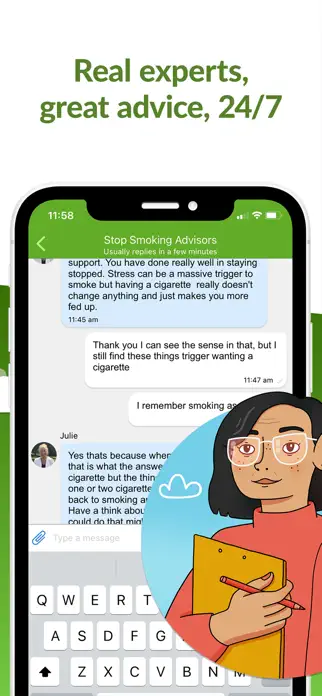
Smoke Free has the edge for examining craving patterns, while Kwit may feel more encouraging during a single difficult moment. Neither app can help if you do not open it before buying or lighting a cigarette.
Nicotine withdrawal commonly begins 4 to 24 hours after the last cigarette and is often strongest during the first 2 to 3 days. Symptoms usually ease over 2 to 4 weeks, though a coffee, meal, stressful call, or night out can trigger cravings much later. Our nicotine withdrawal timeline explains what to expect.
Try this workflow with either app:
- Record your usual triggers before your quit date.
- Choose one response for each trigger, such as walking after lunch or changing the morning coffee routine.
- Open the craving tool as soon as the urge starts, not after several minutes of bargaining.
- If you smoke, record it accurately and restart the plan. One cigarette does not require returning to a full pack.
- Review the week for repeated situations and change the plan for the next one.
People who want a separate practical framework can use our guide to handling cravings and triggers alongside either app.
How do the free versions and prices compare?
Both apps are free to download, but meaningful extras sit behind purchases. Kwit provides clearer US subscription examples, while Smoke Free lists several premium products that are difficult to compare without seeing the current paywall.
- Kwit: basic tracking and some motivational material are free.
- Kwit premium: the US listing shows a $6.49 weekly subscription and a $20.99 one-month subscription.
- Kwit lifetime: the listing shows a $169.99 one-time lifetime option.
- Smoke Free: basic tracking and cessation content are available free, and the listing says the free area has no ads.
- Smoke Free Pro: missions and additional support require a premium purchase. Its listing contains several subscriptions and content products, so check the product name, renewal period, trial terms, and cancellation date on your own screen.
A low introductory charge can renew at a different interval. Take a screenshot of the confirmation screen and set a reminder at least 24 hours before a trial ends.
What devices can you use?
Smoke Free has verified listings for iPhone, Apple Watch, and Android. Kwit’s current US App Store listing confirms iPhone support, but that iPhone page cannot establish its current Android availability.
Kwit requires iOS 18.1 or later. Smoke Free requires iOS 16.0 or later, making it compatible with some older iPhones, and its watch support may help if you want to log or view progress without reaching for your phone. A current Smoke Free Google Play listing confirms Android access.
Android users considering Kwit should search Google Play in their country and verify the developer, update date, and required Android version. Do not assume that an iPhone listing means the same app is available on Android.
What does the research say?
Research suggests quit apps can support motivation and self-monitoring, but it does not establish that Kwit or Smoke Free produces a superior long-term quit rate. App engagement also tends to fall, which matters after the first burst of motivation.
A 2024 quantitative feasibility and engagement study published in JMIR mHealth and uHealth evaluated Kwit in real-world use. The authors reported gains in willingness to change, confidence, and readiness to quit, especially among participants who initially felt less capable. Engagement was limited, and the study was not definitive evidence of long-term abstinence.
A 2023 observational survey of 255 Kwit users found that 70% described themselves as nonsmokers, 76% reported no relapse, and 80% said the app had played a significant role. These were self-reports from app users, not a randomized quit-rate trial. Kwit collects its cited publications on its medical and scientific research page.
The strongest general evidence supports combining behavioral help with an approved medication when appropriate. Options include nicotine replacement therapy, varenicline, and bupropion. A clinician or pharmacist can help select an option based on dependence, medical history, pregnancy, and other medications. See our guide to quit-smoking medication.
Talk with a clinician or pharmacist if withdrawal feels unmanageable, you have repeated relapses, or you want medication support. Get urgent help for chest pain, severe trouble breathing, or thoughts of harming yourself.
What are the drawbacks of each app?
Kwit can become expensive on a short subscription, while Smoke Free’s premium choices can be hard to compare. Both also depend on honest, consistent entries.
Kwit drawbacks
- The weekly subscription can add up quickly if left running.
- Some strategies, reports, and insights require premium access.
- Game-like rewards may lose their appeal after the first few weeks.
- Its current iPhone requirement excludes devices that cannot run iOS 18.1.
Smoke Free drawbacks
- The mission-based plan is promoted as a Pro feature, not a standard free tool.
- Multiple premium products make direct price comparison difficult.
- Detailed logging can feel like extra work during a difficult craving.
- Reminders and statistics may become repetitive for some users.
Calculations for money saved, cigarettes avoided, and progress depend on the smoking level and lapses you enter. Review our full Kwit review or Smoke Free review for a closer look at each.
Which one should you pick?
Pick Kwit for visual motivation and encouragement. Pick Smoke Free for deeper tracking, Apple Watch or verified Android access, and a structured Pro plan.
- Pick Kwit if progress displays, rewards, motivation cards, and breathing prompts make you more likely to open the app.
- Pick Smoke Free if you want craving notes, pattern review, detailed statistics, and daily missions through Pro.
- Try the free areas first if price matters. Enter your quit date and one craving before paying.
- Use added treatment if you smoke soon after waking, have struggled through repeated withdrawals, or want medication support.
Two other options to consider
NicLess ranks first in our broader nicotine app list because it tracks cigarettes, vapes, and pouches, includes a cut-down mode and craving button, and keeps data on the iPhone without an account. It launched in September 2026 and has no ratings yet. The MeQuit Quit Smoking program ranks second for its structured daily course, but it requires about an hour a day, has no cigarette tracker, and has only five US ratings.
NicLess and the MeQuit program are made by the team behind MeQuit, and readers who want a long rating history can start with the established apps listed above. See our full quit-app comparison for more choices.
Kwit vs Smoke Free FAQ
Which quit smoking app is better for beginners?
Smoke Free may suit beginners who want a clear sequence of tasks, but its daily missions are offered through Pro. Kwit may feel easier if visual progress and short motivational tools are enough to keep you engaged. Try entering a quit date and logging one craving in each free version before choosing.
What should a quit smoking app track?
Useful tracking includes your quit date, cravings, triggers, cigarettes smoked during a lapse, money saved, and the situations that repeatedly cause trouble. The app should also help you act on the information. A trigger record has limited value unless it leads to a specific plan for the next coffee, commute, meal, or stressful call.
Can a quit smoking app replace nicotine patches or medication?
No. An app can support routines, reminders, and craving plans, but it cannot assess your medical history or prescribe treatment. Nicotine replacement, varenicline, and bupropion may improve quit chances when clinically appropriate. Ask a clinician or pharmacist about side effects, interactions, dosing, and the best option for your smoking pattern.
How long should I use a quit smoking app?
Use it actively before the quit date and through at least the first several weeks, when withdrawal and routine-based triggers are common. Keep it available longer for situations such as alcohol, work stress, travel, or seeing someone smoke. The useful period is the one in which the app still prompts concrete action.
What should I do if I smoke while using a quit app?
Record the cigarette accurately and look at what happened immediately before it. Remove the remaining cigarettes, revise the plan for that trigger, and return to quitting rather than treating one lapse as a complete failure. Contact a clinician or quit counselor if slips repeatedly turn into regular smoking.
Are health milestones in quit smoking apps exact?
No. Health timelines are educational estimates based on population-level information. Recovery differs with smoking intensity, years smoked, age, medical conditions, and continued exposure. Use milestones as encouragement, not as a diagnosis or a promise that a particular symptom or health risk has resolved.