

How to Use NRT to Quit Vaping
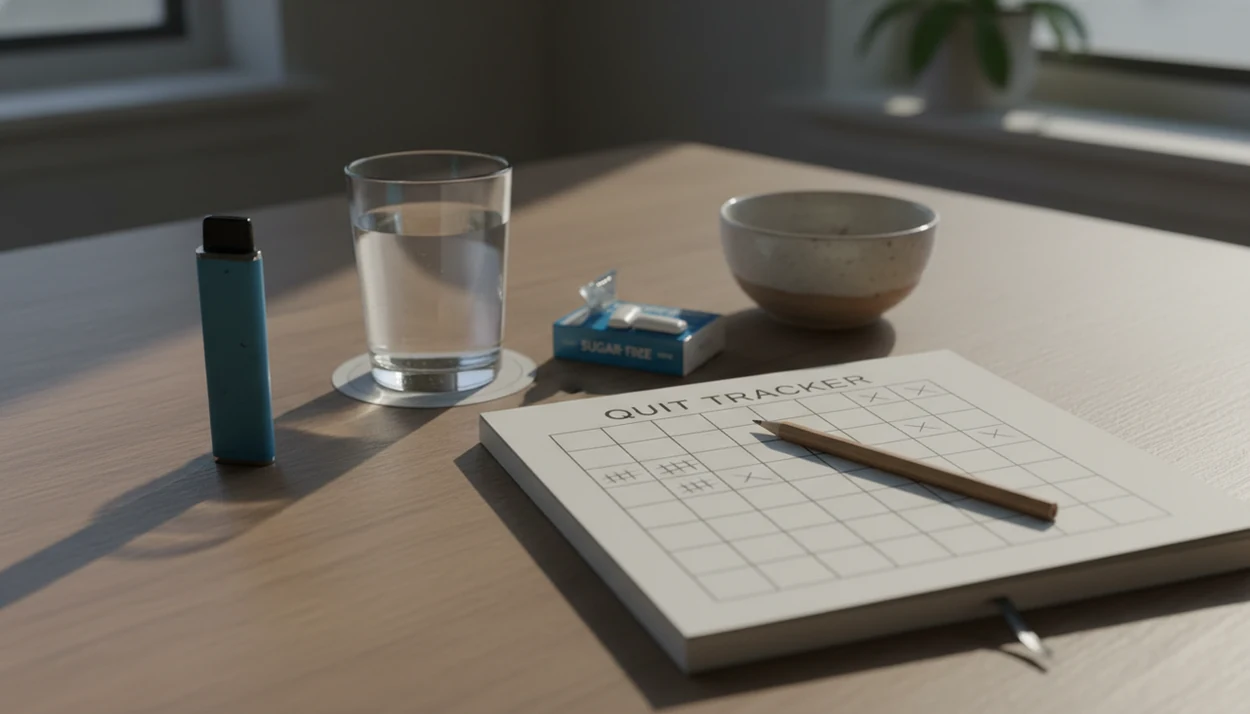
NRT can make the first days without a vape more manageable, especially if irritability, poor concentration or strong cravings have derailed earlier attempts. It supplies nicotine without vaping aerosol, but it does not replace the hand movement, inhale or automatic reach for a vape.
This guide explains how patches and nicotine gum can fit into an adult quit plan. It also covers dose warning signs, lapses and situations that call for medical advice. For a broader plan covering preparation and triggers, see how to quit vaping.
The short answer
Nicotine replacement therapy may help adults quit vaping by reducing cravings and withdrawal. A common approach is a nicotine patch for steady coverage plus gum or another short acting product for sudden cravings. Direct evidence for vaping cessation is still limited, so choose the product and dose with a pharmacist or clinician rather than converting vape puffs into milligrams.
Does NRT work for quitting vaping?
NRT may reduce nicotine withdrawal when an adult stops vaping, but it has not been proven conclusively as a vaping cessation treatment. The evidence supporting NRT is much stronger for quitting cigarettes.
A 2025 Cochrane review of vaping cessation treatments included nine randomized trials with 5,209 participants. Evidence for combination NRT was inconclusive because the findings were imprecise and the studies had risk of bias.
That does not mean NRT cannot help. It means researchers cannot yet give it the same vaping-specific certainty available for smoking cessation. In smoking studies, all forms of NRT increased the chance of quitting by about 50% to 60%, according to a Cochrane review of 133 trials. Applying that figure to vaping would be an extrapolation, not direct proof.
Which type of NRT fits a vaping quit plan?
A patch provides steady nicotine, while gum, lozenges or mouth spray address cravings that break through. Adults with lower nicotine use may need only one product, while moderate or high dependence may call for a combination.
| Option | Main role | When it may fit | Main limit |
|---|---|---|---|
| Nicotine patch | Steady nicotine delivery across the day | Frequent or automatic vaping from morning onward | Does not respond immediately to a sudden craving |
| Nicotine gum | Short acting relief used when a craving appears | Predictable triggers such as coffee, driving or after meals | Must be used according to the package instructions |
| Patch plus gum or another short acting product | Baseline coverage plus help for breakthrough cravings | Moderate or high dependence, or cravings despite a patch | The regimen should be checked if cravings persist or nicotine side effects appear |
Using a patch with gum does not automatically mean too much nicotine. Combination NRT is an established smoking cessation approach and appears in practical guidance for adults stopping vaping. The NHS Greater Glasgow and Clyde vaping guide describes a patch plus a rapid acting product as an option. Follow the label and obtain individual advice.
How do you start NRT for vaping?
Choose either a complete stop date or a measured reduction plan, then arrange your NRT before that point. Avoid an open-ended plan that leaves you vaping and using NRT indefinitely.
- Write down when you vape most: immediately after waking, with 7 a.m. coffee, in the car, after food, during work breaks or late at night.
- Ask a pharmacist or clinician which NRT product and starting strength fit your nicotine use, health history and medications.
- Pick a date to stop vaping completely. If you are reducing first, set clear limits and a later complete stop date.
- Remove the device, chargers, pods and e-liquid from the places where you automatically reach for them.
- Use the patch and short acting NRT exactly as the product label or clinician directs.
- Keep gum or another rapid acting option available during your strongest trigger situations.
The NHS guide to stopping vaping supports either gradual reduction or switching directly from vaping to suitable NRT. Compare those approaches in our guide to vape tapering versus a quit date.
How should a nicotine patch be used for vaping?
Use a nicotine patch for steady background coverage, following the package directions or a clinician’s instructions. Do not select patch strength by trying to convert daily vape puffs into a nicotine dose.
A patch can fit someone who vapes repeatedly throughout the day, including brief automatic puffs that are hard to count. It may reduce the background withdrawal that shows up as irritability, restlessness, anxiety, low mood, poor concentration or increased appetite.
The patch cannot recreate the immediate sensation or ritual of vaping. A strong craving during a commute, work break or evening screen time does not necessarily mean the patch has failed. A short acting NRT product and a behavior change may be needed. Persistent strong cravings or repeated lapses are reasons to ask a pharmacist if the regimen needs adjustment.
How does nicotine gum help you quit vaping?
Nicotine gum is a short acting option for cravings that appear despite a patch or at predictable times. Use it according to its label rather than chewing it like ordinary gum or estimating a dose from vape puffs.
Think of gum as part of a trigger plan. Keep it available before the drive where the vape usually sits in the cup holder, the coffee that cues the first puff or the Friday drinks that lower your guard. Waiting until a craving feels unmanageable can leave less time to respond.
Gum may also be used alone by some adults with lower nicotine use. If you need it constantly, remain uncomfortable or repeatedly return to vaping, ask a pharmacist about the product, technique and overall dose. Our guide to nicotine cravings and triggers can help identify the routines that medication does not cover.
Contact a clinician or pharmacist if strong withdrawal continues despite NRT, or if you develop nausea, dizziness, sweating, headache or palpitations that may indicate excessive nicotine. Get individualized advice before NRT if you are pregnant, recently had a heart attack or have serious heart disease.
Why can’t vape puffs determine the NRT dose?
Puff counts cannot be converted reliably into a patch or gum strength. Nicotine delivery varies too much across devices and patterns of use.
- E-liquid nicotine concentration varies.
- Device power affects aerosol delivery.
- Coil condition can change each puff.
- Puff length and inhalation technique differ.
- Many people take frequent brief puffs without noticing or counting them.
A more useful assessment looks at when you first vape, how often you use it, how difficult it is to go without it and what happens after stopping. After the quit date, persistent cravings, irritability or repeated lapses may indicate inadequate control. Nausea, dizziness, sweating, headache or palpitations can indicate excessive nicotine and call for stopping or reducing the product and seeking professional advice.
What should you do during a vaping craving?
Use the planned short acting NRT if directed, then change the immediate situation that cues vaping. NRT addresses nicotine withdrawal, but water, movement, breathing and removing the device help break the learned routine.
- Morning coffee: move to a different chair, hold the mug with the hand that held the vape and use your planned gum.
- Car: remove the vape and charging cable, bring cold water and keep approved short acting NRT accessible.
- After food: stand up immediately, brush your teeth or walk for several minutes.
- Work break: change the location, avoid the usual vaping group temporarily and take a brief walk.
- Alcohol: consider skipping drinks early in the quit attempt if they reliably lead to vaping.
- Nighttime: charge your phone outside the bedroom and remove vaping supplies from the bedside area.
The CDC’s guidance on quitting vaping recommends planning for withdrawal and discussing medication with a healthcare professional. More targeted ideas are available in our guide to vaping withdrawal symptoms and craving patterns.
What happens if you vape while using NRT?
One lapse does not require abandoning the quit attempt, but it should prompt a quick check of your triggers and NRT plan. Resume the planned treatment as directed and ask for advice if vaping continues or nicotine side effects occur.
Write down where you were, what you felt and what happened immediately before the puff. A lapse during the commute may call for gum in the car. A lapse after dinner may call for removing the device and leaving the room. Repeated strong cravings may mean the regimen needs professional adjustment.
Do not respond by returning to cigarettes. For a former smoker, preventing a return to combustible tobacco is a central safety goal. See how to stop vaping without smoking again for a plan covering cigarette urges.
Who should get medical advice before using NRT?
Ask a clinician or pharmacist before selecting NRT if you are pregnant, recently had a heart attack, have serious heart disease, use unusually high nicotine amounts or take multiple medications. Product instructions and precautions differ.
The NHS overview of nicotine replacement therapy explains that patches, gum, lozenges, sprays and inhalers are used differently. Advice is especially useful when your vaping is nearly continuous, you wake to vape or previous attempts produced severe withdrawal.
Do not increase the patch strength, stack products or use gum more often based only on puff counts. Ask a pharmacist to review ongoing cravings and possible nicotine side effects.
NRT for vaping FAQ
Can I use nicotine patches to quit vaping?
A nicotine patch can provide steady nicotine while you stop vaping, which may reduce background withdrawal and cravings. Direct evidence for vaping cessation remains limited, so ask a pharmacist or clinician to help select a suitable product and strength. Do not try to calculate patch strength from your number of daily puffs.
Can I use nicotine gum to quit vaping?
Nicotine gum can help with sudden or predictable cravings, either alone for some lower-level nicotine use or alongside a patch. Follow the package instructions carefully. If you need gum constantly, continue to have strong withdrawal or repeatedly return to vaping, ask a pharmacist to review the technique and regimen.
Is it safe to use nicotine gum with a patch?
Patch plus gum is a recognized combination approach for nicotine dependence. The patch supplies steady nicotine, while gum addresses breakthrough cravings. It does not automatically represent an overdose, but the products must be used as directed. Seek advice for unusually high nicotine use, medical conditions, multiple medications or possible nicotine side effects.
What strength nicotine patch should a person who vapes use?
There is no reliable puff-to-patch conversion. E-liquid concentration, device power, coil condition, puff duration and inhalation pattern all affect nicotine delivery. A pharmacist or clinician can consider your first vape of the day, frequency of use, withdrawal history and health conditions when recommending a starting product.
Can I vape while wearing a nicotine patch?
For a quit attempt, the goal is to stop vaping completely while using NRT as directed. A single lapse does not mean the attempt is over. Return to the plan, identify the trigger and seek advice if lapses continue. Nausea, dizziness, sweating, headache or palpitations can signal excessive nicotine.
How long should I use NRT after quitting vaping?
There is no single vaping-specific duration supported by strong evidence. Use the product for the period stated on its label or recommended by your clinician or pharmacist. Stopping too early can leave withdrawal untreated, while ongoing vaping plus indefinite NRT use can keep the reduction plan from reaching complete cessation.
Is NRT better than quitting vaping cold turkey?
NRT may make withdrawal and cravings easier to manage, but research has not established it as definitively more effective for vaping cessation. Some adults stop without medication, while others benefit from nicotine support and counseling. Consider prior withdrawal, frequency of vaping and the risk of returning to cigarettes when choosing a plan.
What are signs that I am getting too much nicotine from NRT?
Possible signs include nausea, dizziness, sweating, headache and palpitations. Stop or reduce the product and seek advice from a clinician or pharmacist rather than trying to correct the dose yourself. Persistent strong cravings, irritability and repeated lapses can point in the other direction and also deserve a professional review.